






Following the discovery of an explosive-laden drone near a Ukrainian cargo plane at a German airport, European officials have pivoted toward a more confrontational stance regarding Russian-backed sabotage. For years, intelligence agencies suspected that President Vladimir Putin’s regime was behind various hostile acts across Europe, yet struggled to produce definitive proof. Now, authorities are increasingly linking recent security threats directly to Moscow. NEW YORK – After an explosives-laden drone was discovered near a Ukrainian cargo plane at a German airport, European leaders did something they’d stopped short of doing before: publicly blame Russia. But recently, Moscow is raising even more suspicions. And Polish authorities recently blamed Russia for starting a fire at a factory producing weapons for Ukraine. Sabotage and cyberwarfare, hybrid warfare typically refers to unconventional attacks using unmarked soldiers. Putin’s history of crossing red lines.
The threat landscape has grown increasingly volatile. Russian submarines have been implicated in efforts to disable critical Arctic subsea cables, while Russian drones have frequently breached the airspace of Latvia, Lithuania, and Estonia. Kaja Kallas, the European Union’s foreign policy chief, noted the rising frequency of these incidents during an interview near the United Nations, stating, “We see them really increasing their attacks. They are testing how far they can go.”
Analysts suggest that as Russia faces significant losses in Ukraine, Vladimir Putin is utilizing hybrid tactics to intimidate Western allies into reducing their support for Kyiv. Daniel Fried, a former U.S. ambassador to Poland, explained that these maneuvers are designed to discourage assistance to Ukraine and other nations. He noted that Putin prefers to operate in ambiguous spaces where accountability is difficult, adding that the Russian leadership possesses a capacity to “smirk and deny responsibility” even when their involvement is widely understood.
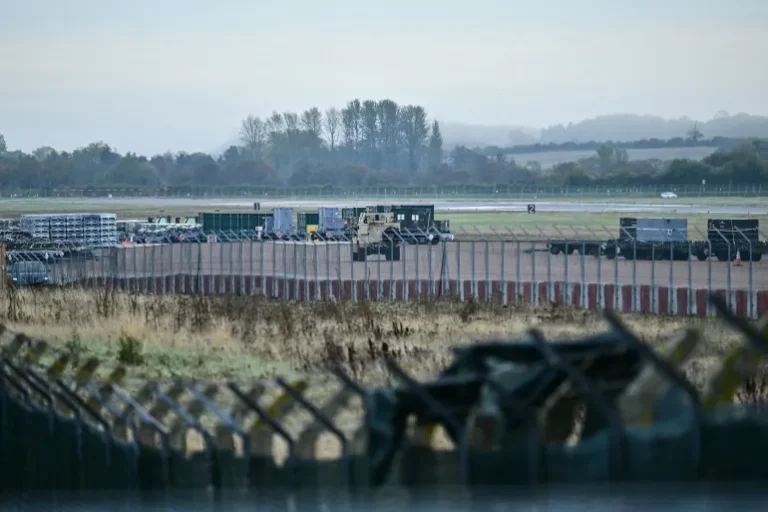
The attempted drone strike at Germany’s Leipzig/Halle Airport in August stands out as a critical escalation. Officials reported that the drone, had it detonated, would have likely resulted in civilian casualties and major structural damage. German investigators confirmed that the drone’s components were consistent with Russian hybrid operations and the ongoing war in Ukraine, with intelligence linking the effort to individuals acting on behalf of Russian state entities. It would have caused significant damage and potentially killed civilians, if the drone had exploded. Intelligence also pointed to “people being involved who acted on behalf of Russian state entities,” the country’s interior minister said.
Putin’s broader strategy has long relied on the perception that he could confront NATO with relative impunity. Throughout his 26-year tenure, his administration has been accused of meddling in electoral processes across the U.S. and Europe. Driven by a desire to restore influence over former Soviet republics, Putin has repeatedly pushed boundaries, such as the 2008 invasion of Georgia following NATO’s commitment to future Georgian and Ukrainian membership, and the 2014 occupation of Ukrainian territory by forces without identifying insignia. Where the alliance committed to future membership for Georgia and Ukraine, Russia launched a war against Georgia and occupied its Abkhazia and South Ossetia regions, months after the 2008 NATO summit in Bucharest.
Critics, including Ivo Daalder, a former U.S. ambassador to NATO, argue that a persistent fear of escalation has historically undermined Western deterrence, inadvertently setting the stage for the full-scale 2022 invasion of Ukraine. While U.S. intelligence initially predicted a rapid collapse of Kyiv, Russian forces currently hold approximately 12% of Ukrainian territory. Estonian Foreign Minister Margus Tsahkna emphasized that Putin underestimated both Ukraine and Western resolve, urging a strategy focused on public attribution, sanctions, and robust response.
Concerns over these operations coincide with Pentagon discussions regarding a potential reduction in U.S. military presence in Europe. Simultaneously, intelligence reports from countries like Denmark suggest a growing risk of limited Russian military operations against NATO members. U.S. Secretary of State Marco Rubio warned on September 23 that the conflict in Ukraine carries a persistent danger of spilling over, whether through intentional hybrid aggression or accidental incidents involving military aircraft.
Recent provocations include a Russian drone strike on a train near the Ukraine-Poland border that narrowly avoided dignitaries. During a Security Council briefing on September 23, U.S. Ambassador to the United Nations Mike Waltz condemned these risks to NATO airspace, while Matthew Whitaker, the U.S. ambassador to NATO, has consistently advocated for a clear-eyed approach to the Russian threat. While officials acknowledge the seriousness of the situation, they currently see no immediate evidence of a full-scale invasion of alliance territory, though they emphasize that the risk of a wider war remains contingent on the strength of the collective Western response.