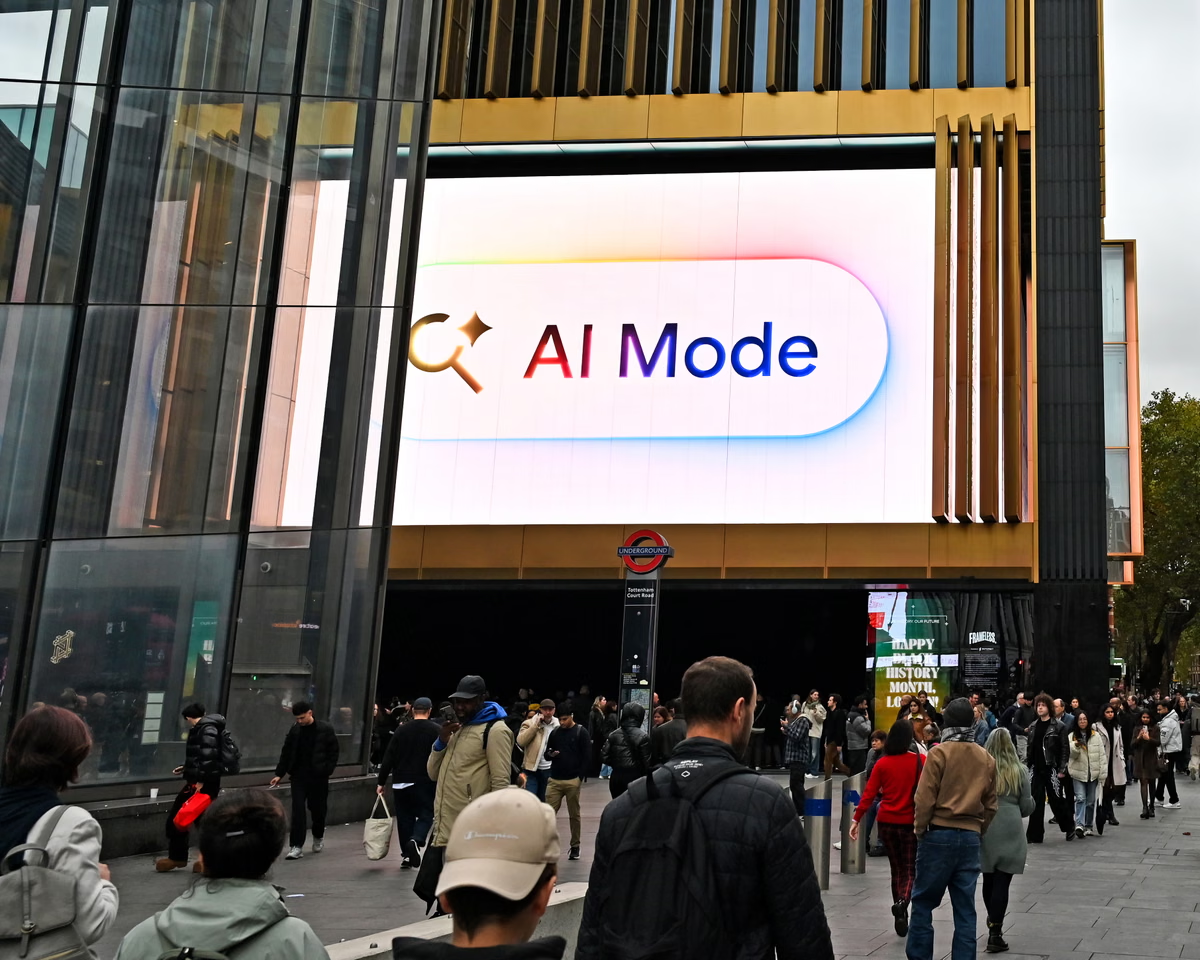









Google has fundamentally reshaped its search platform by placing artificial intelligence at the heart of the user experience. While the platform continues to present a standard list of links, users are now prompted to interact with AI Overviews—summarized chatbot responses that occupy the top of search results. This evolution represents what Liz Reid, Google’s vice-president of search, described last August as “the most significant upgrade of the Google Search experience ever.” The company confirmed in May that further AI enhancements are planned for the future.
The shift has ignited a debate over the effectiveness and reliability of these tools. For some, AI has significantly streamlined the search process. Alan Caruana, a 62-year-old consultant from Malta, finds traditional ranked lists “time consuming, and frustrating,” preferring the analysis provided by chat functions. Similarly, 67-year-old electrical engineer Eleazar Eke from Nigeria reports searching with “complete assurance and a high degree of accuracy.” Others, such as 52-year-old software engineer Mark Johnson from London, value the ability to ask follow-up questions to gain a deeper understanding of specific topics.
However, the transition has alienated a segment of the user base. Critics argue that the AI features often obscure primary sources and provide unreliable information. Sionn Achog, a 76-year-old retired teacher from Dublin, noted that while the AI can be helpful, it lacks trustworthiness and has even apologized for making false claims. For 33-year-old English teacher Ewan Herbert, based in Japan, the process has become a chore: “Every time I search I have to scroll down to find an actual real website.” Others, including 43-year-old personal trainer Jon Wilkinson from Manchester, expressed frustration that the feature cannot be permanently disabled.
This shift in behavior is causing significant concern for digital publishers. As users increasingly rely on AI summaries, navigation to third-party websites has declined, threatening the advertising revenue that sustains many media outlets. Large US media companies have initiated lawsuits, alleging that these AI summaries unfairly redirect traffic. Google maintains that these accusations rely on “flawed methodologies.” In defending the platform’s impact, Reid noted last year that “total organic click volume from Google Search to websites has been relatively stable year-over-year.”
The changing landscape has prompted some users to seek alternatives. 61-year-old Pedro Reyes from Galicia, Spain, now uses Google only as a last resort, preferring Wikipedia and DuckDuckGo. Others have made deliberate switches to platforms like Ecosia, as noted by 54-year-old IT professional Dan Jennings from Southampton. For 17-year-old student Catherine O’Leary in Newcastle, the environmental impact of AI data centers is a concern, leading her to rely on physical library resources for academic research.
Despite the criticism, some users remain enthusiastic about the capabilities of the technology. Samuel Lieberstein, a 90-year-old retired teacher from New Jersey, believes the tool “extends the mind through sensing connections,” making complex subjects more accessible. Yet, for many, the sentiment remains focused on what was lost. As one reader observed, the current iteration of the internet feels “enshittified,” leading to a widespread longing for the original, simpler version of the search engine. The report also notes that g oogle has put artificial intelligence at the front and center of its search bar. The report also notes that and the browsing habits of billions of people are shifting, the change to what was once the gateway to the rest of the internet has been profound. The report also notes that they’re spending more time with Google’s and therefore more time on Google.com, as people grow accustomed to AI chatbots. The report also notes that even if the bot cites the sites that feed it, academic studies are finding that people navigate less to sites beyond Google if an AI Overview can give them a good enough answer. The report also notes that asked readers whether Google has improved or worsened in the age of AI and how their habits of searching the internet have changed. The report also notes that better, mainly because it leads you in your quest rather than you having to search on yourself. The report also notes that i am happy to have the AI lead me to an answer but the mega caution is that Google AI or any of them are not at all trustworthy. The report also notes that which simply referred the user to other relevant websites, i find that AI responses are more informative than previously.