
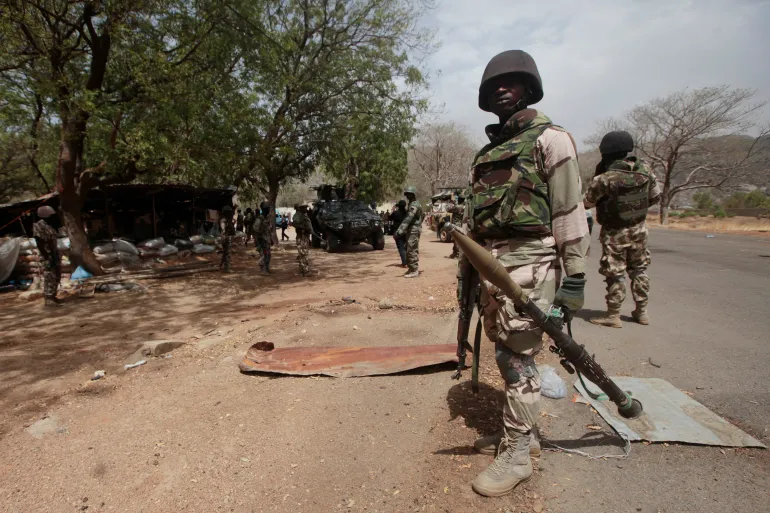







Boko Haram fighters have leveraged artificial intelligence chatbots developed by major technology firms to manufacture more powerful explosive devices, organize military campaigns, and overcome tactical challenges on the battlefield. This shift in operational capacity is detailed in a study by the University of Cambridge, which involved interviews with 27 former combatants from the group’s two main factions: the ISIL-affiliated West Africa Province (ISWAP) and Jama’at Ahl as-Sunnah lid-Da’wah wa’l-Jihad (JAS).
United Nations officials issued a warning to the Security Council in February regarding the escalation of advanced AI utilization by ISIL and its various affiliates. The Cambridge study, which analyzed AI usage during 2023 and 2024, suggests that the situation has likely intensified as the underlying technology has continued its rapid evolution. Lead researcher Antonia Juelich, who shared findings with, expressed deep concern over the capabilities these individuals might possess today given the more advanced systems available in 2026.
Inside ISWAP-controlled territories in northeastern Nigeria, the integration of AI was reportedly structured and sophisticated. Operatives from outside the region allegedly traveled to these strongholds to provide hands-on training to senior leadership. One former commander recalled how foreign trainers assembled the group’s top members, using a projector to demonstrate how the tools functioned on a large screen. Participants were provided with laptops featuring advanced encryption and privacy software, alongside active, paid subscriptions to various AI platforms.
A former ISWAP leader remarked that there was essentially no inquiry to which they could not receive an answer. Another former fighter described a dedicated 23-person unit operating out of a solar-powered facility, where specialists were tasked with analyzing data and training commanders on AI interaction. This unit functioned as a central resource, with one participant describing the technology as a human robot that offered guidance whenever bomb-makers encountered difficulties during assembly.
Juelich noted that roughly 10 of the interviewees specifically discussed using AI to improve explosives. The value of these systems often lay in their ability to offer bespoke troubleshooting. Rather than relying on static manuals, militants could input the specific materials they had on hand to receive customized advice on boosting destructive output. This process included efforts to recover explosive material from unexploded military ordnance and even repurposing commercial drones to carry and deploy explosives.
Beyond weapon construction, AI was integrated into daily combat maneuvers. Fighters reportedly consulted chatbots to operate unfamiliar firearms, plan tactics after failed operations, and even devise methods for overcoming government defenses, such as trenches designed to block motorcycle assaults. In some cases, commanders used AI to analyze tactical failures, sharing past battlefield data to receive suggestions on how to reorganize unit sizes for better performance.
While many of these queries clearly violate the safety protocols established by AI companies, researchers found that users are successfully bypassing these restrictions through various jailbreaking techniques. Despite the documented misuse, the administration of US President Donald Trump has resisted strict oversight, advocating instead for a framework that allows companies to innovate without what officials describe as cumbersome regulations.
The threat is not confined to internal operations, as separate investigations by Tech Against Terrorism suggest that pro-ISIL supporters are actively sharing instructions on global online forums about how to circumvent AI safeguards. Experts warn that as these models become more capable, the barrier to entry for producing lethal weapons continues to lower, presenting an ongoing challenge for security agencies worldwide. The report also notes that a number of members described using Sam Altman-led OpenAI’s ChatGPT, Anthropic’s Claude, Google’s Gemini, Elon Musk’s Grok, Mark Zuckerberg’s Meta AI and China’s DeepSeek as a routine source of technical and military advice before, during and after attacks. The report also notes that meanwhile, exclusive material obtained by reveals how supporters of the wider ISIL (ISIS) movement are sharing instructions on bypassing AI safety controls and obtaining weapons-related information. The report also notes that the findings come amid growing concern over ISIL’s adoption of emerging technologies. The report also notes that researchers and several of the technology industry’s most prominent figures have warned that increasingly powerful AI systems are advancing faster than safeguards, raising concerns that unchecked advances in AI are making it easier for armed groups to exploit the technology, at the same time. The report also notes that fighters were selected and assembled in rooms around laptops and projectors and shown how to query chatbots and circumvent the safeguards designed to prevent them from answering dangerous requests. The report also notes that the research suggests, went far beyond occasional use of ChatGPT by individual fighters, what followed. The report also notes that where its members answered questions, analysed information and trained senior commanders gathered around a laptop, one former JAS commander described a specialised unit of 23 people working from a solar-powered room.