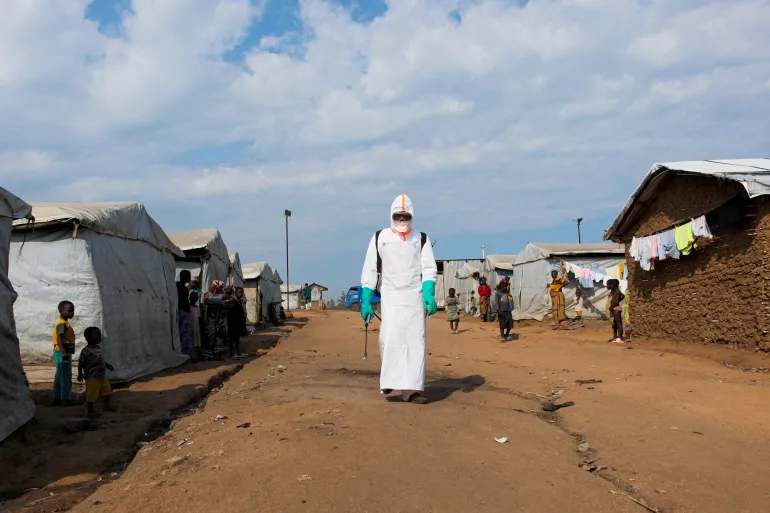








The Democratic Republic of the Congo (DRC) is facing the most rapid Ebola spread ever documented, with the virus now reaching two additional health zones. According to recent government data, the outbreak has expanded into Biena and Manguredjipa in North Kivu province, bringing the total number of affected areas across the country to 60.
Health officials report that the fatality rate in these newly affected zones is significantly higher than the national average of 48 percent, a disparity attributed to delays in the initial response. Nationwide, the Ministry of Health has confirmed 5,794 cases and 2,786 deaths. Experts warn that the current trajectory of the epidemic threatens to surpass the 2014–2016 West Africa outbreak, which resulted in more than 11,000 fatalities.
Efforts to curb the transmission are being severely hindered by a combination of factors, including regional armed conflict, population displacement, attacks on medical infrastructure, and a lack of essential resources. Furthermore, the specific strain of the virus—the rarer Bundibugyo type—lacks an approved vaccine or specialized treatment, forcing relief workers to rely heavily on traditional containment strategies like contact tracing and patient isolation.
To bolster the response in one of the most severely impacted regions, Doctors Without Borders (MSF) has opened a new treatment facility in Beni. Since the outbreak began in mid-May, Beni has recorded 122 confirmed cases and 87 deaths, resulting in a localized fatality rate of nearly 69 percent. MSF emergency coordinator Albert Stern noted that the new center is designed to provide rapid patient care, improve contact tracing, and assist local authorities in containing the virus.
MSF currently maintains a presence of 1,400 staff members in the DRC, operating treatment centers with a total capacity of 400 beds. Stern emphasized that early diagnosis and immediate treatment are critical for survival and for reducing transmission risks within families and communities. However, aid workers continue to cite a persistent shortage of bed capacity as a major obstacle to effective containment.
The severity of the situation has drawn international concern. UN Secretary-General Antonio Guterres recently warned that the epidemic is moving faster than the current global response. In a public statement, Guterres described the situation as the fastest-spreading Ebola epidemic on record, noting that it is growing wider and faster than containment efforts can manage. He urged the international community to urgently increase support to bring the crisis under control. The report also notes that “We know how to contain Ebola and save lives. The report also notes that the world must urgently step up action to get it under control.”.