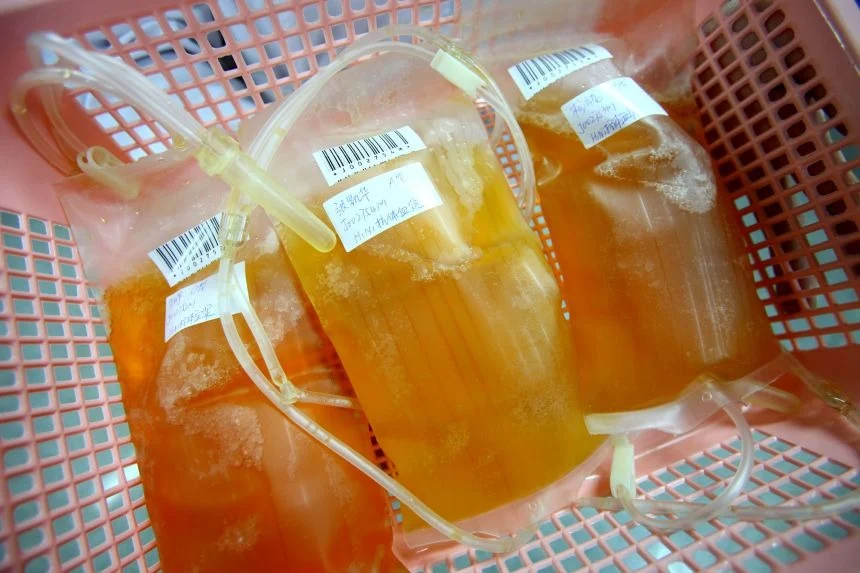








For patients like Ge Lan, a store worker in Henan, China, the cost of medical treatment has become an overwhelming burden. Her mother, recovering from stomach cancer surgery, requires daily infusions of human albumin to restore blood protein levels. Over a two-month period, the treatment consumed 72 bottles of the protein, costing the equivalent of seven months of Ge’s income. At approximately $46 per 10-gram bottle, the imported blood product represents the most expensive component of her mother’s care. “I just hope she gets better soon,” Ge told reporters. “I’m worried about the money too, but I have no choice.” Without financial assistance from her sister, she noted that the treatment would be unaffordable, potentially leading to a deterioration in her mother’s condition.
China stands as the world’s largest consumer of human albumin, a vital plasma-derived protein used for trauma care and chronic conditions. Despite this high demand, the country faces a persistent domestic shortfall. Research indicates that over 60% of the Chinese albumin market is supplied by foreign manufacturers, with all of that supply derived from plasma collected in the United States. The US currently provides roughly 70% of the global plasma supply, largely because it is one of the few nations that compensates donors.
This reliance on a geopolitical rival creates significant risks for Chinese patients, including the potential for drug shortages and price spikes if supply chains are disrupted by global health emergencies or political tensions. Experts note that during the Covid-19 pandemic, a surge in demand for plasma-based therapies led to panic buying and restricted access for patients with chronic illnesses. Yale University public health associate professor Xi Chen explained that this vulnerability is why Beijing is attempting to increase domestic collection capacity.
The challenge of achieving self-sufficiency is deeply rooted in a 1990s scandal involving unsafe plasma collection practices. During that era, local authorities in Henan encouraged villagers to sell plasma to boost the economy, often utilizing unsanitary methods like reused needles. The resulting HIV outbreak, which infected at least 25,000 former donors in Henan alone, led to strict regulations and a lasting public stigma against plasma donation. This history continues to influence current policy, as the government maintains tight control over the industry to prevent a recurrence of such a disaster.
While the US allows donors to sell plasma up to twice a week—totaling 104 times annually—China caps donations at once per fortnight, or 24 times a year. This regulatory environment, combined with lingering public fear, has hindered domestic supply growth. Kathleen McLaughlin, author of the 2023 book “Blood Money,” observed that the US plasma industry often relies on vulnerable populations, including unemployed individuals and those without college degrees, who sell plasma to cover basic living expenses. Donors like 25-year-old Sky Tucker have described the necessity of selling plasma to afford food, noting the moral complexity of a system that commodifies human blood.
In response to these systemic issues, China has taken steps to diversify its supply. In 2023, the country opened 32 new plasma collection centers, bringing the national total to 302. Additionally, regulators approved the country’s first rice-based albumin in July 2024. Yang Daichang, chairman of the developer Healthgen Biotechnology, anticipates this product could eventually replace about a quarter of China’s imported albumin. However, industry experts warn that the rice-based alternative has limited applications and that fundamental changes to the existing regulatory regime are required to achieve true self-sufficiency.
Despite these efforts, China still faces an annual shortfall of approximately 6,000 tons of plasma. Industry insiders argue that while China has aligned many of its product regulations with international standards, the plasma sector remains constrained by outdated rules. As long as the country remains dependent on the US for a critical medical resource, the stability of its healthcare system remains tied to the fluctuations of the American market and the geopolitical climate between the two nations. The report also notes that “I just hope (she) gets better soon,” the 44-year-old told. The report also notes that every year, millions of Americans offer up their arms to cover everyday costs – people like 25-year-old Sky Tucker. The report also notes that “While I do know it could save a life, most of the time, I’m just worried about if I’m gonna get my next meal or if I can feed my cats,” said the community college student who sold plasma twice a week for seven years to. The report also notes that as she watched the pale yellow liquid drip into her mother’s vein, Ge Lan felt the weight of every drop. The report also notes that according to a 2024 study co-authored by researchers from China’s national and Zhejiang drug inspection authorities, more than 60% of China’s albumin market is supplied by foreign manufacturers and all of it is made from plasma collected in the US. The report also notes that beijing appears increasingly aware of that vulnerability. The report also notes that the country cleared its first rice-based albumin for market last July, as part of a broader push to reduce reliance on American plasma, after opening dozens of new licensed plasma collection centers in 2023.