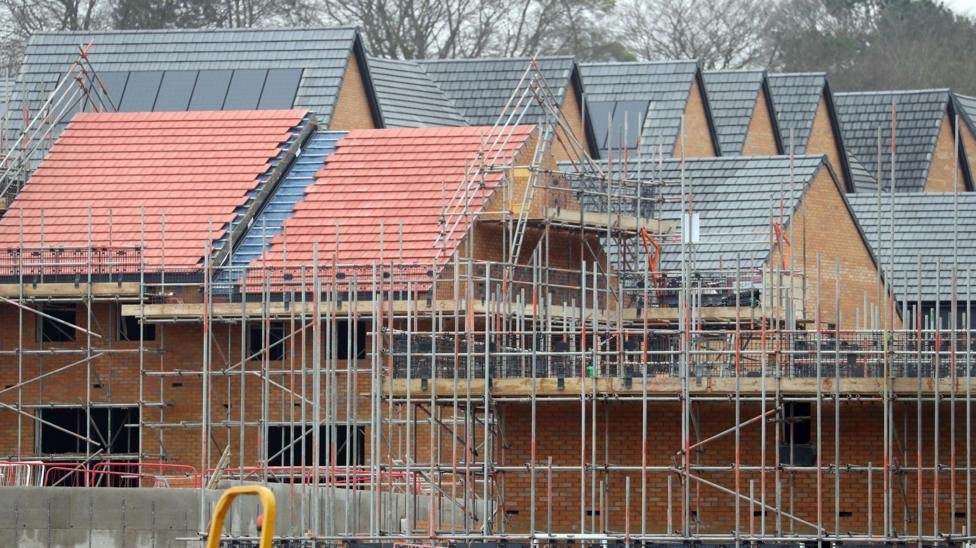








Mayors across England are set to receive expanded authority to override local council decisions on significant planning proposals. This shift aims to accelerate housing delivery and urban regeneration, granting mayors in 13 regions—including Manchester, Liverpool, the West of England, and the West Midlands—the ability to “call in” planning applications. Similar powers are already held by London Mayor Sadiq Khan.
The new oversight will apply to large-scale developments, specifically those involving more than 150 homes, commercial spaces exceeding 15,000 square metres, or structures taller than 30 metres. Other regions included in this rollout are the North East, South Yorkshire, West Yorkshire, York and North Yorkshire, Hull and East Yorkshire, Greater Lincolnshire, Cambridgeshire and Peterborough, the East Midlands, and the Tees Valley.
Housing minister Matthew Pennycook described these powers as an “essential part of the toolkit” required for mayors to effectively manage new housing and regeneration projects. While the government maintains that local councils will continue to handle the majority of applications in accordance with existing planning rules, the new framework also allows mayors to grant “up-front permission,” potentially enabling construction to commence without a standard developer application.
Conservative critics have questioned the fairness of stripping local councils of their “ability to make planning decisions in their own communities.” Paul Bristow, the Conservative mayor of Cambridgeshire and Peterborough, offered a nuanced perspective, telling Breakfast that he would use such powers to approve stalled schemes that could provide homes and drive economic growth. He argued that the “perceived threat of intervention” could encourage developers and councils to reach compromises rather than defaulting to rejection.
Addressing concerns about local autonomy, Bristow noted that the process should be a “two-way street,” suggesting that local authorities sometimes propose developments that negatively impact communities. He emphasized that his approach would be “much more light touch” than the system currently utilized in London, where housebuilding has slowed despite the mayor’s existing call-in powers.
The government remains under pressure to meet its ambitious target of building 1.5 million homes in England by the end of the decade. While Pennycook acknowledged the goal is “really stretching,” he insisted it is necessary given that nearly 180,000 children are currently living in temporary accommodation. Conversely, Bristow expressed skepticism, stating the government has “no chance whatsoever” of hitting that target under the current planning system.
Prime Minister Andy Burnham has been a vocal proponent of devolving power to local leaders. Beyond planning, he has pledged to provide mayors with a share of income tax revenue to “bring power home” to every postcode and recently launched a program to embed high-performing civil servants within mayoral offices. However, this strategy has drawn criticism from some Labour members and the Liberal Democrats, who warn that it risks creating a “two-tier system” that disadvantages areas lacking an elected mayor.
Further details on the implementation of these planning powers are expected next week, when the government plans to publish a formal consultation. Additionally, the government intends to grant mayors greater influence over regional housing funding, directing the national agency Homes England to prioritize the specific objectives set by local mayoral offices. The report also notes that but about developers and councils finding a compromise on projects instead of just saying no – which he believed the “perceived threat of intervention” would help, bristow said “it’s not about overriding what local people want”. The report also notes that the Labour government promised to build 1.5 million homes in England by the end of the decade, but housebuilders have warned the target could be missed, in the 2024 general election. The report also notes that pennycook said the government was “absolutely determined to stick with that ambition”. The report also notes that we need to get building and families need places to live, and at the moment, the planning system just isn’t working, we need economic growth in this country. The report also notes that challenge does need to be made to local decision-making and actually it cuts both ways,” he told the Sunday Times.