








Television history is littered with programs that were once considered essential viewing—gripping, provocative, or hilarious—but now feel deeply uncomfortable to revisit. For many viewers, shows like America’s Next Top Model, House of Cards, and The Office have transitioned from nostalgic favorites to relics that feel tainted by the passage of time and shifting social standards.
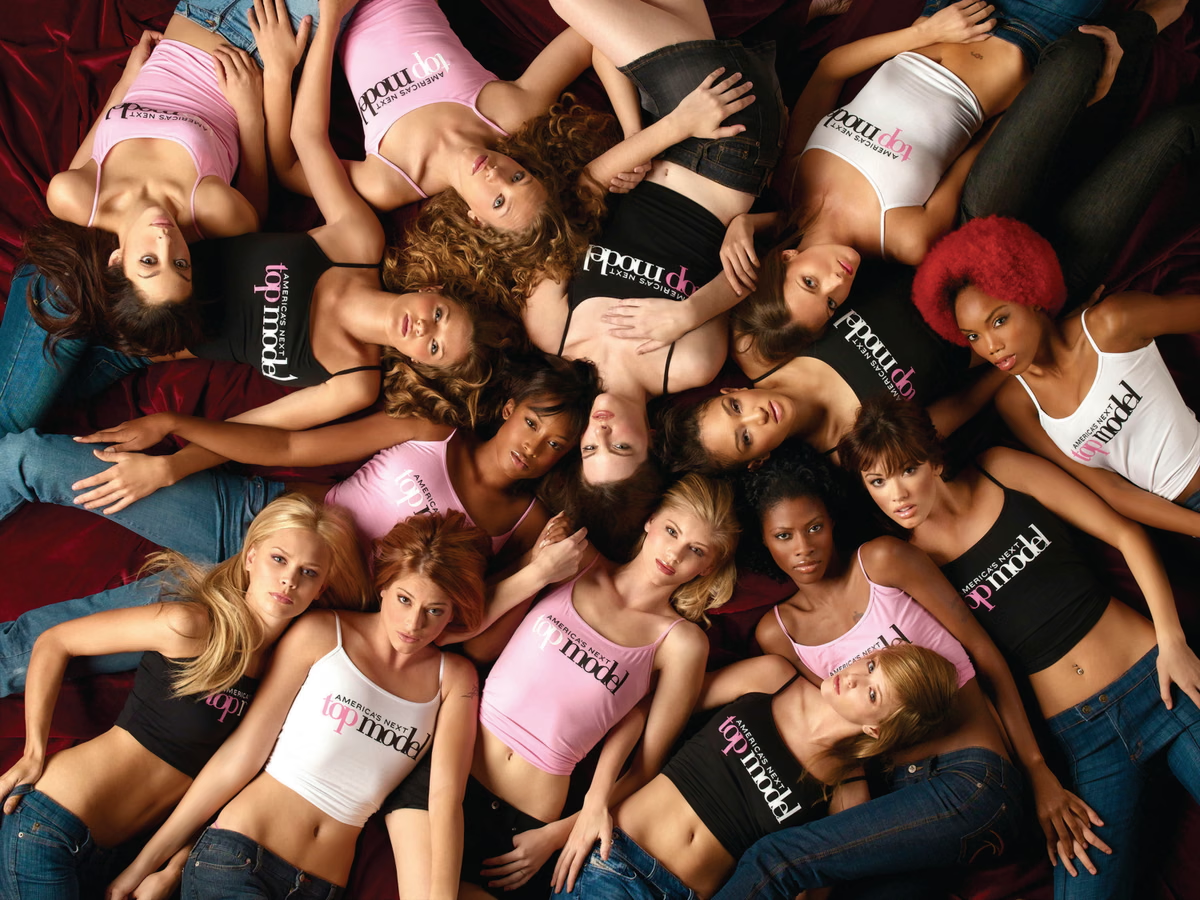
The evolution of perspective is perhaps most evident in reality television. America’s Next Top Model, once a staple of teenage summer holidays, now feels problematic for its treatment of contestants. The makeover episodes, which featured young women sobbing as their hair was aggressively cut or shaved, were once standard entertainment, but they now highlight a dynamic that feels exploitative rather than empowering. Similarly, The Apprentice has faced severe criticism for its legacy, particularly regarding the American original’s role in legitimizing Donald Trump. The British version has also struggled to maintain its standing, as its underlying values feel increasingly outdated.
The reality genre’s darker side is further exposed by Married at First Sight Australia. While it provided a distraction during the 2020 lockdown, the show’s premise—where couples meet at the altar and participate in a weeks-long experiment involving dinner parties and commitment ceremonies—has been overshadowed by serious concerns. A BBC Panorama investigation into the UK version revealed allegations of rape and sexual assault, while female participants in the Australian iteration have questioned why the vetting process allowed men with histories of domestic violence and abuse to participate.
Scripted dramas and comedies have not been immune to this re-evaluation. The Office remains a technical masterpiece of satire and character study, yet it is difficult to watch today because it perfectly captures the relentless, casual sexism that defined the turn of the millennium. Similarly, the 1990s series This Life, once celebrated for its depiction of young adulthood, now feels jarringly dated, with its reliance on the aesthetic and social norms of a bygone era. Even the 2000s hit Entourage, often described as “toxic masculinity – the TV show,” has aged poorly. While creator Doug Ellin has blamed “righteous PC culture” for the show’s declining reputation, its focus on chasing women and fetishizing wealth feels increasingly hollow.
Other shows have been marred by the personal conduct of their stars or production changes. House of Cards, which once thrived on the charisma of Kevin Spacey’s Frank Underwood, has become impossible to enjoy following the sexual assault allegations against the actor, which he denies. Meanwhile, the beloved Great British Bake Off lost its original charm for many fans when the rights were sold from the BBC to Channel 4, a move that prompted the departure of presenters Mel Giedroyc and Sue Perkins.
Even shows that were once considered edgy or honest about relationships now feel puerile. A recent rewatch of the 2000 comedy Coupling revealed that what was once perceived as biting honesty about dating was actually filled with derogatory jokes about women. Similarly, the final season of Euphoria left many viewers disappointed, as the show’s trajectory shifted toward what critics have described as “fetish slop” and male-gaze misogyny, moving far away from the initial promise of the series.
Finally, the impact of real-world politics can permanently alter how we perceive entertainment. The inclusion of Nigel Farage in I’m a Celebrity in 2023 fundamentally changed the tone of the show for many, transforming a lighthearted, schadenfreude-laden adventure into something far more polarizing. These examples serve as a reminder that television is rarely static; as our values change, the shows we once cherished often reveal themselves to be products of a time we are no longer comfortable inhabiting. The report also notes that when I think of the summer holidays when I was a teenager, I think of watching America’s Next Top Model for hours on end, critiquing each contestant with my sister. The report also notes that at the time, Tyra Banks seemed like a big sister, giving the contestants the tough love they’d need to succeed in a ferociously competitive industry. The report also notes that rewatching episodes I hadn’t seen in more than two decades, it was the strangest sensation. The report also notes that at times I felt almost teleported back. The report also notes that how could I not find these scenes of models collapsing with hunger utterly abhorrent. The report also notes that i wondered what influence watching a show that celebrated eating disorders had on my own brain. The report also notes that i think the residual taint of it is still there. The report also notes that for the way it legitimised Donald Trump, but the British version doesn’t exactly get away scot-free, the main culprit is obviously the American original.