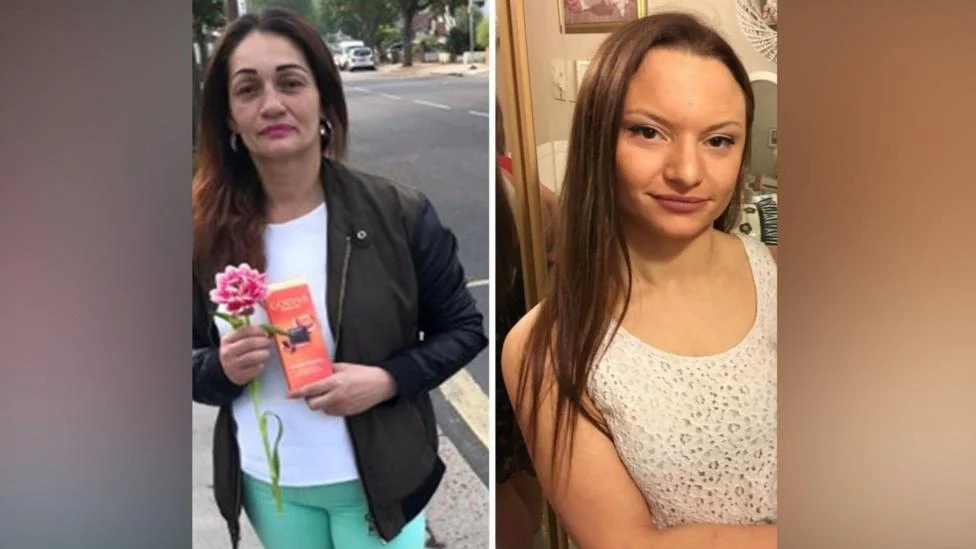







A convicted sex offender, Simon Levy, has been found guilty at the Old Bailey of murdering 54-year-old Carmenza Valencia Trujillo and 39-year-old Sheryl Wilkins, as well as the violent rape of another woman in a London car park. The verdict follows a campaign of violence that saw Levy murder, rape, and sexually assault multiple women on public transport, all while he was being monitored and risk-managed by the Metropolitan Police. Senior officers have now admitted that the life of Sheryl Wilkins could have been saved had the system functioned correctly.
The Metropolitan Police has issued a formal apology to the family of Sheryl Wilkins, acknowledging what Deputy Assistant Commissioner Kevin Southworth described as a “collective system failure” and a “tragedy beyond words.” Investigations reveal that between late 2024 and the summer of 2025, Levy was repeatedly released on bail by both police and the courts, even after he had been charged with serious sex offences and had broken his bail conditions. Throughout this period, he remained under the supervision of the Met, which had controversially downgraded his risk level to women upon his release from prison in 2024.
The failures were multifaceted and spanned several agencies. The Met closed an investigation into a rape Levy committed in January 2025 despite evidence that could have identified him. Furthermore, when Carmenza Valencia Trujillo was killed in March 2025, the force failed to classify the death as a murder or refer it to specialist homicide detectives until after Levy had claimed his second victim. The British Transport Police (BTP) also faced severe criticism, as their investigation into Levy’s sexual assaults on public transport was plagued by delays. Despite possessing footage of Levy committing an attack, the BTP took more than six months to charge him.
In one instance, a victim captured footage of Levy on the Tube. When confronted by a witness during an assault, Levy pointed to a jumper draped over his arm and asked, “What are you talking about – look my hand is covered.” Despite the availability of CCTV, police failed to identify him at the time. A year after his initial Tube assault, Levy attacked three more women in quick succession. Following his arrest, he denied the offences, and BTP officers released him on bail, claiming they lacked sufficient evidence to charge him. It was not until May 2025 that a CPS team had to scramble to make an emergency charging decision overnight because BTP had rearrested him.
The administrative negligence extended to the handling of basic property. Both the Met and BTP returned a stolen travel card to Levy, which enabled him to continue using public transport to target women. Det Ch Supt Pete Fulton of the BTP admitted that the delays in his force’s enquiries were “absolutely not good enough.” Meanwhile, the Crown Prosecution Service (CPS) has apologised for “shortcomings” in its failure to ensure Levy was remanded in custody during the period he was active.
Levy, a 40-year-old jobless man who lived with his mother, was described as being obsessed with sex. A search of his home revealed a computer containing notes detailing his “favourite sex acts” and evidence of his interest in the misogynistic influencer Andrew Tate. His history with law enforcement dates back to 2017, when he was first reported for a sexual assault. In 2021, he was sentenced to three years in prison for assaulting two women on public transport, where he had placed his hands down their clothing.
During his 2021 sentencing, Judge Christopher Hehir described the offences as “extremely serious” but declined to impose a Sexual Harm Prevention Order (SHPO). The judge deemed the order unnecessary for public protection, a decision that went unchallenged by police or prosecutors. While the judge noted that Levy would be “subject indefinitely” to monitoring requirements for convicted sex offenders, the Met’s subsequent management of that monitoring proved ineffective.
The Met’s handling of the case is particularly sensitive as it occurred after the force claimed to have reformed following the findings of Baroness Louise Casey. Met Commissioner Sir Mark Rowley has consistently rejected the formal finding that his force is institutionally misogynistic, but the circumstances surrounding Levy’s ability to remain at liberty will undoubtedly lead to renewed scrutiny of that position. Kevin Southworth of the Met conceded, “There were opportunities here to save some of the victims.”
One survivor of Levy’s attacks expressed that learning about his other victims and the fact that he had been on bail while attacking others was “worse than even the physical assault” itself. She added, “It didn’t need to take all of those women for Simon Levy to be finally put into prison… the attacks could have been stopped.” The police watchdog is currently investigating the Met’s decision to downgrade Levy’s risk profile, as well as the broader failures that allowed a known offender to operate with such impunity.
The timeline of failures highlights a systemic inability to connect disparate reports of violence. The Met took three years to investigate and charge Levy for the sexual assault of a prison officer, a delay that allowed him to continue his pattern of behaviour. By the time he was finally apprehended for the murders, he had already caused irreparable harm to multiple families and victims who had sought protection from the very institutions that failed them.
As the legal proceedings conclude, the focus shifts to the accountability of the agencies involved. The CPS, BTP, and the Metropolitan Police are all facing pressure to explain how a man with a clear record of sexual violence was permitted to remain on the streets. The case of Simon Levy stands as a stark example of how bureaucratic delays, poor risk assessment, and a lack of inter-agency communication can have lethal consequences for the public.
The investigation into the Met’s specific actions continues, with the police watchdog scrutinizing why the force failed to act on intelligence that could have prevented the murders. For the families of Carmenza Valencia Trujillo and Sheryl Wilkins, the admissions of “collective system failure” offer little comfort, as they grapple with the reality that their loved ones might still be alive had the authorities acted with the necessary urgency and diligence.
The Met’s decisions and actions in Levy’s case were taken after the force said it had reformed in the wake of previous notorious cases – such as the murder of Sarah Everard by a Met officer, and the failure to detect and
“It didn’t need to take all of those women for Simon Levy to be finally put into prison⦠the attacks could have been prevented,” one of the 10 women assaulted on public transport by him told the.
He first came to the attention of the Met in 2017 when a woman reported him for sexually assaulting her at an event in south London.
Warning: Contains graphic details of sexual offences
The Met’s decisions and actions in Levy’s case were taken after the force said it had reformed in the wake of previous notorious cases – such as the murder of Sarah Everard by a Met officer, and the failure to detect and stop serial killer Stephen Port.
In 2021, he received a three-year prison sentence for the sexual assault of two women, in separate attacks at public events in London in summer 2018.
He decided it was not necessary for such public protection, according to a transcript of the sentencing hearing at Southwark Crown Court, seen by the.
When Levy was first released from prison on licence in 2023, he was classed as a high-risk sex offender.
He was briefly returned to prison in May 2024 to finish his three-year sentence for his sex offending, after being accused of rape and therefore breaking his licence conditions.
He was not charged with any further offence.
When he was finally released in August 2024, at the end of his sentence, the Met became solely responsible for risk managing Levy.
In April 2022 he sexually assaulted a female prison officer in HMP Brixton.
He had grabbed the officer’s backside as he passed her on the stairs.
After he was questioned by police, nothing happened.
Contact us on email daniel.desimone01@.co.uk or via the Signal messaging app @investigation.56
“Yes, and in fairness that angle of the inquiry isn’t lost on us in terms of its significance to the overall chain of events,” he replied.
Beside the failure to deal with a sexual offence against a prison officer, a significant opportunity to disrupt Levy had been thrown away.
The 10 women Levy sexually assaulted on London public transport between October 2023 and May 2025 encountered him at random.
In February this year, he was convicted of intentionally and sexually touching the women on their legs, buttocks or vagina, without their consent.
“Before I was assaulted, I was the type of person who travelled around with confidence and curiosity.
“Now I treat everyone with suspicion.
I avoid places and public, I feel unsafe around strangers, particularly males, and I struggle with busy environments and public transport.”
Levy would ride the Tube network for hours, seeking busy carriages as cover for his assaults.
He tied clothing around his waist, placing his left hand beneath it, in a crude attempt to disguise it and enable him to assault women.
Levy boarded and positioned himself directly in front of the woman, before leaning his elbow on her.
A few minutes later, she felt something touch her, over her clothes, on her vagina.
Such was the force Levy used, that she felt like it was an attempt to push his fingers inside her through clothing.
Levy then called her “crazy” and “stupid” and got off the tube at Westminster Station.
The woman got off at the next stop, upset and crying.
Levy assaulted a third woman a week later.
It was weeks before identity parades were arranged, and BTP did not approach the CPS for six months.