








The White House and the Pentagon have formally pushed back against a series of recent reports indicating that American offensive and defensive weapon stockpiles have dropped to critical levels following months of active conflict with Iran. While various media outlets and defense analysts have raised alarms regarding the depletion of key assets, the administration maintains that the military remains fully equipped to defend national interests.
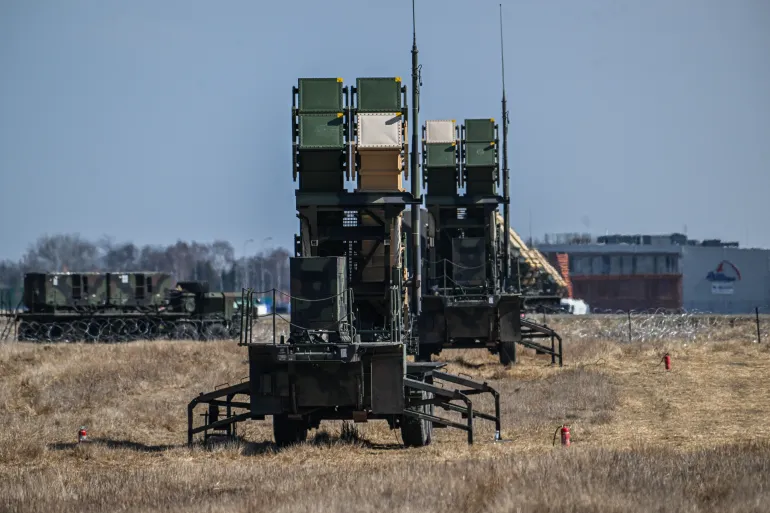
Experts have specifically highlighted concerns regarding the depletion of air defence interceptors, particularly those utilized in Patriot and Terminal High Altitude Area Defense (THAAD) systems. These analysts warn that such shortages could leave US forces vulnerable and create significant security gaps for regional allies who rely on these systems for protection against incoming ballistic threats.
In a statement provided to Al Jazeera on Tuesday, President Donald Trump rejected the notion that the US is facing a supply deficiency. “We have far more munitions than anyone in the world, and far more than we need, despite the fact that an unprecedented amount was given away by Crooked Joe Biden and the Biden Administration to Ukraine and Europe at no cost, in one of many of their extremely bad deals,” Trump stated.
Trump pointed to new efforts to scale up domestic weapons production to meet current demands. However, defense experts have questioned whether the manufacturing of complex air defence missiles can truly be scaled up in a timely fashion to offset the rapid consumption rates seen during the current conflict. Despite these doubts, the President remained optimistic about the supply chain trajectory.
“And as we build up, we will start issuing more to our allies in Europe and elsewhere,” Trump added. The administration’s stance remains that the current inventory is sufficient for all ongoing operations, dismissing the narrative of a looming crisis as politically motivated or factually incorrect.
Pentagon spokesman Sean Parnell also maintained that the US was not in dire straits regarding its munitions inventory. “America’s military is the most powerful in the world and has everything it needs to execute at the time and place of the President’s choosing,” Parnell said in a formal statement to Al Jazeera.
Parnell further emphasized the operational readiness of the armed forces, noting, “We have executed multiple successful operations across combatant commands while ensuring the US military possesses a deep arsenal of capabilities to protect our national interests and those of our partners.”
Several reports on Monday indicated that the situation may be more pronounced than US officials have publicly acknowledged. CNN reported that the US military had depleted 80 percent of the THAAD interceptors it had prior to the war and about half of its Patriot interceptors. Sources familiar with the internal data described the current inventory levels as “dangerously low.”
Secretary of Defense Pete Hegseth swiftly contested the 80 percent figure and the characterization of the threat it posed, posting “not true” and “shame on you” on X on Monday. The Pentagon continues to assert that these figures do not accurately reflect the strategic depth of the US arsenal.
In an analysis published by the Washington, DC-based Center for Strategic and International Studies (CSIS) on July 27, the think tank calculated that the military had just over a third of its Patriot interceptors left and about half of its THAAD interceptors. CSIS has assessed that it would take at least three years, even with a recent flurry of funding, to bring supplies back to pre-war levels.
The current tensions follow the collapse of a memorandum of understanding (MoU) between Washington and Tehran that had successfully brought a halt to fighting in June. The breakdown of this agreement led to nearly two weeks of intense attacks from both sides, further straining the munitions supply chain.
“It’s more dangerous, and you really have to beat down any air defence system,” one expert noted, highlighting the high cost of engagement. The Reuters news agency and CBS News separately reported that the military has used the majority of its Army Tactical Missile Systems (ATACMS) and Precision Strike Missiles (PrSM).
Unlike the Patriot and THAAD interceptors, these highly accurate long-range missiles are used primarily in offensive operations. Two sources told Reuters that “virtually all” the missiles, which cost about $1m each, had been used in recent engagements. This high rate of expenditure has raised questions about the sustainability of current offensive capabilities.
No Trump administration official has publicly acknowledged any threats posed by these shortages, despite the fact that the administration has requested $95bn in its Fiscal Year 2027 defence budget and $21bn in a supplemental funding request to replenish its stores. In May, the administration also announced an additional $25bn in Patriot interceptor sales and related services to Kuwait, Bahrain, the United Arab Emirates, and Qatar.
Mark Cancian of CSIS noted that the current focus on exports will likely shift. “That will almost certainly change, and the US will endeavour to hold more of the interceptor back to replenish our own stockpiles,” Cancian said. He added that while money is not the primary obstacle, the timeline for industrial production remains a significant hurdle.
“Money will not be a problem,” Cancian said. “The problem is time.” Even with an influx of funding, he warned that near-term shortages of US interceptors will not be swiftly resolved, as the manufacturing base requires significant lead time to expand capacity.
On Wednesday, President Zelenskyy remarked that allies have supplied Kyiv with far fewer air defence interceptors in 2026, accounting for just a third of the deliveries from the same period last year, suggesting that global supply constraints are affecting multiple theaters of conflict simultaneously.
Multiple media reports have indicated that Dan Caine, the chairman of the Joint Chiefs of Staff, has repeatedly raised concerns behind closed doors regarding the depletion of these assets. The New York Times reported that these internal warnings contrast sharply with the public messaging coming from the White House.
Experts argue that shortages in both offensive and defensive weapons could leave US forces less secure in the long term. Specifically, the depletion of ATACMS and PrSM degrades the army’s ability to launch precision strikes from afar, potentially requiring forces to operate closer to enemy lines, which increases the risk to personnel and equipment.
“For ATACMS and PrSM, if you run low or out, then you would have to use some other mechanism, and that would be air-delivered or sea-delivered, so you’re talking probably Joint Air-to-Surface Standoff Missiles (JASSM) or
“If we run out of Patriots, then the missiles get through.”
Such concerns were underscored by a July 17 attack on the Muwaffaq Salti airbase in Jordan, in which three US soldiers were killed when Iranian missiles were able to slip through US military and Jordanian air defence sys
“For ATACMS and PrSM, if you run low or out, then you would have to use some other mechanism, and that would be air-delivered or sea-delivered, so you’re talking probably Joint Air-to-Surface Standoff Missiles (JASSM) or Tomahawk to strike a deep target, or having aircraft fly over enemy territory,” Cancian said.
Such concerns were underscored by a July 17 attack on the Muwaffaq Salti airbase in Jordan, in which three US soldiers were killed when Iranian missiles were able to slip through US military and Jordanian air defence systems.
However, with the current level of US stockpiles, every interception of an Iranian strike weakens US deterrence capabilities against military powers like China.
The strategy can help to preserve interceptors, but can also increase the chances of miscalculation.