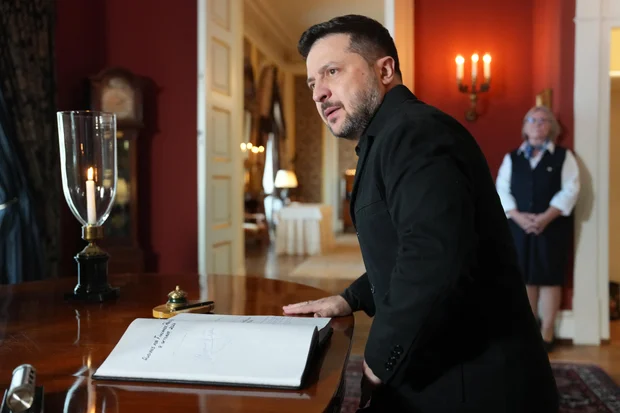







Ukrainian President Volodymyr Zelenskyy has stated that if the Trump administration is unable to influence Russian President Vladimir Putin, it must at least facilitate the delivery of critical interceptor missiles.
These assets are essential for Ukraine to protect its energy infrastructure from ongoing aerial assaults. Zelenskyy’s remarks, featured in an interview with the Italian newspaper Corriere Della Sera, highlight the deepening friction between the two leaders regarding the trajectory of the war.
Secretary of State Marco Rubio addressed the friction on Tuesday, noting that President Trump feels frustrated by what he characterizes as false claims that his administration intends to harm Ukraine. Rubio maintained that no aid has been deliberately withheld from Kyiv, describing the current situation as a complex balancing act between satisfying international obligations and meeting domestic U.S. defense requirements. He insisted that nothing had been “deliberately denied to Ukraine,” but added: “It’s simply, it’s a balance between our obligations to other partners and frankly our own… requirements for our own facilities as well. America cannot stop them,” he said. “Let’s believe that America really wants to, but cannot.
The diplomatic strain is occurring as Zelenskyy prepares for meetings in Norway with U.S. envoy Steve Witkoff and, remotely, Jared Kushner. Meanwhile, the region continues to suffer from daily Russian drone and missile strikes. Recent attacks on Kyiv resulted in at least four deaths, further fueling frustration in the Ukrainian capital over the perceived lack of warning from international partners. Mr. Trump has criticized Zelenskyy for saying he would resume strikes on Russian refineries in retaliation for the latest Russian onslaught.
Ukraine is facing a critical shortage of U.S.-manufactured Patriot air defense interceptors, which are vital for neutralizing incoming ballistic missiles. Zelenskyy has publicly asserted that the U.S. is stalling the shipment of these systems, even though they have already been purchased by various European nations. He has specifically suggested that bureaucratic hurdles, including a lack of sign-off from Defense Secretary Pete Hegseth, are delaying the transfers. And Zelenskyy has long pleaded for more, ukraine has nearly run out of the U.S.-made Patriot air defense interceptors used to take down Russian ballistic missiles.
Addressing the broader demand for these technologies, Rubio—speaking from India—explained that the global market for such weaponry is extremely competitive. He noted that multiple nations, including Saudi Arabia and Israel, are also requesting interceptors. He insisted that when countries face delays in receiving these systems from the U.S., it is a supply chain constraint rather than a targeted political directive. According to rubio, on a visit to India,, “every other country in the world” also wanted Patriots. Every country in the world would like interceptors,” he said. “It’s probably the most in-demand product right now in the defense field. So, when a country doesn’t get interceptors from the United States, it’s not because we’re denying. Kremlin spokesman Dmitry Peskov has confirmed that “the topic of such a hypothetical has indeed been mentioned.
Tensions have been further exacerbated by reports regarding SpaceX’s Starshield technology. Zelenskyy has stated that Ukraine remains unable to utilize the military-grade satellite network to intercept Russian drones. While the Ukrainian leadership views this as a restrictive measure, a senior Pentagon official told reporters that there has been no change in Department of War policy concerning intelligence sharing or the capabilities currently enabled for European partners to support Ukraine. It is very painful, when you lie while your people are at war. Ukraine still can’t intercept drones due to Starlink issues, Zelenskyy says.
The atmosphere surrounding the U.S.-Ukraine relationship remains notably strained compared to the period following the February 2025 meetings.
President Trump has recently intensified his public criticism, suggesting on social media that the Ukrainian leader is not interested in ending the conflict.
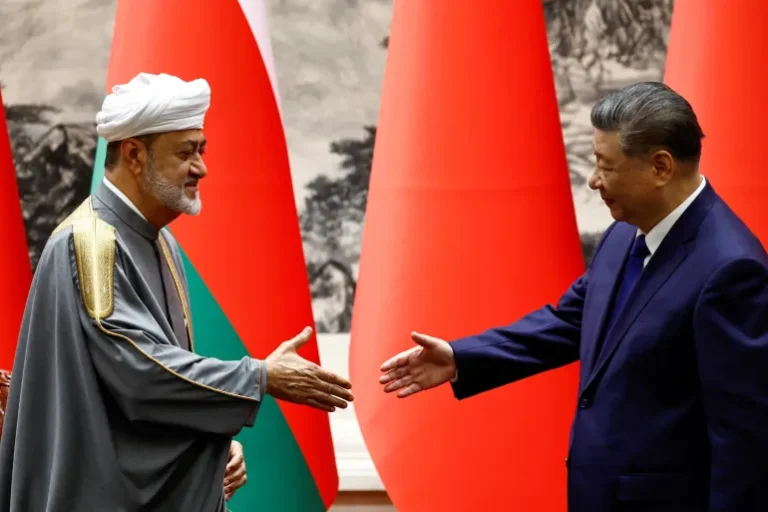
Furthermore, Trump has openly mused about the possibility of negotiating the war’s future directly with Putin and Chinese President Xi Jinping, a prospect Ukrainian Foreign Minister Andrii Sybiha warned would only serve to encourage further Russian aggression if Ukraine remains excluded from the talks. According to norwegian Prime Minister Jonas Gahr Store, Finnish President Alexander Stubb would also join the talks in Oslo, with “the aim to put diplomatic efforts on a more constructive path,” according to a statement from the prime minister’s office.
Despite the public sparring, Zelenskyy emphasized in his recent interview that Ukraine has consistently prioritized transparency in its dealings with Washington. He stated his commitment to maintaining honest, pragmatic relations with the U.S. regardless of the mounting challenges on the battlefield. The ongoing humanitarian crisis, compounded by the persistent lack of aerial defense support, underscores the urgency of his request as winter approaches and the risk to critical infrastructure intensifies.
The political discourse also touches upon recent U.S. policy shifts, including the waiving of certain sanctions on Russian energy exports. This move, intended to lower domestic gas prices, has drawn sharp criticism from Kyiv, with officials arguing that such economic leniency emboldens Moscow’s ongoing offensive. The situation remains in flux, with both sides navigating a complex web of military, diplomatic, and political pressures that continue to define the ongoing conflict. According to mr. Trump on Friday waived some sanctions against Russia, reducing penalties for its energy sales in a bid to ease rising U.S. gas prices caused by the ongoing war with Iran — a policy Zelenskyy, Could embolden Moscow to step up its four-and-a-half-year invasion of Ukraine. Which initially began in 2014, and has at times blamed Zelenskyy for the full-scale invasion ordered by Putin on Feb, mr. Trump has never publicly acknowledged that Russia started the war against its neighbor.