






Three artworks by the street artist Banksy have cost taxpayers almost £150,000 in cleaning operations and security so far, with the total bill expected to rise further. The spending was disclosed to the through Freedom of Information requests and is likely to reignite the ongoing debate over whether Banksy’s work is vandalism or valuable public art.
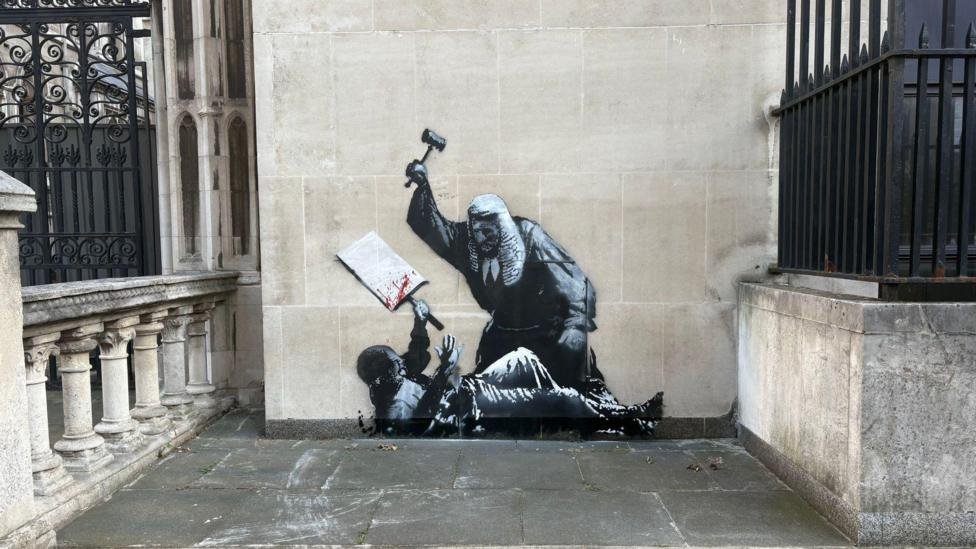
The largest single cost relates to a mural painted on the Royal Courts of Justice in September 2025. Removal efforts and security for this specific site have so far cost more than £85,000. The Ministry of Justice (MoJ) confirmed it has spent £50,000 trying to remove paint from the wall of the Grade II-listed building in Carey Street, while a further £35,300 was spent on overtime and security costs.
The mural, which appeared on 8 September 2025, depicts a judge in a wig battering a protester with his gavel. Banksy claimed the image as his own work by posting it on his website and Instagram account. The Metropolitan Police confirmed that officers received a report of criminal damage to the side of the Royal Courts of Justice on that date, noting that no arrests have been made and the investigation remains ongoing.
Upon the mural’s discovery, court staff barricaded off the area to manage the site. Security guards screened off the mural and stood guard to prevent further interference while initial cleaning efforts began. The fact that the artist chose to paint on an historic court building has deeply divided public opinion.
A HM Courts and Tribunals Service (HMCTS) spokesperson stated: “The Royal Courts of Justice is a listed building and HMCTS are obliged to maintain its original character.” Because initial attempts to scrub off the paint were not completely successful, contractors have been on site using specialized laser technology to remove the artwork.
Shadow Justice Secretary Nick Timothy criticized the expenditure, stating: “It’s outrageous that tens of thousands of pounds of taxpayers’ money – maybe more – will have to be spent cleaning up after Banksy, who seems to believe he has a right to deface public buildings with impunity. Our courts are a national symbol of justice and the rule of law. Banksy’s vandalism should be stopped and he should foot the bill for the costs he imposes on others.”
However, art critic Estelle Lovatt defended the work and pointed to the potential benefits for tourism. “Some people visit Buckingham Palace and others visit Banksy’s art,” she noted. “It can be intimidating if a mural appears on your building, in terms of the crowds, but he makes art accessible because there’s no gallery fee. His work brings people together in a way that politics can divide us. He’s like the Pied Piper or a town crier.”
Banksy, who emerged from Bristol’s graffiti scene in the 1990s and became one of the world’s most famous street artists, is known for murals and installations that often appear overnight and attract large crowds. This is not the first time he has painted on a listed building; his early works in Bristol included a mural of a man hanging from a window on a Georgian house.
Cleaning efforts at the Royal Courts of Justice are currently continuing behind scaffolding, panelling, and a locked doorway. While the debate continues, the financial impact remains a point of contention for authorities tasked with preserving the integrity of public infrastructure.