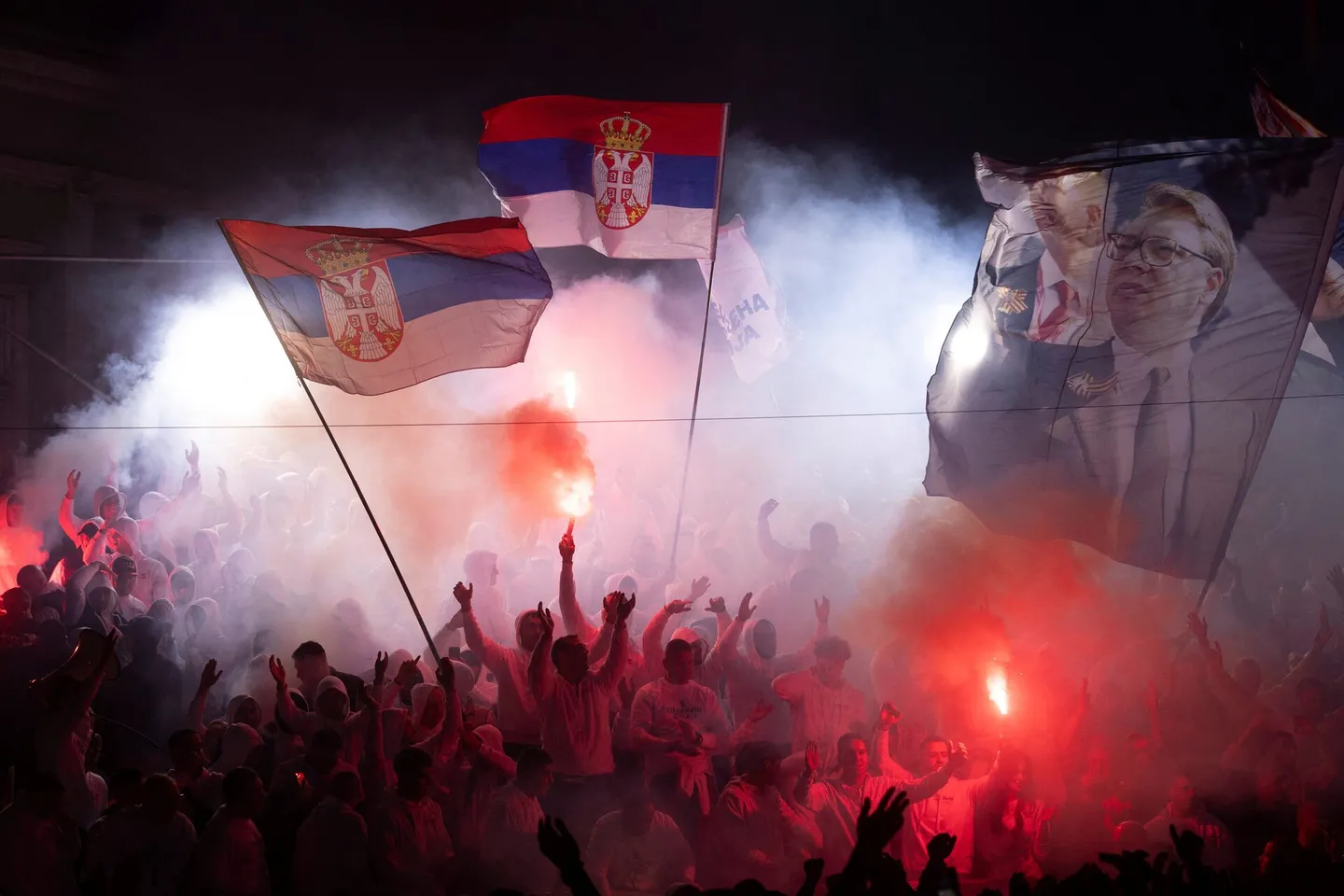










A newly formed, student-backed coalition has taken control of Serbia’s parliament, challenging the long-standing political dominance of Aleksandar Vucic. This movement, which unites pro-European advocates and Serbian nationalists, must now navigate a complex foreign policy landscape after years of the former administration’s delicate balancing act between Moscow, Beijing, and the West. “The coalition members come from diverse political and socioeconomic backgrounds. Under Vucic, Serbia pursued a four-pillar foreign policy aimed at maintaining relations with Moscow, Beijing, Brussels and Washington. This is because Serbia’s future stance on the ongoing war between Moscow and Kiev has the potential to fundamentally reshape its foreign policy—from Belgrade’s identity- and energy-based relations with Russia, to its investment-based ties with China, to the defence cooperation it seeks to build with the United States, and to its European Union accession process. It will be far from easy for people with such diverse ideologies to find common ground on policy, according to Ulger.
The so-called Student List emerged following a national tragedy on November 1, 2024, when a concrete canopy collapsed at the Novi Sad railway station, resulting in 16 deaths. The incident ignited widespread demonstrations against government corruption and systemic negligence, eventually evolving into a broad-based movement for domestic political reform.
In the national elections held on October 25, the coalition achieved a significant victory by securing 141 of the 250 available seats, capturing 53 percent of the vote. This effort was driven by a grassroots campaign featuring the slogan “One student for every village,” which helped propel voter turnout to approximately 70 percent—the highest participation rate recorded in the country since 1992.
Irfan Kaya Ulger, an international relations scholar at Kocaeli University, characterizes the Student List as an organization that finds unity primarily through its shared opposition to Vucic. He notes that the group lacks a centralized ideology or a single charismatic leader, as it consists of a disparate assembly of farmers, actors, judges, and academics who may struggle to reach consensus on sensitive international issues. Charismatic leader,” Ulger tells, they do not share a common ideology or have a unifying.
The coalition faces an immediate, difficult test regarding the ongoing conflict in Ukraine. While the previous administration balanced Western pressure to sanction Russia against domestic demands for pro-Russian policies, the new government must now reconcile its internal ideological divides. The group includes hardline nationalists alongside proponents of full European integration, creating potential friction over diplomatic strategy.
While the European Union welcomed the election results with optimism, hoping for progress on judicial and media independence, significant hurdles remain. Recognition of Kosovo’s independence remains a primary condition for EU membership, a prospect that threatens to deepen the coalition’s internal fissures. Ulger warns that if the new government commits to a pro-European path, it may face severe pushback from nationalist factions within its own ranks.
Regional stability also hinges on how the coalition addresses the interests of Serb communities in Kosovo and Bosnia and Herzegovina.
During their campaign, candidates pledged to maintain peace with neighbors, yet observers remain cautious about how the government will handle specific requests for support from those minority populations.
According to Ulger, these looming regional demands could expose significant vulnerabilities within the coalition in the coming months, marking the first major hurdle for the nation’s post-Vucic political transition.