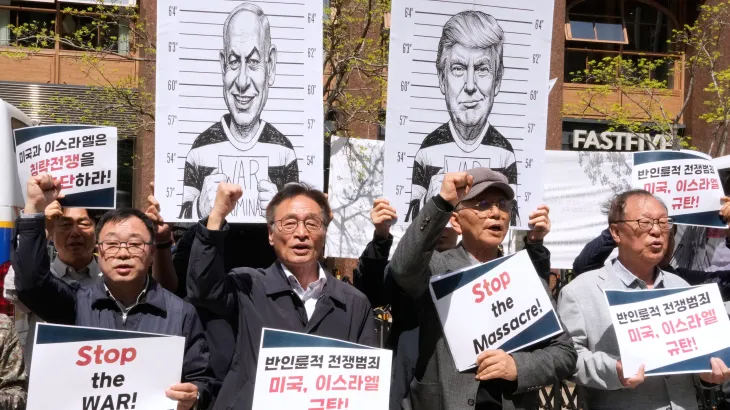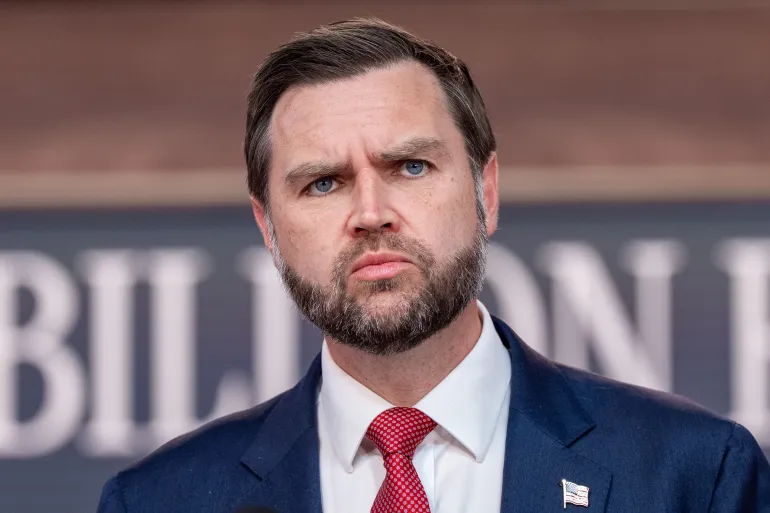










The United States government has suggested a potential shift in its approach to Iran’s nuclear program, with Vice President JD Vance calling for a meaningful reduction in uranium enrichment capacity. This development occurs as the conflict between the US, Israel, and Iran enters its eighth month, prompting debate among experts over whether Washington is pivoting from its previous demand that Tehran completely abandon enrichment efforts. Even as Vance’s wording leaves open questions about what nuclear restrictions it would accept, analysts say the comments suggest pressure on Tehran remains central to Washington’s approach. According to “Our problem with the United, Is that every time we come to the negotiating table, war is immediately imposed upon us,” he said during a meeting with Armenia’s foreign minister.
Vance emphasized in a recent interview that Iran must demonstrate its commitment to non-proliferation by adjusting its enrichment activities. He questioned the necessity of 60 percent enriched fuel for a country claiming it does not seek nuclear weapons, labeling it a fundamental threshold issue. While the International Atomic Energy Agency has confirmed Iran is enriching at 60 percent—well below the 90 percent threshold for weapons-grade material—it has found no evidence of a structured nuclear program as of May 2025. Vance told the Reuters news agency that Iran needed to demonstrate its commitment to not developing nuclear weapons by changing its enrichment programme. “If you don’t want a nuclear weapon, then why do you need 60 percent enriched fuel?” he said.
The administration’s stance remains varied, however. Secretary of State Marco Rubio maintains a hardline position, insisting that Iran cannot possess a nuclear weapon, period. Meanwhile, President Donald Trump has cautioned that the ongoing war will conclude either through the nice way or the not-so-nice way, emphasizing that the US remains committed to its stated policy goals. His comments come amid hardline rhetoric from other senior US officials. Meanwhile, Rubio, speaking to reporters in Athens, accused Iran of missing several opportunities to reach an agreement.
Tehran has expressed deep skepticism toward these overtures. Iranian President Masoud Pezeshkian labeled negotiations with the US as futile, citing recurring military actions following previous talks. He argued that the US is primarily seeking to dismantle the Islamic Republic rather than pursue genuine diplomacy. Despite this, Foreign Minister Abbas Araghchi suggested on October 4 that a deal remains possible if negotiations are rooted in justice and fairness.
The diplomatic stalemate is further complicated by disagreements over the sequence of a potential settlement. A recent Iranian proposal suggested a comprehensive roadmap: ending hostilities across all fronts, including in Lebanon; the lifting of US naval blockades and oil sanctions; the release of frozen assets; and the reopening of the Strait of Hormuz before final nuclear negotiations. Trump reportedly rejected this offer.
Simon Mabon, an international relations professor at Lancaster University, noted that while the US appears to be softening its rhetoric on enrichment, Washington may be miscalculating Iranian priorities. He suggests that Tehran is primarily focused on the removal of sanctions, the naval blockade, and asset freezes rather than just the nuclear issue. Furthermore, the uncertainty surrounding shipping in the Strait of Hormuz continues to influence US strategy.
Tensions in the waterway remain high. On Tuesday, an unknown projectile struck a Panama-flagged tanker in the strait, injuring 12 crew members, according to Indian officials. Despite claims from Secretary Rubio that Iran has lost control of the channel, maritime data from Kpler shows that Gulf oil exports, excluding Iran, reached over 81 percent of pre-war levels in September, with exports exceeding pre-war benchmarks on 14 separate days that month.
Analysts observe that the inconsistency in US messaging creates confusion. While Vance expresses interest in a deal, he admits the administration is unclear on how Iran’s internal decision-making process functions. Rubio, conversely, asserts that the Iranian economy is in total freefall under pressure from what he describes as crippling sanctions.
Looking back, the failure of the 2015 Joint Comprehensive Plan of Action—from which the US withdrew in 2018—casts a long shadow over current efforts. Mabon pointed out that a nuclear agreement was arguably reachable in early 2025 before the decision to escalate into war was finalized. Now, reaching a resolution would likely require a broader framework addressing regional conflict, the status of the Strait of Hormuz, and the lifting of economic constraints that Iran views as essential for any long-term stability.