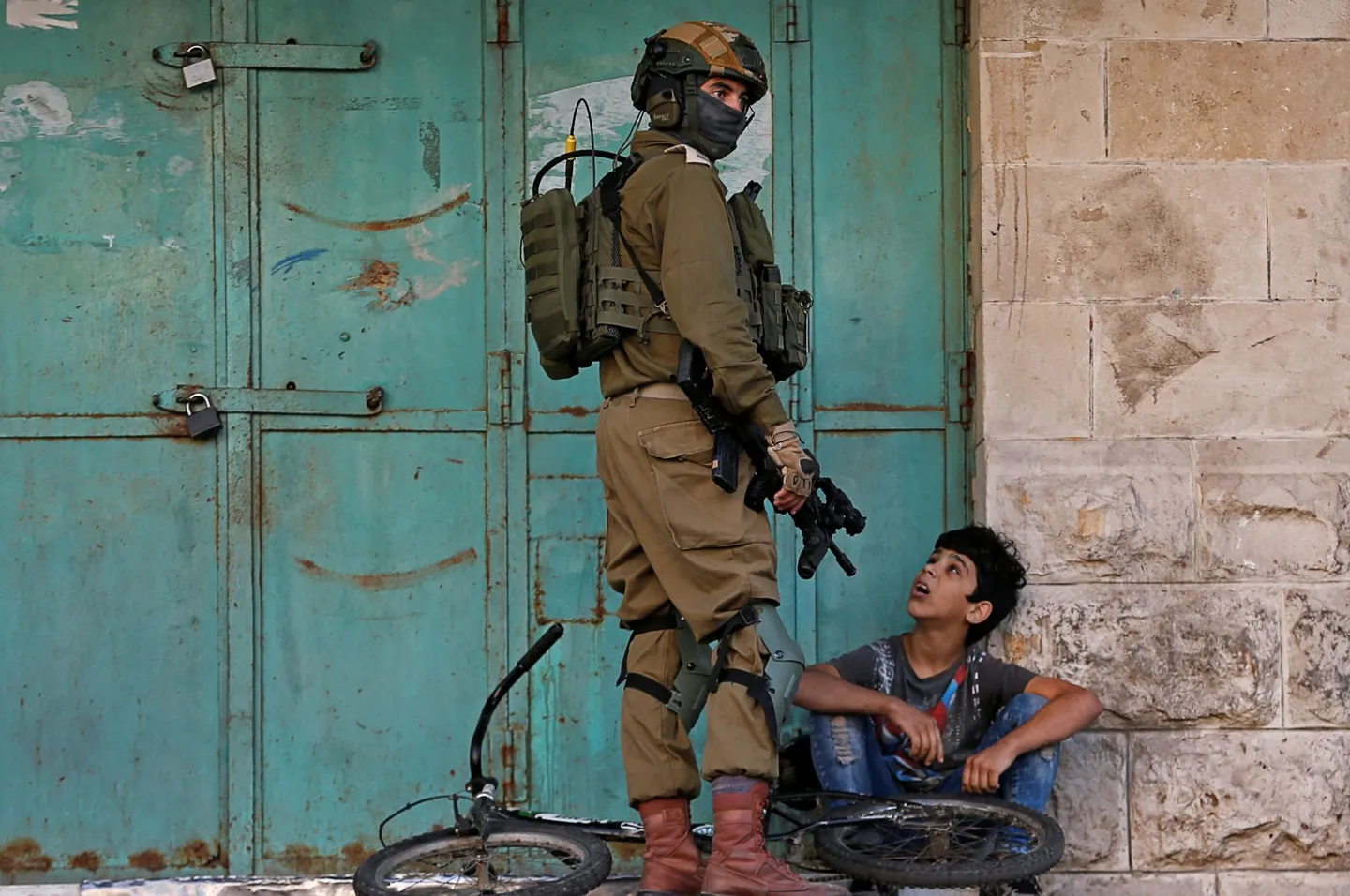










“I left one prison and entered another.” For 19-year-old Ahmad, regaining his physical freedom did not mean escaping the psychological confinement of his 15-month detention. Arrested on August 6, 2024, at the age of 16 and released on November 3, 2025, the Balata Camp resident continues to grapple with intense fear and trauma that persist in his daily life. He was arrested on August 6, 2024, at 16, and released on November 3, 2025, at 18. I’m afraid of going back to prison.
Ahmad remains deeply apprehensive about potential interactions with Israeli forces, noting that if the military enters his city, he immediately vacates the area. He describes his experiences during his imprisonment—held across Damon, Ofer, and Megiddo prisons—as being marked by beatings, stress positions, and repeated exposure to gas. Additionally, he reported suffering from scabies for four months without access to medical care.
Since October 7, the occupied West Bank has seen a sharp increase in the detention of Palestinian minors by Israeli forces. These children are processed through a military court system that has long been criticized for its handling of youth, including interrogation and detention procedures. As of early August, approximately 370 Palestinian children were held in various facilities, primarily at Megiddo and Ofer. Data from the Palestinian Centre for Prisoners’ Advocacy indicates that 276 children were detained in the first half of 2026 alone.
The ordeal often extends well beyond the release date, as children struggle to reintegrate into their education, social circles, and routines. For 13-year-old Omar and 14-year-old Faisal, a five-day detention at Megiddo Prison proved sufficient to disrupt their lives significantly. Omar, who had been balancing school with work at a local shop, found himself unable to return to either. He reports that his employer stopped hiring him due to fears of potential military raids, and his social life has deteriorated as friends have distanced themselves from him.
Omar also carries a persistent physical injury from an incident involving the butt of a rifle prior to his imprisonment. “The impact affected my head, and ever since then, I have experienced pain whenever I rest my head on a pillow,” he explained. His fear of re-arrest keeps him largely confined to his home, avoiding the neighborhood out of anxiety regarding a potential encounter with soldiers. Of the hardships I experienced in there,” he said, i’m afraid of what is inside. And eventually they started avoiding me,” Omar said, i had conflicts with many of them.
Faisal faces a similar internal struggle, particularly during the night when memories of his detention resurface. He notes that the humiliation and mistreatment he experienced while in custody make it difficult to maintain normal relationships. “The hardest part has been trying to return to my normal life and reconnect with my friends and people around me,” he said.
The backdrop for these experiences is a complex legal environment where Palestinian children can be held under administrative detention—a process that allows for renewable imprisonment without charge or trial based on undisclosed evidence. By March 2026, the Israel Prison Service reported that 191 Palestinian minors were held under these conditions, marking a peak since monitoring began in 2008. These figures remain incomplete as they exclude children held in separate military interrogation centers and those detained in Gaza.
While international standards, such as Article 37 of the Convention on the Rights of the Child, mandate that detention should be a last resort, a UNICEF review has characterized the treatment of Palestinian minors within the Israeli military system as widespread, systematic, and institutionalized. Under current military law, the age of criminal responsibility is 12, creating a stark disparity between Palestinian minors and Israeli settler children in the region, who are subject to civilian juvenile law.
The return home is often marked by an initial period of disorientation. Ahmad recalled that it took four days to feel grounded upon his release, as he struggled to differentiate between reality and his time behind bars. Even mundane tasks, such as eating, felt foreign after months of severe food shortages. His mental health recovery remains an ongoing challenge, as he actively avoids discussions about the army or other prisoners to maintain a sense of stability, often responding to inquiries with, “I don’t know.” But the numbers say little about what happens after the prison gates open.