








Where does a novel truly begin?
For many authors, it starts by spending years gathering loose threads, waiting for the moment when the collective weight of those experiences suggests that the cloth will finally hold, allowing the author to weave them into a coherent narrative.
For Douglas Stuart, the internalisation of his novel John of John began as far back as 1994, the year he entered college and made the decision to become a weaver himself. The year I went to college and chose to become a weaver myself, i suppose I began internalising John of John back in 1994.
Yet, the specific thread for this narrative did not fully manifest until 2019, during the anxious waiting period before the publication of Shuggie Bain.
Stuart felt compelled to travel to the Western Isles, a location he had longed to visit his entire life, with a nascent idea to set a story there about an adult son called home to a crofting community to care for his difficult father. There is a blind man in Mallorca who could tell this story better than I could.
The Western Isles and the Search for Meaning
Stuart’s journey to the Western Isles was driven by a desire to see the Harris tweed weavers and to pivot away from the intense focus on sectarian violence that dominated his earlier work, Young Mungo. While he admits to harbouring a romanticised view of the islands, he quickly discovered they were intensely practical, challenging environments for earning a living. Starting in Vatersay and moving through the archipelago to the Isle of Harris, he eventually sat in a local woman’s kitchen, where they discussed the surprising number of single folk residing in the area. When he asked why, she noted that many had likely just missed their moment. This chance insight, coupled with the rugged landscape, helped crystalise his creative direction. But I’d also just finished writing Young Mungo, a novel about sectarian violence where young Glaswegians seemed intent on destroying beauty, and so without being able to articulate it, I had set out seeking a spirit of gentleness, to write about creativity within working-class lives – about beauty, and colour, and nature, and music, i was keen to see the Harris tweed weavers. People have a romantic notion of the islands – and perhaps I had a little too. They are very real, very practical places, where it can be difficult to earn a living and raise a family, where managing your relationship within a community is of the utmost importance, although they are stunning. Talking about her involvement in the local church, we were sitting at her kitchen table. I mentioned that I’d been struck by the number of spinsters and bachelors I’d met on my trip. It seemed unusual given that crofts seemed to benefit from larger families. And then I ventured that it would be harder still if some of these older people had been gay, i agreed that it must be tricky to find love in a settlement with so few people. And off I went, i told her I knew what she meant. We live it, breathe it, it is everywhere among us, and while people will talk to like-minded people (sometimes) there is much that people will not say to each other about our current situation. We shop for groceries, we take walks with friends and laugh, we go to our quilting clubs, and all around us terrible things are happening, and most of us are not talking about it, we go to work. The protagonist, how I found an old photo in an obituary and saw a splendid ordinary face … This is all true, and it gave me the visuals I needed for him, but the book itself came forth because of what is happening in our country, i have spoken publicly about my inspiration for Artie Dam. And in fact, has happened, i made Artie a high school history teacher because he would have had – perhaps – a deeper understanding of what was going to happen. A story that shook my young gay self down to the bone and sent me hurling into the closet with the door slammed shut, but until three years ago I thought this man the stuff of urban legend. Men in business and a very famous musician, that among the mob was law enforcement. We know that you pay a price for standing on fact. The gay men were getting safe sex advice.
Encounters in the United States
Elizabeth Strout’s inspiration for The Things We Never Say arrived through a quiet, unsettling encounter in a Maine drugstore. A store clerk, speaking in a hushed tone when no one else was present, whispered, “I just want it over!” as she cupped her hands to her mouth to mention the current election. Strout found this to be a profound reflection of the collective distress and democratic decline facing the United States. This novel functions as a tribute to those living through such fractured times, juxtaposing the characters’ ordinary daily lives—working, shopping, and existing—against the backdrop of a changing political landscape.
Rumours and Truth in Kingston
Marlon James draws his inspiration from stories that refuse to leave him, particularly those that leave gaps and holes which prevent the tale from fully adding up. He recounts a long-circulating rumour from the early 1990s in Kingston, where a mob allegedly descended upon a group of gay men gathered at an AIDS support organisation, inflicting brutal violence. Despite the absence of police reports, news coverage, or written records, James remains convinced of the event’s reality. He views such rumours as essentially true within the Jamaican context, noting that speaking the truth to power often incurs a heavy price, making one a target. The kind of news that is untraceable, the rumour speaker knows that he has the safety of knowing that his truth will never come back to expose or convict him, because it is the kind of news that fades. One of the mob was Jamaica’s biggest reggae singer.
Staging and Replica
Other authors found their paths through curiosity about artificiality and staging. Years before his current projects, James was visiting the Royal Magdalene Almshouses in Glastonbury when he felt moved by a dressed bedroom, sparking an interest in the concept of staging and replicas. This interest lingered, echoed by a memory thirty years prior of squeezing a plastic grape in a sofa showroom. He began working on a story about a lonely woman who fills her home with replica food to conjure spirits, aiming to reach a point of cohabitation with the fabricated scenes. This process is guided by the mantra of Iris Murdoch: “One should sit quietly and let the thing invent itself.”
Psychological Footnotes and Chronic Pain
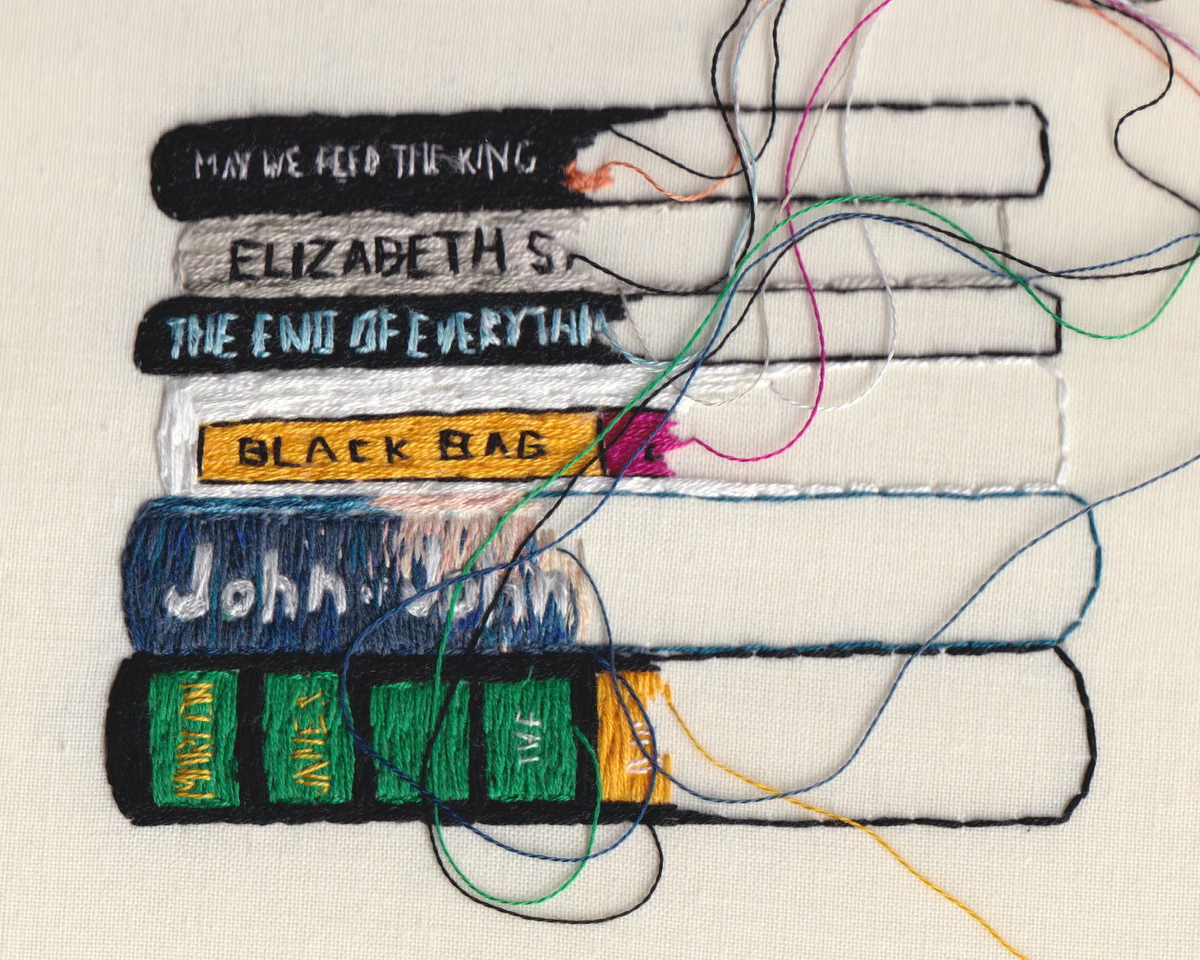
The spark for other works came from more clinical or intellectual discoveries. During March 2021, while suffering from chronic neck and back pain exacerbated by hours of teaching on Zoom, one author found themselves searching through social psychology articles late at night. With twelve browser tabs open, they discovered a footnote describing the 1967 University of Oregon “black bag experiment.” This brief precis became a symbol of the 21st-century artist’s status and the weariness of simply existing as a person. Every one of these finalists emphasises that the final narrative is the result of years of observation, a commitment to truth, and the patience to let the story emerge from the silence. At least I would have seen more of my own country, i reasoned that even if a novel didn’t emerge from the trip.