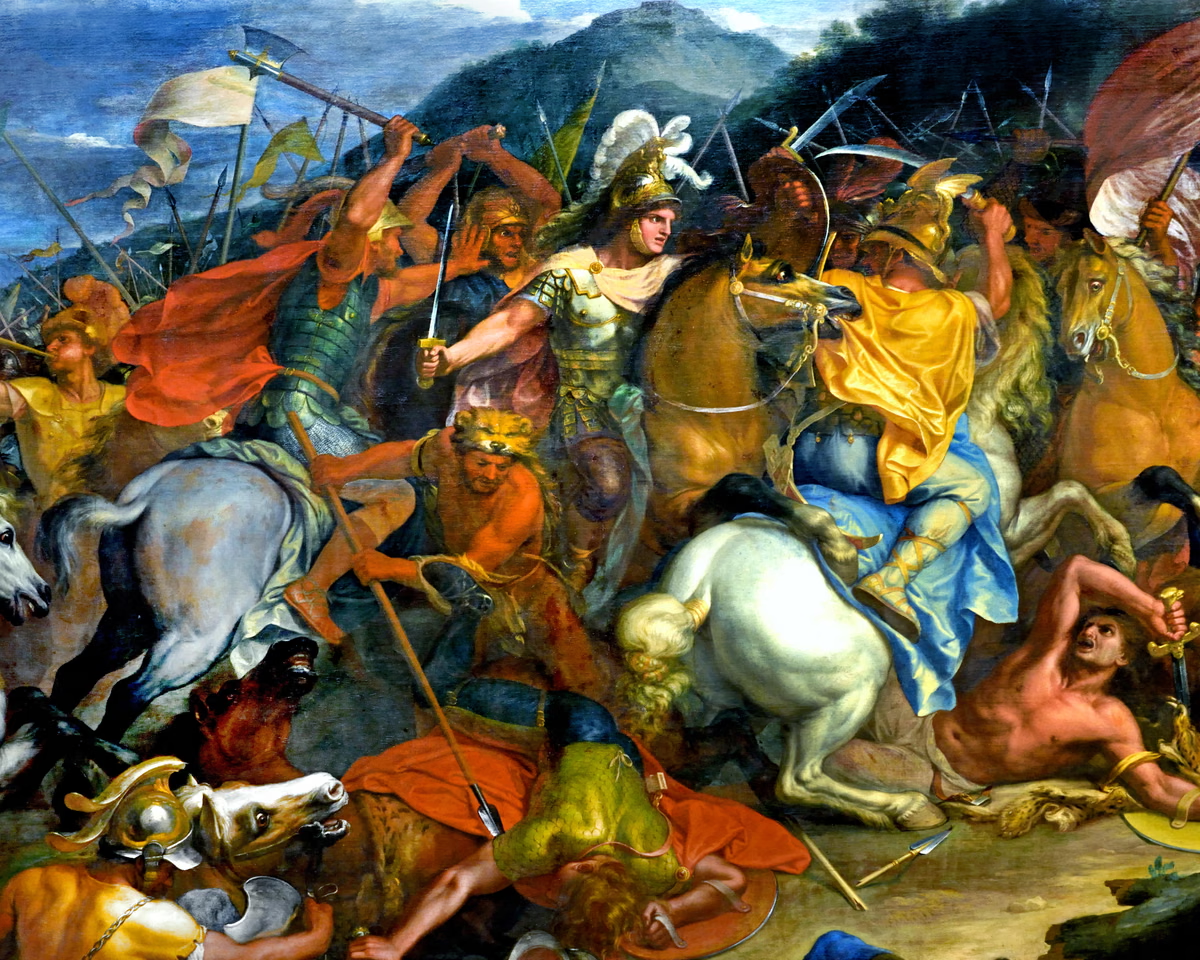








Edmund Richardson has been awarded the prestigious £50,000 Baillie Gifford prize for his biographyAlexander: God, King, Man. The announcement comes at a poignant time for political and global discourse, with the author reflecting on the historical parallels presented in his work. Describing the project as a “beautiful monster” to create, Richardson spent a decade retracing the footsteps of the Macedonian ruler from the British Museum’s archives to the remote Himalayan foothills and Egyptian catacombs. H e was the most powerful man in the world but he was brought down by one battle too many after a decade at the top. According to the story of Alexander the Great might be more than 2,000 years old, but it seems timely that a new biography of the ancient ruler won the Baillie Gifford prize for nonfiction just as President Trump took a battering in the US midterms. “This is a moment,”, Its author Edmund Richardson, “where people are finding that there are limits to what unlimited wealth and power can do, and that humanity catches up with. Alexander wants to transform the world – and he leaves it in ruins.”. The view of the City of London skyline from the floor to ceiling windows a reminder of 21st-century power and economics, we are having coffee at the offices of the PR company for the Baillie Gifford prize. It would, we agree, have made the perfect backdrop for an interview with Patrick Radden Keefe, a previous winner of the £50,000 Baillie Gifford prize and the favourite this year for London Falling, a forensic investigation into the death of a teenager who falls from one of the city’s luxury skyscrapers. “I would never, ever have imagined this,” Richardson says, almost in a whisper. “I am fully expecting someone to. Tap me on the shoulder and say, ‘I’m so sorry, there’s been a terrible mistake, Mr Radden Keefe is waiting. There have been countless takes on Alexander’s story: the boy from the Macedon hills, who became king aged 20 in 336BC after his father was assassinated; marched his army into the hea, from Plutarch to Horrible Histories. But his travels back in time were interrupted by modern-day unrest. “There was a short encounter with a barricade of burning tyres,” he says, referring to a protest he stumbled upon in Cairo, while his visit to Afghanist. Exhaustively researched Alexander: God, King, Man is another triumph for the classics in a year when Christopher Nolan’s The Odyssey stormed the box office (Alexander liked to sleep with a copy of Homer under his pillow, apparently), richardson’s exhilarating. Richardson doesn’t just make the ruler of the ancient Greek kingdom of Macedon flesh and blood for a new generation. Even by ancient standards, with his empire unravelling before his death, but for Richardson its true legacy is in the “ripple effects” that we still feel today. “It’s in the ways that Babylonian science turns up in Greece, that Greek art turns up on the borders of the Indus, that Egyptian scholarship finds its way into how we understand Homer, his expansionist campaigns might have been brutal. It’s in the world becoming far more connected. There have been countless takes on Alexander’s story: the boy from the Macedon hills, who became king aged 20 in 336BC after his father was assassinated; marched his army into the heart of the Persian empire; had conquered much of the known world by the time he was 30, killing 1% of the population along the way; and who died “brokenhearted” in Babylon aged 32, from Plutarch to Horrible Histories. “Terrible things tend to happen to people who take up papyrus or laptop to write the Alexander story,” he says. He first had a melanoma as a teenager and “they’ve been back a couple of times since”. He was horrified. “The idea of coming up against Alexander, and all of these thousands of versions of his story written by some of the people I admire the most in the world – absolute terror!”, but when his editor suggested he write about Alexander himself.
Richardson, a professor of classics, is recognized for a narrative style that critics have labeled “part novel, part history.” He posits that Alexander remains a figure who fundamentally reshaped human reality, asserting that his influence is still felt through the complex “ripple effects” of his ancient campaigns, which blended scientific exchange with brutal conquest. He views Alexander as an enigma defined by extreme contradictions—a leader capable of immense cruelty yet also profound kindness and devotion. It is hard to imagine anyone less like history’s favourite mob boss than this softly spoken professor of classics. As a historian, vividly, i felt my own fallibility as a writer.
The biography marks a departure from Richardson’s previous niche academic pursuits, which focused on obscure historical figures.
His earlier acclaimed work Alexandria: The Quest for the Lost City centered on the 19th-century archaeologist Charles Masson. Computer simulation and new discoveries gave him access to evidence and contemporary sources unavailable to earlier historians.
Reflecting on his shift to such a globally recognized subject, Richardson admitted that he initially feared the project might be all-consuming, noting the superstition that chroniclers of Alexander often meet with misfortune—a belief underscored by the ancient fate of Callisthenes, Aristotle’s great nephew, who was crucified.
The writing process was underscored by personal hardship, as Richardson battled a cancer diagnosis shortly after beginning the book. During a period of hospitalization last year, triggered by extreme exhaustion, he found himself reflecting on the fragility of his work while sharing a ward with police-guarded prisoners. He credits his recovery and professional success to a deep-seated obsession with historical discovery, supported by his fiancee, journalist Yepoka Yeebo, whom he credits for his improved outlook on life and his ability to see the world’s underlying wonder. Purple scarf and matching socks, with a high forehead and corona of auburn curls, Richardson himself might have stepped out of an earlier age, wearing a purple velvet jacket. He was barely 40. “I was writing this book not knowing if I would be around when it was out in the world,” he says, at this point.
Raised in Bristol by academic parents, Richardson’s journey into the ancient world began with a childhood fascination for storytelling and a formative encounter with Mary Renault’s 1969 fictional trilogy about the king. His academic career led him from Cambridge, where he studied under Mary Beard, to Princeton, eventually culminating in this definitive study. Now 44, he expresses genuine surprise at the public interest in his research, stating that his current success feels like moving from a long period of struggle into the light.
Looking ahead, Richardson has already turned his attention to his next project: a biography of British Egyptologist Flinders Petrie. He intends to return to the practice of uncovering the lives of those largely forgotten by history, a task he describes as his “happy place.” As he continues to engage with media and public discussions regarding his award-winning biography, he maintains a sense of humility, viewing his role as an academic who is privileged to have an audience interested in the ghosts and fragments of the past.