





Emergency responders are conducting urgent search and rescue operations along the Nepal-China border following a devastating flash flood and mudslide event that occurred on Wednesday. The disaster, which authorities believe was triggered by a glacial collapse, has left more than 1,000 people missing across the region.
Nepal Police have confirmed at least 353 fatalities, with 826 individuals still unaccounted for. According to the National Emergency Operation Center, the missing in Nepal include 113 tourists, 161 local residents, and 85 security personnel from the army and police forces. Simultaneously, Chinese state broadcaster CCTV reported that 558 people are missing in Tibet, including 260 foreign nationals, with at least three deaths confirmed in that area.
Hikmat Singh Ayer, CEO and senior director of the Nepal Tourism Board, confirmed that at least 65 U.S. citizens are among the missing foreign nationals. In a subsequent update, the board noted that 27 foreign nationals have been successfully rescued from the Rasuwa district, including two American citizens—a man and a woman in their 50s.
The U.S. government has mobilized to assist in the response. Secretary of State Marco Rubio stated that the department is ready to provide humanitarian aid, while the U.S. Embassy in Nepal has expressed its condolences to the families of the victims. The State Department is actively monitoring the situation and has dispatched an adviser to the region, alongside a $500,000 grant directed to Catholic Relief Services to support relief efforts.
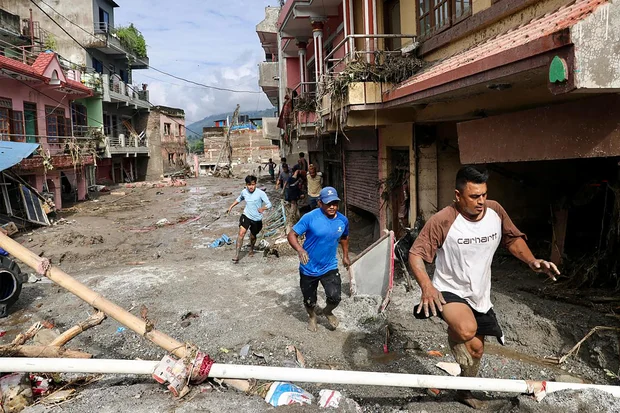
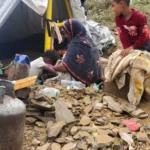
The scale of the destruction is immense, with torrents of water and mud burying roads, bridges, power plants, and residential buildings. Local resident Shoyam Rajbhandari described the sudden onset of the disaster, noting that the market in Dhunge bazaar was overwhelmed by floodwaters within half an hour of the initial surge. Drone footage from the area shows entire sections of infrastructure submerged in sediment resembling wet cement.
The Nepalese army has deployed helicopters to evacuate those trapped in the disaster zone, successfully airlifting more than 100 people on Thursday. Among those rescued were at least eight foreign nationals and several workers trapped at the Trishuli hydropower project. Search teams have also recovered bodies as far as 62 miles downstream in the Chitwan district, while the injured are being transported to Kathmandu for specialized medical care.
In Tibet, the situation remains precarious near the Gyirong Port, where mudslides have left deposits exceeding five feet in depth, with some sections reaching six feet. Chinese authorities are contending with a newly formed barrier lake that complicates rescue operations, necessitating the use of large military transport aircraft to deliver supplies.
While initial reports suggested a 4.4 magnitude earthquake occurred near the border on Wednesday, the U.S. Geological Survey later clarified that the seismic activity was likely linked to the glacial collapse. Experts from the International Centre for Integrated Mountain Development confirmed that an ice-rock avalanche from a glacier on the Nepal side blocked the Lhende Khola river, causing an exceptional surge in water levels.
This marks the second time the Lhende Khola river system has flooded in 14 months, highlighting the increasing instability of the Himalayan ice system. Researchers in Kathmandu have observed that glaciers in the Hindu Kush Himalaya region are melting at an accelerated rate, with ice loss doubling since 2000. The disaster has drawn international attention, with the Dalai Lama expressing his prayers for those affected in both Nepal and Tibet. The report also notes that the head of Nepal’s tourism board said Thursday that 65 U.S. The report also notes that almost doubling the number of U.S, zargar on Thursday that at least 65 Americans were among the missing foreign nationals in the small Himalayan nation. The report also notes that solidarity Wednesday with the Nepali people, saying in a social media post that the department “stands ready to support the government of Nepal with needed humanitarian assistance. The report also notes that embassy in Nepal expressed “heartfelt condolences to the families and loved ones of those who lost their lives in the devastating floods” and said it was “working to account for U.S. The report also notes that nationals in the region who were able to contact their families, hotels, guides or trekking or tour companies as soon as possible however they could, but it noted that communications were still severely disrupted. The report also notes that tearing down bridges and dams and sweeping away buildings, videos broadcast by regional news outlets and posted on social media show violent torrents of water surging through valleys and mountain passes.