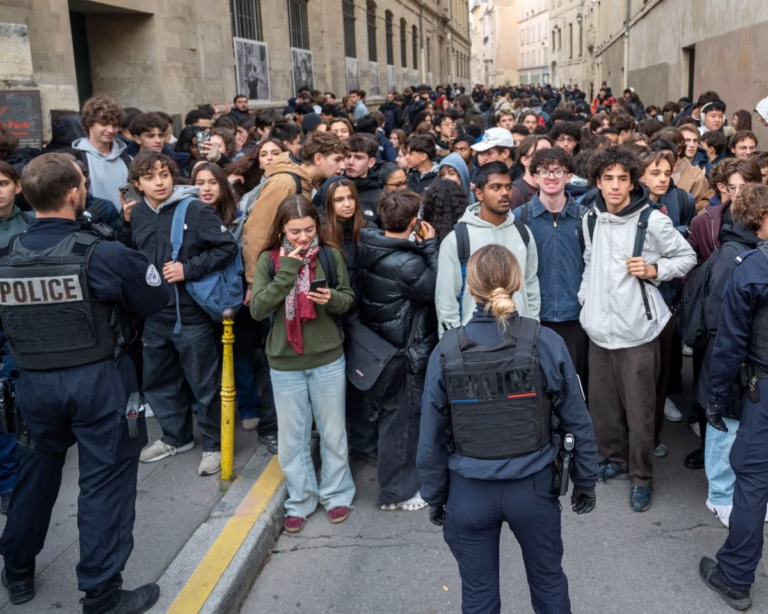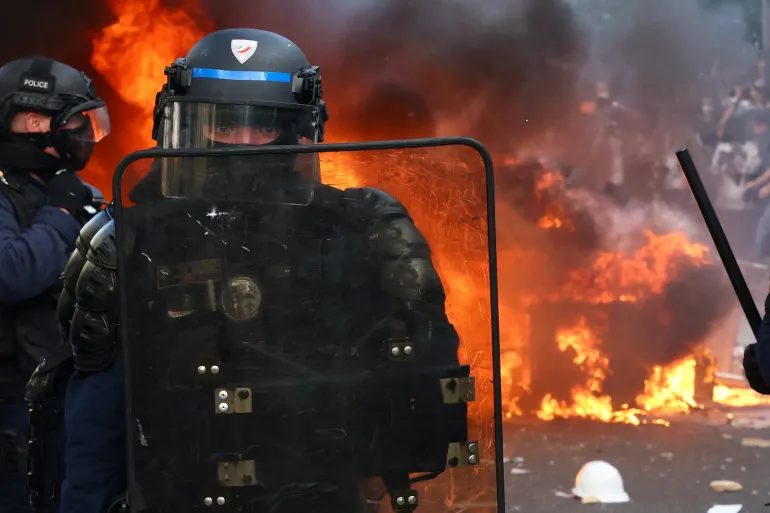










French Prime Minister Sebastien Lecornu has ordered a nationwide suspension of high school classes for the remainder of the week. The move comes as massive, mounting protests demanding education reform have sparked violent clashes between demonstrators and riot police.
Official estimates suggest roughly 250,000 protesters participated in Tuesday’s rallies, though organizers placed the turnout significantly higher, closer to half a million. Authorities report that nearly 2,000 high schools have been forced to close or blockaded by students, according to the High School Students Union. According to the government, Approximately 200 to 250 protesters had thrown objects at the police.
Lecornu stated the temporary closure is intended to create space for pupils, teachers, and headmasters to engage in internal democracy to address ongoing grievances regarding school conditions. Addressing the violence, the Prime Minister insisted that burning down facilities does not resolve the state of school infrastructure. The government has directed ministers to submit proposals by the end of October to address student demands, which include replacing absent instructors, extending lunch periods, and adjusting the length of the school day.
Protests began two weeks ago in Paris’s disadvantaged suburbs before spreading rapidly nationwide. In cities including Strasbourg, Lyon, and Rennes, demonstrations devolved into urban violence, with participants hurling projectiles and igniting fires in the streets. Police responded by deploying tear gas. On Monday in northern France, a 15-year-old student suffered the loss of a hand and part of an arm after allegedly picking up a police grenade during a clash, according to the newspaper La Voix du Nord. Students in Marseille, Nantes and Lyon began demonstrations on Tuesday morning, with demonstrators holding aloft signs which read “they don’t really care about us” and “survive or study”. According to natacha Butler, who was at a march in Paris,, More groups are joining the demonstrations.
The demonstrations have garnered support from diverse sectors, with farmers, energy workers, and teachers’ unions planning to join the protests. Parents and teachers have also attended, citing concerns over the risk posed by potential agitators infiltrating the student movement and fears regarding the use of excessive police force. Hugo Vetzel, a recent graduate in Strasbourg, highlighted a perceived disconnect between the political elite and students, noting that the resort to violence signals a breakdown in democratic engagement. According to rosie Birchard was at a demonstration in Lille and, Students from neighbouring Belgium came to show support.
Official figures from the Ministry of Interior indicate that 6,100 individuals have been arrested since the unrest began, with the majority under the age of 18. The Ministry of Justice confirmed that over 1,800 people will face prosecution, including 1,483 minors. Lecornu reported that at least 215 teenagers have been wounded in the confrontations, alongside 715 police officers.
The economic feasibility of the students’ demands remains a point of contention. Observers point to France’s significant national debt and existing budget crisis, questioning where the funding for such large-scale public service improvements would originate.
In the United States, President Donald Trump commented on the situation via his Truth Social platform. He attributed the unrest to uncontrolled mass migration, claiming the protests were not about education but rather an attempt by Islam to influence the nation—a statement made without supporting evidence. But there are doubts about how quickly the government can respond. In a post on his social media platform Truth Social, Trump said: “What’s happening in France is nothing less than out of control mass migration. This is about Islam wanting to take over a once great Country!”, this isn’t about schools.