









Canada is increasingly looking toward the European Union to forge stronger economic, political, and defense ties. This pivot follows recurring rhetoric from the Trump administration regarding Canada, including repeated claims that the nation should be considered the 51st American state. These comments have stirred a resurgence in Canadian nationalism and deepened concerns over American political ambitions, prompting Prime Minister Mark Carney to search for new international partners.
Historically, Canadians have resisted integration with their southern neighbor, dating back to their refusal to join the American colonies during their 18th-century revolt against British rule. Resistance continued during the War of 1812, when Canadians fended off an American invasion. While current tensions remain diplomatic, these historical frictions have contributed to a shift in Ottawa’s strategic outlook.
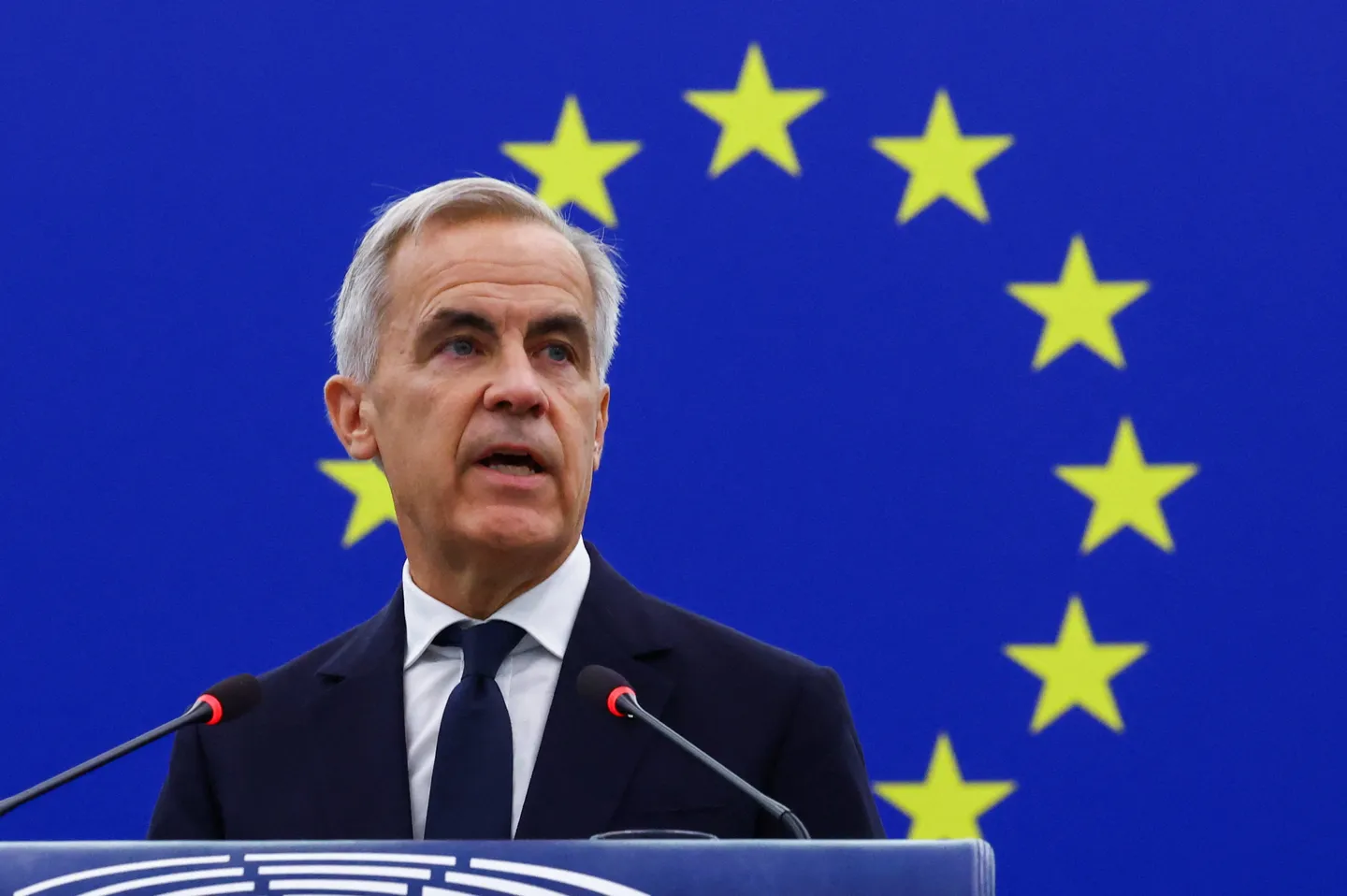
Prime Minister Carney has been careful to frame his diplomatic outreach as a move toward resilience rather than the creation of a rival superpower bloc. In a recent address to EU lawmakers, he stated that the goal is to ensure no foreign actor can control Canada’s open markets, threaten its territorial integrity, or undermine its democratic institutions and rule of law. He emphasized that Europe and Canada are stronger together, suggesting that a formalized alliance could serve as a model for other global democracies.
The ambition of this partnership appears to extend beyond trade. During his visit to the European Parliament, Carney noted that defense cooperation is high on the agenda. This alignment gained significant momentum when European Commission President Ursula von der Leyen proposed the unprecedented possibility of Canada becoming the EU’s first associate member. While the legal framework for such status remains undefined, the proposal indicates a strong political willingness in Brussels to deepen institutional ties.
The Trump administration has responded with clear displeasure toward these maneuvers. Officials in Washington warned both the Canadian government and the EU against taking any hostile actions, with threats of heavy tariffs on Europe should the U.S. determine the intentions behind this partnership are malicious. Despite these warnings, Canada has continued its outreach, including a diplomatic shift toward France, a move seen as a nod to Canada’s significant French-speaking population.
Geopolitical friction is also surfacing in the Arctic. Canada and Greenland, an autonomous region of Denmark, share a land border on the uninhabited Hans Island, a settlement reached in 2022. The region has become a focus for international security, as Greenland sits between North America and Europe, providing a strategic vantage point to monitor Russian military activity. While Denmark and Greenland have recently moved to ease tensions with Washington by allowing increased U.S. military presence, including the establishment of two radar stations agreed upon in September 2026, concerns persist in Ottawa regarding long-term American control of the Arctic.
Carney’s diplomatic strategy involves building strong personal rapport with European leaders. He maintains close working relationships with France’s Emmanuel Macron, German Chancellor Friedrich Merz, and Finnish President Alexander Stubb. Furthermore, Canada’s traditional relationship with the United Kingdom remains relevant, particularly under Prime Minister Andy Burnham, who took office in July 2026. The Trump administration’s reported criticism of Burnham, whom they labeled an extremely liberal mayor, further highlights the widening gap between the current U.S. leadership and several Western allies.
Beyond immediate political friction, the push for a Canada-EU partnership is driven by a shared desire to diversify supply chains and reduce reliance on both the U.S. and China. For Canada, an energy-rich nation that exports approximately two-thirds of its goods to the U.S., the shift is an economic necessity. Potential initiatives include exporting Canadian natural gas to Europe as an alternative to Russian energy supplies.
The groundwork for these ties was established long before the current administration took office. Formal negotiations for a trade agreement began in 2009, following a joint study launched in 2007. Although that agreement has been provisionally applied since September 2017, the scope of current discussions suggests a broader, more integrated future. As one analyst noted, the erosion of the U.S. as a reliable partner has accelerated this rapprochement, compelling both Canada and the EU to secure their futures through mutual cooperation. The report also notes that from fashion trends to popular culture, partly because of their proximity and the world’s longest international border, canada and the US share many cultural similarities. The report also notes that when the American colonies revolted against British rule, Canadians refused to join them as a 14th rebellious colony, more than 250 years ago. The report also notes that since then, Canada and the US have largely maintained peaceful relations. The report also notes that “We do not seek power to dominate others. The report also notes that we’ll put very heavy tariffs on Europe, which is a possibility, if it’s a bad intention. The report also notes that home to about 55,000 people, could be both a geographic bridge between Canada and Europe and a strategic point of convergence, especially amid the US administration’s ambitions for the world’s largest island, recent talks between European leaders and Canadian officials suggest that Greenland. The report also notes that reuters reported that Washington, Copenhagen and Greenland are set to sign an agreement on September 22, allowing the US to establish two additional military sites on the island. The report also notes that “Undoubtedly, President Trump has played a major role in accelerating this rapprochement.