








Yemen has effectively returned to a state of full-scale war, according to Hans Grundberg, the United Nations Special Envoy to the country. Speaking before the UN Security Council on Friday, Grundberg highlighted that the nation’s fragile stability has collapsed, with combat operations escalating significantly across multiple fronts. Amid the US-Iran war, Yemen’s worst fighting in years threatens to destabilise the region further, experts say.
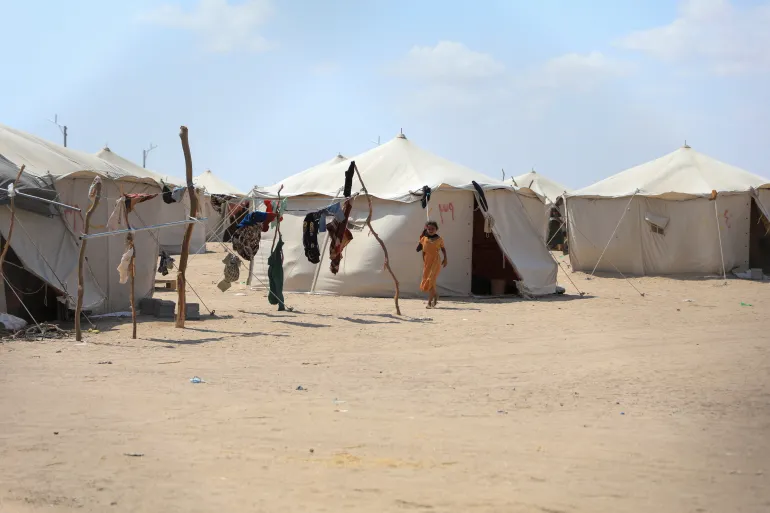
The current cycle of violence has taken a heavy toll on non-combatants. The United Nations reports that at least 46 civilians have been killed and over 130 injured since August, with many of the casualties being children. Furthermore, the International Organization for Migration notes that more than 200,000 individuals have been displaced as the intensity of the conflict continues to climb. More than 200,000 people have been displaced since fighting escalated in September, the UN’s migration agency (IOM), said.
The shift toward open conflict follows a period of relative calm initiated by a 2022 ceasefire that had temporarily halted the civil war that began in 2014. Tensions flared in September when the Houthis—an armed group known as Ansar Allah that has held the capital of Sanaa for over a decade—moved to seize control of additional territory along the western coast. Specifically, the group secured positions along the Bab al-Mandeb, a critical maritime chokepoint at the mouth of the Red Sea. A vital trading chokepoint that has become an important alternative to the Strait of Hormuz, where Iranian attacks have all but halted shipping, government forces are particularly looking to retake the important Bab al-Mandeb strait at the entrance to the Red Sea. Fierce battles across several fronts have prompted concerns from rights groups that Yemen has essentially returned to civil war after the relative quiet brought by a 2022 ceasefire that followed a lengthy civil war which first erupted in 2014. The Bab al-Mandeb strait emerged as yet another front in the US-Israel war on Iran when the Houthis declared a blockade on ships linked to Saudi Arabia in July. The Houthis, who have controlled Sanaa and parts of northwestern Yemen since 2014, seized the area in September, effectively taking control of the strait, although both sides currently claim control of the shipping lanes.
In response to these developments, the Yemeni government’s Presidential Leadership Council, led by Rashad al-Alimi, launched a major military offensive on October 4 dubbed Operation Dawn of Yemen. The declared objective of this campaign is to reclaim all territory remaining under Houthi control, including Sanaa.
Government military officials reported that in a 24-hour window, they executed more than 2,750 precision strikes. Colonel Majid al-Nuzaili, a spokesperson for the armed forces, claimed that these operations resulted in the neutralisation of over 1,400 Houthi fighters and successfully targeted high-value military assets located deep within rebel-held zones. Ground forces have reportedly breached Houthi defenses to recapture strategically significant positions.
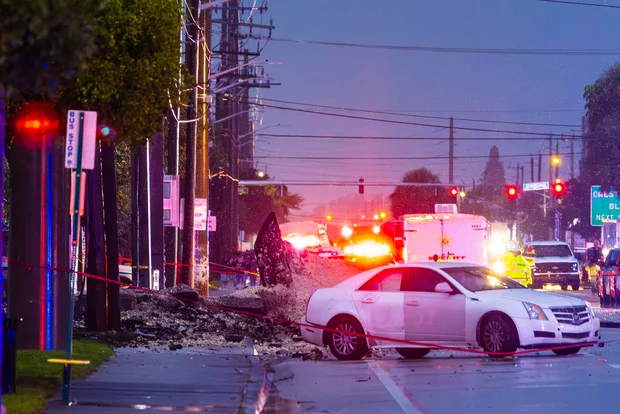
The conflict has expanded into international airspace as well. Saudi aviation authorities stated that on Friday, three Saudi citizens—including a pilot—were killed in Houthi strikes targeting Riyadh International Airport, marking the first such fatalities within the kingdom since hostilities reignited. Consequently, the Saudi-led coalition has ramped up its own aerial response, targeting military sites, launch pads, and radar systems in areas controlled by the Houthis.
The Houthis contend that their recent military actions are a retaliatory measure against Saudi-imposed blockades. However, international observers and US officials argue that the group is acting as an instrument of Tehran to undermine regional stability. US Ambassador Jeff Bartos voiced Washington’s grave concern regarding the escalation, particularly the targeting of civilian infrastructure. Critics of the Houthis warn that the ongoing campaign risks triggering a humanitarian catastrophe similar to the crisis that crippled the country between 2015 and 2022. According to while the Houthis, Was in retaliation for ongoing Saudi blockades on Yemen, analysts viewed the move as calculated to provide more leverage for Iran amid on-and-off negotiations with the US – a close ally of Riyadh.
As both sides vie for control of strategic hubs like the cities of Mocha and Taiz, the conflict remains deadlocked. While the Houthis have successfully utilized sophisticated weaponry, including ballistic missiles and drones, the government offensive continues to push forward, leaving the future of the nation and its trade routes increasingly uncertain.