




In a significant escalation of tensions between Washington and the Hague, US Secretary of State Marco Rubio announced a new round of sanctions aimed directly at the International Criminal Court (ICC). Unlike previous measures that targeted specific prosecutors or supportive organizations, this latest executive action seeks to restrict the entity itself, effectively cutting off its financial resources and operational capacity.
This aggressive policy aligns with the Trump administration’s stated “all of government” approach to dismantling the tribunal. In a social media broadcast, Rubio declared that the United States would prohibit transactions with what he termed a “rogue court,” framing the move as a protective measure for American citizens. “Either the ICC will end its threats, or we will end the ICC,” Rubio asserted, emphasizing that the administration does not recognize the court’s jurisdiction over the United States. According to he, The court had been preparing for the eventuality for over a year.
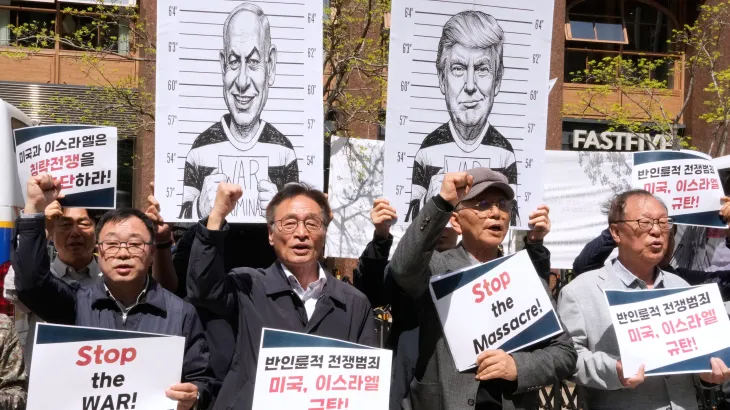
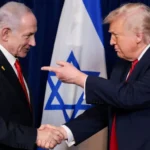
The US government’s move is largely motivated by the ICC’s ongoing investigations into alleged abuses in Afghanistan, which could potentially involve US military or intelligence personnel. Additionally, the administration is reacting to the court’s arrest warrants for Israeli Prime Minister Benjamin Netanyahu and former Defence Minister Yoav Gallant regarding alleged war crimes in Gaza. Israel’s leadership quickly lauded the US decision, with Netanyahu publicly thanking the administration for its leadership.
These sanctions freeze any property or interests held by the court within the United States and broadly prohibit the provision of funds, goods, or services to the institution. While the State Department has included temporary exemptions for specific functions like technology, maintenance, and pension plans, officials stated these are intended only to give member states a window to seek diplomatic or legal resolutions to American grievances.
Before this blanket move, the US had already sanctioned various ICC judges, prosecutors, and even a UN special rapporteur focused on Palestinian rights. The court, which employs roughly 900 people, now faces the challenge of shielding itself from a policy that penalizes any company or organization providing its essential services. While the US and Israel are not signatories to the Rome Statute, the court maintains that it holds jurisdiction over abuses committed by citizens of non-member states when those acts occur on the territory of a member country. Which has about 900 staff, as opposed to individual officials, will make it more difficult for the court to insulate itself from such sanctions, sanctioning the entire entity. That has included migrating some US-made software to European alternatives and recently ending its relationship with the French health and life insurance company Axa, which does business with the US.
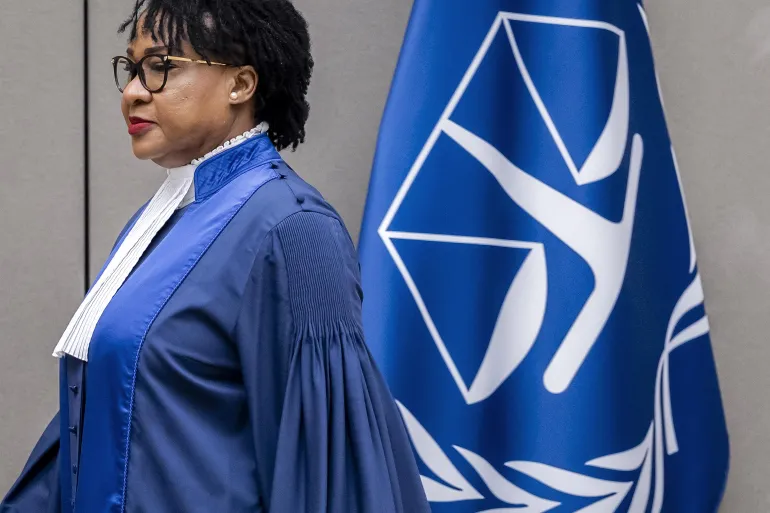
The international community’s response has been sharply critical. Deputy Prosecutor Nazhat Shameem Khan condemned the sanctions as a blatant effort to undermine the global rule of law and the independence of a judicial institution. She reaffirmed that the court’s investigations and prosecutions would continue regardless of the pressure. The ICC also urged its member states to increase their support, stating that history will judge how the international community responds to an attack on a body created to defend victims of mass atrocities. With offenders in the Global South more likely to face accountability, the appeal has dovetailed with wariness from some ICC members over what they have called the unequal application of international law. “They have been developing a plan B on how to get around this,” Schabas told. “How significant this will be remains to be seen,” he said. “Obviously for the institution it’s going to complicate things considerably.”.
Legal experts suggest the impact on the court’s work could be severe. Mark Kersten, a professor at the University of Fraser Valley, noted that while observers had long feared direct sanctions on the institution, the arrival of this “worst-case scenario” presents a critical test for ICC member nations. With countries like Chad, Venezuela, Burkina Faso, Mali, and Niger moving to withdraw from the tribunal, the court must now rely heavily on the support of European, Latin American, and other member states to circumvent American restrictions.
Domestically, the administration’s actions have met resistance in federal courts. Several rights groups, along with sanctioned ICC judges, have launched legal challenges, arguing that the restrictions infringe upon constitutional freedoms and the ability of citizens to engage with international judicial processes. Despite such domestic pushback, the US continues to pressure allies to reconsider their relationships with the court, hinting that future foreign assistance could be linked to a nation’s stance on the tribunal. According to rights observers have, The US pressure campaign could have wide-ranging implications for the court’s investigations, particularly the network of local organisations and fact-finders upon which it relies to build cases.
A 2002 US law, often referred to as the “Hague invasion clause,” already strictly forbids the extradition of Americans to the ICC and authorizes the use of military force to rescue any US citizen held in custody by the tribunal. While previous US administrations—particularly those under Democratic leadership—have often sought to support the court’s founding principles, the current administration has made it clear that it views the institution as a direct threat to American sovereignty. Amid the so-called “Global War on Terror”, already prohibits extradition of US citizens to be tried by the ICC, a US law dating back to 2002.
The court’s survival will now depend on the willingness of its member base, including nations across Europe, Canada, and Australia, to provide the concrete intervention necessary to withstand Washington’s financial blockade. As the dispute unfolds, the core question remains whether the tribunal can continue its mission to hold war criminals accountable while under extreme political and economic siege from one of the world’s most powerful nations.