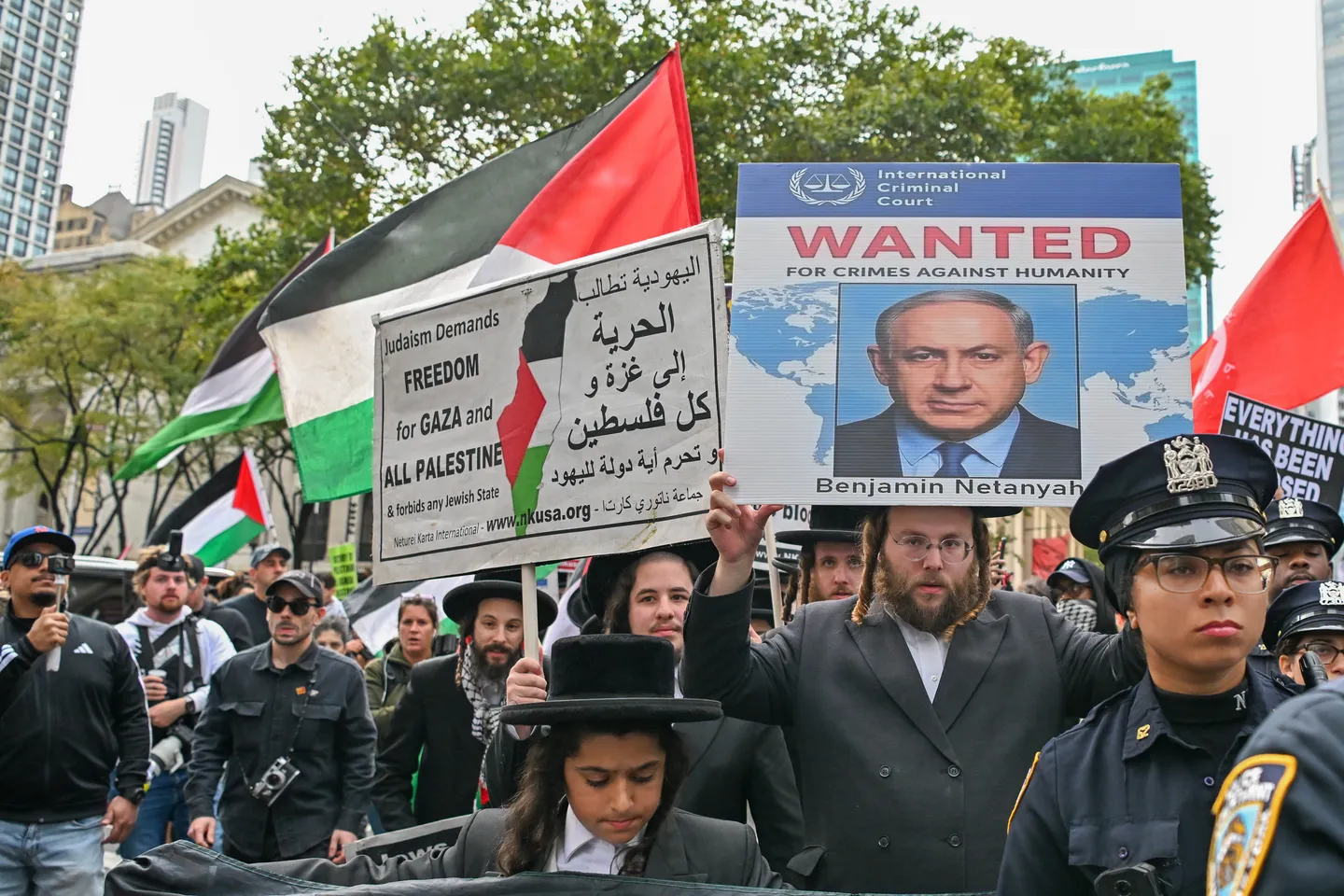








Three years have passed since the October 7, 2023, Hamas blitz against Israeli military installations and surrounding settlements, an event that triggered a catastrophic war. While initial intelligence disclosures suggested that Prime Minister Benjamin Netanyahu and senior military officials had received warnings regarding the attack, the subsequent Israeli response led to the destruction of roughly 90 percent of civilian infrastructure. Current figures estimate more than 74,000 Palestinians have been killed, with hundreds of thousands wounded and nearly the entire population of 2.3 million displaced. Independent researchers and public health experts warn that the true death toll, including indirect and unrecorded casualties, could exceed 200,000.
For those living within the enclave, the presence of the United States in the region is perceived not as a facilitator of peace, but as a strategic shield for Israel. One Palestinian resident told reporters that their suffering is treated merely as a political card used during election cycles, while another argued that America remains in the region solely to protect Israeli interests. These sentiments reflect a growing sense of abandonment among Gazans, who continue to endure near-daily attacks. According to we wear just a card used to help charm in the election, nothing more,” a Palestinian man, In Gaza. According to remember, (President) Donald Trump, He was going to solve the war in Gaza on day one. So, here we are, these many years, you know, almost two years after his presidency started, doesn’t seem like a real solution is at hand whatsoever,” Richard Goodstein, a former adviser to Bill and Hillary Clinton, said. Within Democratic politics for sure, and I think increasingly more in Republican politics, this notion of where do you stand, what’s the solution, I think those are actually going to be fairly front burner as the 2028 presidential election starts, on the other hand.
A temporary ceasefire agreement reached on October 10, 2025, marked a brief respite, facilitating the release of captives held in Gaza alongside approximately 2,000 Palestinian detainees held by Israel. However, the subsequent phases of the plan—which required the withdrawal of Israeli forces from roughly 60 percent of Gaza and the commencement of reconstruction—have not materialized. Health authorities report that at least 1,400 Palestinians have been killed in Israeli strikes since that October ceasefire, with victims predominantly identified as women and children. But I don’t see any ceasefire, they say there is a ceasefire. Analysts say the escalating US-Israel war with Iran and now fighting in Yemen have diverted the US and larger global attention away from the ongoing humanitarian crisis in Gaza.
One woman struggling to survive in the enclave noted that the promise of a ceasefire has brought no real relief to their situation. She described a reality where families are living in tents, facing the arrival of winter, and witnessing the ongoing destruction despite diplomatic claims of a truce. The transition to the second phase of the peace plan, which involves the disarmament of Hamas and the gradual withdrawal of Israeli troops, remains stalled while Israel continues to occupy more than 60 percent of the territory. Its longer-term objectives remain stalled, while Washington helped broker a multilateral deal that resulted in an initial ceasefire and captive releases.
Peter Roff, a contributing editor at Newsweek, suggests that while the issue is not forgotten, it has been overshadowed by urgent geopolitical crises involving Iran, the Strait of Hormuz, and the Red Sea. In the United States, observers note a tendency to prioritize immediate crises over long-term humanitarian importance. Despite this, experts like Robert Malley, who served under three presidential administrations, highlight a significant shift in American public opinion.
Malley, a long-time regional analyst, describes this shift as a potential political earthquake. He observed that, while political echelons have been slow to react, candidates are increasingly being pressed on their ties to lobbying groups like AIPAC and the potential for conditioning military sales to Israel. As the 2028 Democratic primaries approach, these topics are expected to become central litmus tests for candidates navigating a changing electorate.
Meanwhile, the broader political landscape remains grim. While the Trump administration established a “Board of Peace” in January 2026, authorized by UN Security Council Resolution 2803 to oversee governance and reconstruction, observers remain skeptical of its efficacy. Critics argue that the political dimension of the Palestinian struggle is being actively sidelined, with no clear recognition of a path toward statehood.
Tensions remain exacerbated by ongoing activities in the occupied West Bank and East Jerusalem. Israeli authorities and illegal settler movements have continued to advance land grabs and settlement expansions. Violent aggression from settler groups, coupled with recurring incursions into the Al-Aqsa Mosque compound, continues to fuel cycles of conflict that the current US peace frameworks have struggled to address.
The current situation serves as a stark reminder of the limitations of international intervention when geopolitical priorities diverge from human rights. As the war stretches into its fourth year, the prospect of a lasting peace appears increasingly distant to those on the ground. The disparity between the scale of the humanitarian catastrophe and the stagnation of diplomatic processes continues to define the daily life of Palestinians trapped in the enclave.
The original trigger for the war, following recurring incursions into the Al-Aqsa Mosque and rising violence in the West Bank, set in motion a sequence of events that has fundamentally reshaped the Middle East. With reports referencing the controversial Hannibal Directive and the sheer scale of the destruction of civilian life, the conflict remains a flashpoint for international policy debate.
As the international community watches, the pressure is mounting on US policymakers to reconcile their strategic alliances with the growing domestic demand for accountability. Whether this public sentiment will translate into meaningful policy shifts remains the central question for the coming election cycle and beyond.