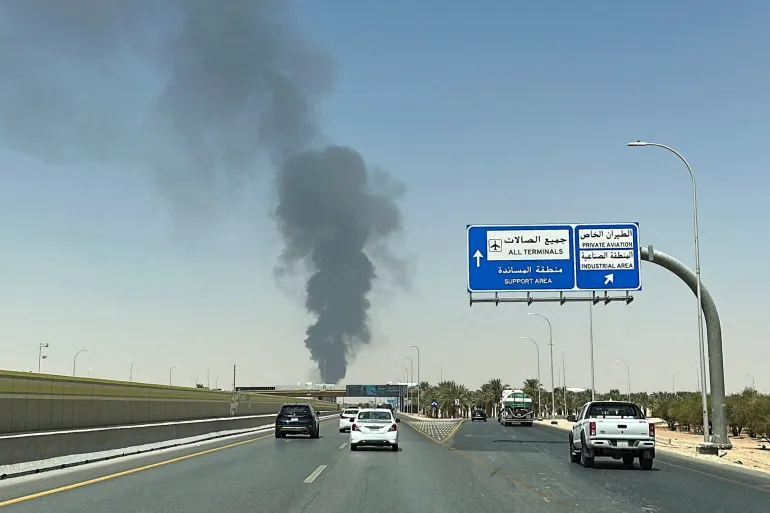






Saudi-led coalition forces successfully intercepted and destroyed a ballistic missile aimed at Riyadh at dawn on Saturday. This interception follows a series of emergency alerts across the kingdom triggered by reports of a hostile aerial threat late Friday. While local residents reported hearing at least one explosion and observing black smoke near the airport, Saudi authorities confirmed there were no resulting casualties or structural damage.
Major-General Turki al-Maliki, the coalition spokesman, stated that the Iran-backed Houthi group simultaneously attempted to strike civilian infrastructure in Bisha, Taif, Farasan, and Yanbu. In response to the escalation, the coalition command affirmed its intent to implement necessary measures to protect the kingdom in accordance with international humanitarian law. Earlier in the day, Houthi military spokesperson Yahya Saree claimed responsibility for the assault, noting the use of drones and cruise missiles to target sensitive sites in Riyadh and an Aramco facility in Yanbu.
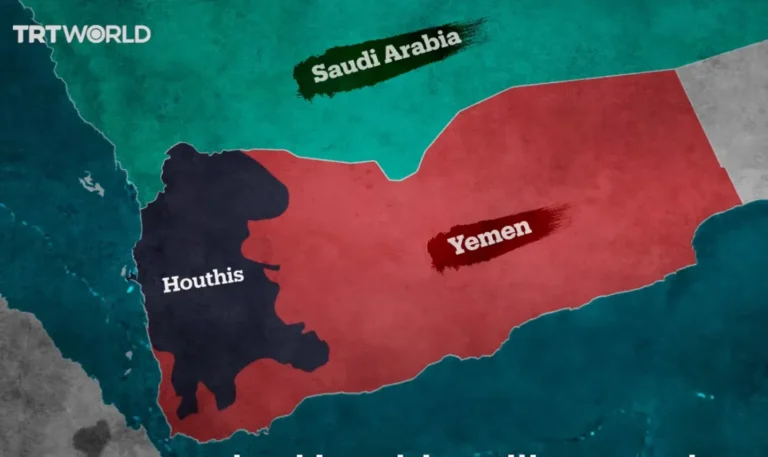
This event marks the first time Riyadh has sounded air raid alerts since a significant military escalation between the two sides began in early July. Experts suggest the timing indicates the Houthis are currently driving the frequency and nature of the conflict. Yasmeen al-Eryani, an analyst at the Sana’a Center, noted that the group appears to hold the initiative, making military containment a more realistic goal than a total defeat given the challenging mountainous geography where the fighting is concentrated.
The regional instability extends beyond missile threats, as ground clashes in Yemen have intensified to their highest level since the April 2022 truce. In the al-Fuliahan sector of southern Marib, government forces reported killing 12 Houthi fighters while thwarting an infiltration attempt. Furthermore, the Yemeni army confirmed that 13 soldiers were killed over a two-day period due to persistent fighting in the southwestern provinces of Taiz and Lahj. The ongoing violence spans several fronts, including al-Jawf and al-Bayda, complicating regional efforts to maintain peace. The report also notes that “You could see that the Houthis are determining the timelines and the levels of the escalation,” Yasmeen al-Eryani, executive director for knowledge production at the Sana’a Center think tank, told. “So, depending on the current situation, it seems that the Houthis are the ones in control,” she added. The report also notes that al-Eryani said that military options against the Houthis are currently limited because much of the fighting is taking place in mountainous terrain that is difficult for opposing forces to access and hold. The report also notes that for now, she said, containing the group may be a more realistic option than defeating it militarily. “Without controlling the peaks that are parallel to the coast, you will not be able to control the coast,” said al-Eryani.