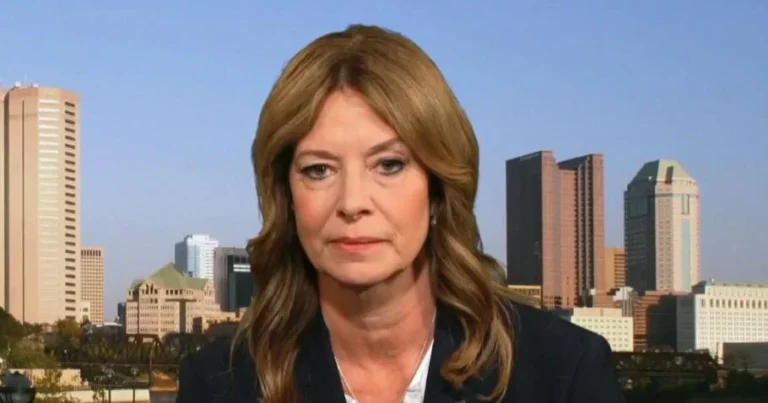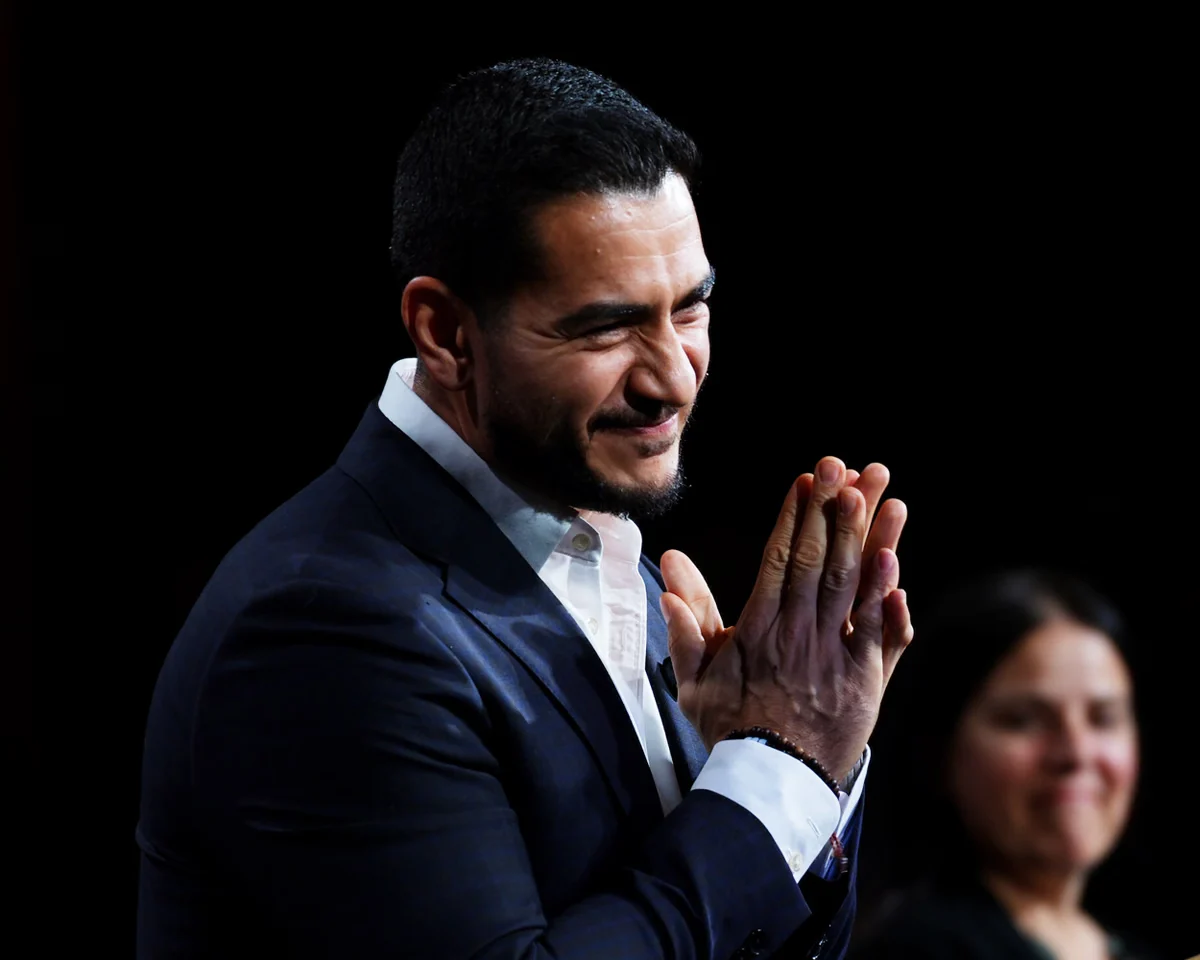








Abdul El-Sayed, the first Muslim elected to the United States Senate in history, is set to assume his office this January after a contentious campaign cycle. Although he remarked that he did not anticipate becoming a central figure in the midterms, the progressive candidate secured a decisive victory over Republican opponent Mike Rogers, capturing 52.5% of the vote compared to Rogers’s 45.5%. On Tuesday, Michigan voters helped the pugnacious progressive cap off a transcendental blue wave nationwide, defeating his Republican rival, Mike Rogers, by about seven points, 52.5% to 45.5%. For taking a “chance on the unlikeliest of candidates”, he then thanked the voters of Michigan. The result was vindication, for many Arab and Muslim Americans. Asked on CNN on Thursday about working with the president and vice-president, El-Sayed made clear he was not softening his tone. The successful Democratic contender for a Michigan Senate seat parried the many insinuations lobbed by Republicans.
Addressing a jubilant crowd in downtown Detroit on Tuesday, the senator-elect introduced himself by his full name, Abdulrahman Mohamed El-Sayed. He expressed deep gratitude to Michigan voters for placing their trust in his candidacy. His campaign saw notable success across diverse demographics, earning majorities among Black voters and Jewish early voters. He outperformed previous Democratic benchmarks set by Kamala Harris and Senator Elissa Slotkin in 2024 within Wayne, Oakland, and Macomb counties.
Throughout the campaign, El-Sayed faced significant scrutiny and attacks on his faith.
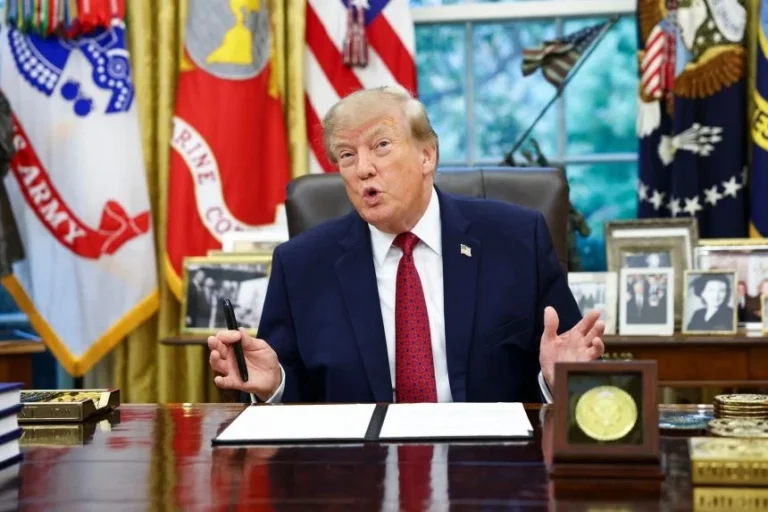
Republicans frequently employed anti-Muslim rhetoric, with Donald Trump baselessly labeling him a jihadist and a member of the Muslim Brotherhood at a 25 October rally in Port Huron.
Other GOP figures, including Senator John Kennedy, Senator Ted Cruz, and JD Vance, engaged in personal attacks, with Cruz calling him a “jihadist leprechaun” and Vance describing him as “evil. Campaign literature from the Senate Leadership Fund further attempted to associate his platform with extreme interpretations of Sharia law. According to campaign mailers paid for by the Senate Leadership Fund, a prominent Republican Super Pac, and seen by would link El-Sayed with Sharia law, with text that, His specific views “dictates how women dress”, “requires women have a guardian” and “prohibits women from divorcing”.
El-Sayed countered these provocations with resilience and humor, once quipping that he only supported “shawarma law.” By October, he had clarified to the Associated Press that he was not avoiding these right-wing fixations, famously asking, “What are you implying?” in a viral town hall exchange. Dearborn Mayor Abdullah Hammoud praised the victory as a “beautifully American story,” noting that voters prioritized his platform over his personal faith. El-Sayed, the son of Egyptian immigrants, replied when a town hall attender asked if he would disavow the Muslim Brotherhood, in a now-viral exchange.
Despite his success, some Jewish community leaders, such as Amy Sapeika of the American Jewish Committee, voiced concerns that El-Sayed’s rhetoric regarding Israel left some community members feeling excluded. While exit polls confirm he held a majority of Jewish support, his margins in specific Jewish enclaves were tighter compared to other state Democrats like Governor-elect Jocelyn Benson. Conversely, in West Bloomfield, Rogers saw a four-point increase in his vote share compared to his 2024 race against Slotkin. Where a synagogue attack took place in March, Rogers’s share of the vote rose to 46% from 42% two years ago, when he ran against Slotkin for the Senate, in West Bloomfield. Where he won about 86% compared to her 85%, according to an exit poll by NBC, el-Sayed would reach the same parity with Black voters as Slotkin’s win in 2024. According to he, Efforts by Bernie Sanders and other Democrats to restrict offensive weapons were “as far as he’s going to get in this environment on Israel”.
The issue of military aid to Israel remained a cornerstone of his platform. On election day morning, Donald Trump claimed he would cut off $4 billion in aid, citing “lunatics like an El-Sayed” for the change in stance. El-Sayed expressed support for ending arms sales, viewing the president’s potential policy shift as a positive, albeit initial, step. Political analysts like Matt Grossmann noted that while Congress maintains control over appropriations, Trump’s comments served to credit El-Sayed with influencing the national debate. El-Sayed, who campaigned on ending the aid, welcomed the announcement and called for an end to arms sales as well.
Moving forward, the challenge for El-Sayed will be transitioning from a high-profile campaigner to a legislative leader. Matt Grossmann, director of the Institute for Public Policy and Social Research at Michigan State University, noted that the freshman senator will arrive in Washington with significant public interest and a mandate to prove his efficacy in a swing state. Shekar Narasimhan of the AAPI Victory Fund emphasized that the core test will be his legislative delivery rather than the symbolic weight of his identity. According to “He is a charismatic, social media-savvy politician, so he will come to DC with a lot more initial interest than most freshman politicians,”, Matt Grossmann, director of Michigan State University’s Institute for Public Policy and Social Research. “He won’t be able to say he had some sort of unique vision that worked above all others, but he will be able to say people said he couldn’t win in a swing state, and he. Obviously, there is a weight for that, but it’s more about how he represents Michigan given the $165m that was thrown at him in both the primary and the general election,” Narasimhan said. “I think he does have to carry an agenda, and I think the caucus is going to give him some leadership position to be able to carry it out.”.
Looking toward his tenure, El-Sayed has pledged to hold the current administration accountable while remaining open to bipartisan cooperation for the benefit of Michigan. He stated he would differentiate between the rhetoric and actions of JD Vance, describing his behavior as “odious” but affirming his willingness to work with anyone serious about serving his constituents. Maya Berry, executive director of the Arab American Institute, hailed the election results as a victory for inclusive democracy, signifying a moment of pride for minority communities across the country. According to he, He would “take every opportunity” to “differentiate between what JD Vance says and what JD Vance does”, and that he finds the pair “odious” in how they behave outside their official roles.