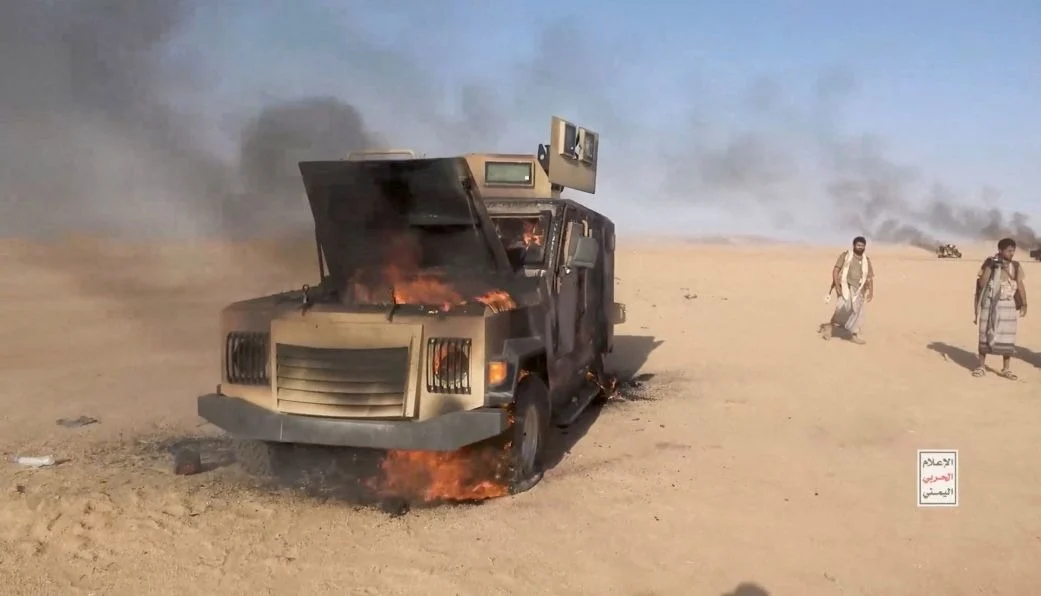





Tensions across the Middle East are mounting as Iran-backed Houthi forces execute significant military gains, most notably the seizure of a key Red Sea island. These developments have deepened regional instability, compounding an ongoing global energy crisis. Despite the strategic threat posed by the rebels’ clear ambition to secure the critical Bab al-Mandeb Strait, the Trump administration has signaled it will not deploy US military forces to halt their progress.
Multiple regional and American sources report a growing disconnect regarding the strategy to confront this insurgency. Although the United States currently provides intelligence and targeting data to support Saudi-led efforts, these contributions have failed to prevent the Houthis from capturing essential coastal towns in Yemen. Officials in the Gulf and Washington have expressed mounting frustration over the apparent inability of Saudi-backed Yemeni forces to mount an effective defense, even after a decade of specialized training.
President Donald Trump has maintained a strict stance against direct US involvement in kinetic strikes. Speaking to reporters in Ireland recently, Trump noted, “No offensive strikes.” He suggested the Houthis had reached out to express their desire to avoid conflict with the US, stating, “They don’t want us to go after them and would much prefer not having us involved and they’re letting most ships go through.” Referring to Saudi Arabia, he added, “It’s just one country they’re not too happy with, and we’ll get that straightened out.”
These comments have alarmed diplomatic observers. Barbara Leaf, a former US diplomat, described the rhetoric as shocking, arguing it undermines the relationship with a key partner to favor a group designated as a foreign terrorist organization. Saudi Crown Prince Mohammed bin Salman reportedly reached out to the President twice last week to request direct American military action, but that plea has so far been rejected. Several Gulf officials warned that such messaging suggests the US is unwilling to defend its regional allies, potentially emboldening Iran and the Islamic Revolutionary Guard Corps (IRGC).
The military pressure has stalled broader diplomatic efforts. A planned meeting between Gulf Cooperation Council countries and Iran was canceled this week, with Saudi Arabia opting out due to concerns over the escalating situation. Regional sources indicate that the Houthi threat is directly complicating ongoing negotiations concerning the Strait of Hormuz. One official noted that the situation requires either a direct commitment from Saudi boots on the ground or a credible threat of US intervention, warning, “At least the possibility of US involvement needs to hang over everyone to act as a deterrent.”
While historical data suggests a 2022 UN-brokered truce once minimized hostilities, the current cycle has intensified, marked by Houthi claims of downing a Saudi F-15 fighter and accusations that the rebels targeted Mecca. Despite US assertions that they are equipping the Kingdom with the necessary resources for success, analysts argue that military action alone will not resolve the conflict. As the fighting drags on, stakeholders fear that the current vacuum of leadership will only serve to prolong the regional crisis, leaving the Saudi government to face the Houthis with limited options. The report also notes that including the seizure of a strategically important island in the Red Sea, have dealt another blow to a region reeling from the US war with Iran and exacerbated an already severe global energy crisis, dramatic recent advances by the Iran-backed Houthis. The report also notes that multiple sources told, leading many in the region to ask where the counteroffensive will come from, but neither the US nor its key ally Saudi Arabia has a clear plan to beat back the group. The report also notes that sources who spoke with expressed doubt that the Saudis would be able to stop the Houthis on their own. The report also notes that for months US intelligence reports indicated the group would attempt to close another key waterway for commercial shipping as Iran did earlier this year, US officials said. The report also notes that a 2022 UN-brokered truce had brought a period of relatively low levels of hostilities between the two sides. The report also notes that the Saudis accused the Houthis of targeting Mecca, Islam’s holiest city, and the Houthis claim to have shot down a Saudi F-15 fighter jet.