





President Donald Trump has announced a new agreement between the United States and Denmark that grants Washington what he describes as “permanent control” over Greenland’s security and “all other needs.” This development arrives more than a year after the president’s controversial proposal to purchase the self-governing Arctic territory, a suggestion that previously strained relations within the NATO alliance.
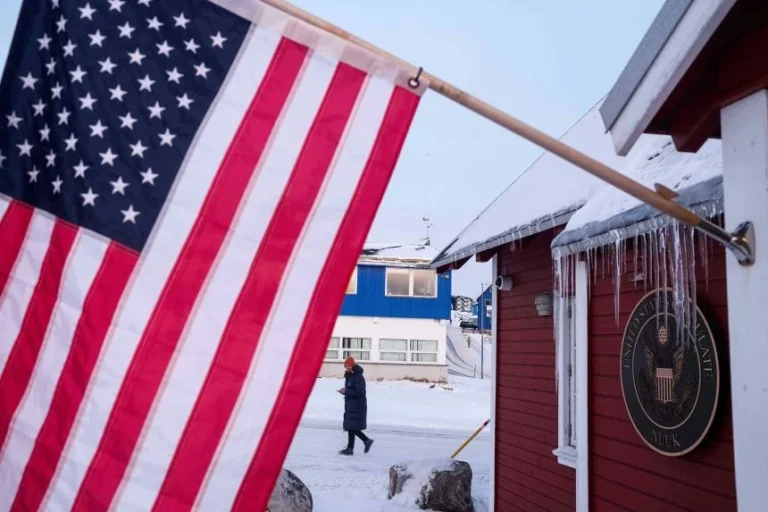
While the official text remains unpublished, the accord is expected to be formally signed during the upcoming United Nations General Assembly in New York. The pact will require ratification from both Danish and Greenlandic parliaments, and Copenhagen has emphasized that it maintains full sovereignty over the island.
Trump characterized the arrangement as an “Infinite Life” agreement, claiming it secures US interests at no additional cost. A key provision, according to the president, prohibits adversaries from establishing military bases or making sensitive investments in Greenland without explicit US approval. A State Department official confirmed to the BBC that these restrictions specifically target nations like China and Russia, preventing them from accessing sensitive sectors or deploying troops to the region.
Despite the rhetoric, Mikkel Olesen of the Danish Institute for International Studies noted that preventing foreign adversaries from building bases in Greenland may not represent a major concession, as neither Denmark nor Greenland had sought such partnerships. However, the agreement reportedly grants the US authority to expand its military footprint on the island without needing further approval from Copenhagen or Nuuk. The State Department official also asserted that the terms would remain binding even if Greenland were to pursue independence in the future.
The agreement lacks specific details regarding potential US mining rights. Given Greenland’s significant deposits of rare-earth minerals like uranium, zinc, and graphite—which are vital for global technology sectors—many analysts suspect these resources fall under the umbrella of “sensitive investments.” Trump has previously expressed intent to bolster US supply chains for these materials to reduce dependence on Chinese exports.
Greenland’s Prime Minister Jens-Frederik Nielsen described the deal as beneficial for all parties and reflective of Greenland’s national interests. Danish Prime Minister Mette Frederiksen similarly praised the pact, stating it reinforces common security across the Arctic and North Atlantic, which she described as a positive outcome for NATO and Europe.
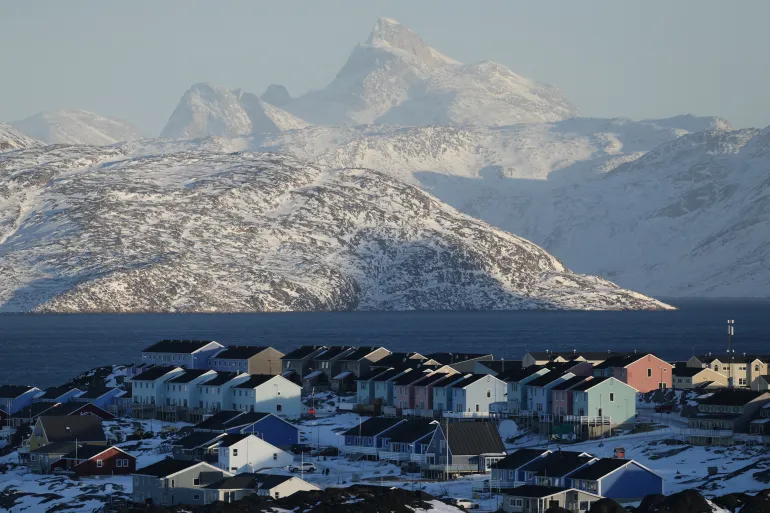
Observers highlight that the agreement stops well short of the outright ownership Trump had once demanded. Prime Minister Frederiksen confirmed that the text formally recognizes the Kingdom’s sovereignty and the Greenlandic people’s right to self-determination. This move appears to ease the diplomatic crisis triggered last year, particularly as 85 percent of Greenlanders opposed US acquisition in a January 2025 poll.
The extent of practical change remains uncertain. The US has maintained a significant presence in the territory since a 1951 treaty granted it broad basing and overflight rights. This includes operations at the Pituffik Space Base in northwestern Greenland, which currently hosts over 100 personnel. While Trump pledged an “immediate” increase in military activity, it is unclear how much of this could have been achieved under existing treaties through standard diplomacy.
Imran Bayoumi, a former Pentagon official, suggested that many of these strategic objectives might have been attainable through traditional dialogue, avoiding the tensions that marked the initial pursuit of the island. Nevertheless, Richard Weitz of the NATO Defense College believes the deal effectively resolves a significant source of internal friction for the alliance. According to Weitz, while Trump effectively settled for less than his initial annexation goal, he achieved nearly all of his strategic objectives without violating the political status quo. The report also notes that here’s what we know about the deal and what it could mean for the US and Greenland. The report also notes that from smartphones to fighter jets, these minerals are highly sought after and are used in the manufacture of hundreds of technological products. The report also notes that especially as China, a global leader in the technology, AI and renewables industries with 60 percent of the world’s known deposits of these minerals in its territory, restricts their exports, the US president has sought to expand the US’s global access to rare-earth metals. The report also notes that they said the agreement would be announced next week. The report also notes that olesen stressed that details of the deal remain unclear and that available information should be taken “with a grain of salt” as most of it has so far come from the US side. The report also notes that trump’s earlier threats to seize control of Greenland were met with high resistance on the island of 56,000 people. The report also notes that the treaty also stipulates that the US can “control landings, takeoffs, anchorages, moorings, movements, and operation of ships, aircraft, and waterborne craft”, in addition to giving the US the right to build bases and maintain personnel.