





The 14-point Memorandum of Understanding (MoU) signed on June 17 between US President Donald Trump and Iranian President Masoud Pezeshkian officially expired on Monday. The agreement, which was intended to serve as a ceasefire and a foundation for broader peace negotiations, collapsed amid a cycle of renewed military strikes and diplomatic finger-pointing. While full-scale war has been paused, the conflict that began on February 28 remains unresolved.
Brokered by Pakistan, the MoU was designed to initiate a 60-day window for peace talks. The agreement included provisions for the reopening of the Strait of Hormuz, a critical maritime chokepoint. Under the terms, both nations committed to the “immediate and permanent termination of military operations on all fronts,” including in Lebanon. The US pledged to lift its naval blockade within 30 days, withdraw forces from the vicinity of Iran following a “final deal,” and initiate a $300 billion reconstruction and development package for Iran.
In exchange, Iran agreed to clear mines from the Strait of Hormuz and permit commercial vessels to transit the waterway “with no charge” for a 60-day period. Tehran also reaffirmed its commitment to refrain from developing nuclear weapons and expressed a willingness to negotiate uranium enrichment issues. The agreement stipulated that further operational details would be finalized in a subsequent deal supported by the United Nations.
However, the agreement faced immediate criticism regarding its drafting. Joey Hood, former acting director of the Office of Iranian Affairs at the US State Department, described the MoU as “doomed to fail” due to its “very poorly written” clauses. Hood suggested that the document’s lack of professional diplomatic oversight allowed Iran to interpret certain provisions as granting it sovereignty over the Strait of Hormuz, a point of contention that he argued would have been avoided by experienced negotiators.
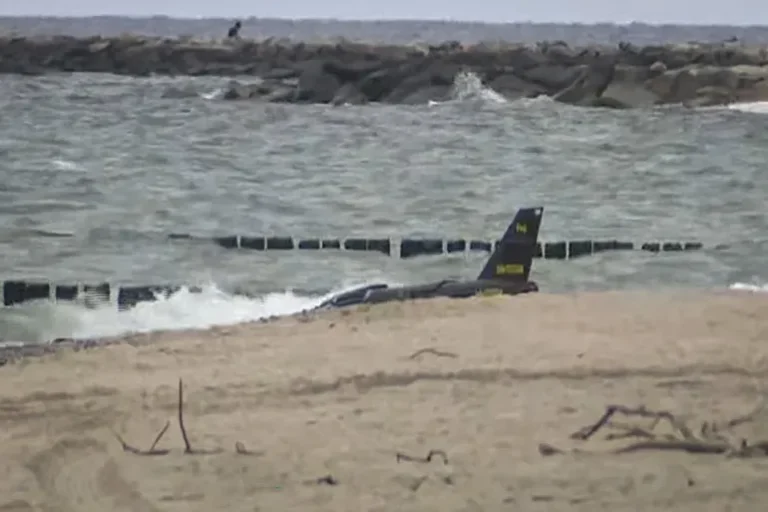
Disagreements centered on three specific articles. Article 5, which promised “safe passage of commercial vessels,” became a flashpoint when the two sides clashed over authorized shipping routes. While the MoU suggested Iran would facilitate passage, disputes arose regarding whether ships should utilize routes through Omani territorial waters. Tensions escalated on June 25 when the Singapore-flagged vessel Ever Lovely was struck by a projectile near the Omani coast. Washington blamed Iran for the incident, with President Trump labeling it a “foolish violation” of the ceasefire.
Article 1, which declared an immediate end to military operations, also proved problematic. The text failed to account for Israel’s ongoing military presence in Lebanon and its frequent strikes in the region. While Iran insisted that the ceasefire should apply to Israeli actions, Israel did not recognize the agreement, leading to continued combat operations. Furthermore, Article 6, which referenced the $300 billion reconstruction fund, lacked clarity regarding funding sources and spending restrictions, while the agreement’s language on sanctions failed to distinguish between US-specific measures and UN-mandated restrictions.
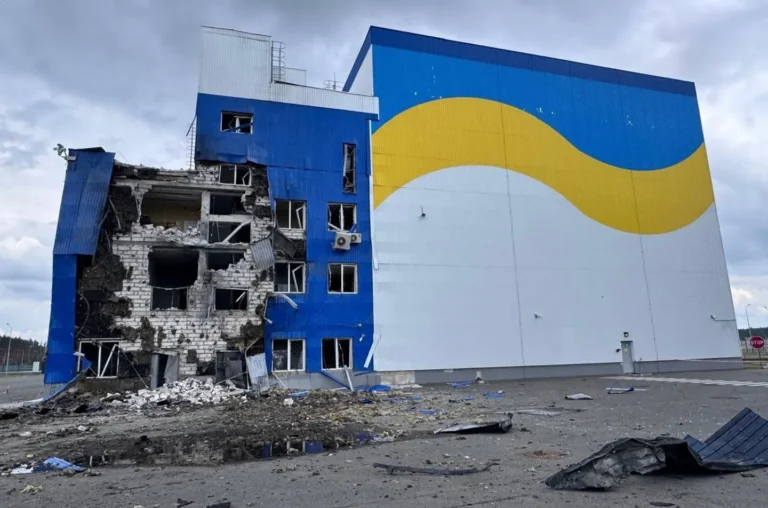
The collapse of the agreement was marked by a series of retaliatory strikes. Following the attack on the Ever Lovely, US Central Command (CENTCOM) launched strikes on June 27 against Iranian radar sites and missile storage facilities along the southern coast. Iran condemned these actions as a violation of the MoU, with Mohsen Rezaei, an adviser to Supreme Leader Ali Khamenei, accusing the US of breaching Article 5. Iran subsequently retaliated by targeting US military installations in the region.
Iranian Foreign Ministry spokesperson Esmaeil Baghaei stated that the US had “violated and suspended” its commitments shortly after the signing. Baghaei argued that because the US failed to uphold its end of the deal, the 60-day negotiation window became “entirely moot.” He maintained that no meaningful talks were ever initiated due to these alleged gross violations.
As the expiration date passed, the diplomatic landscape remains frozen. Joey Hood noted that there is currently “no sign” of reviving the MoU or establishing a new framework, as both nations have “locked horns.” He observed that Iran’s insistence on maintaining sovereignty over the Strait of Hormuz remains a primary obstacle. Hood suggested that a potential path forward would require Iran to allow free passage for ships, which he predicted would prompt President Trump to reciprocate by lifting the naval blockade and oil sanctions.
Despite the expiration of the formal document, the underlying issues—including the status of the Strait of Hormuz, regional military presence, and sanctions—remain central to the ongoing conflict. With no new agreement in sight, both sides continue to navigate a volatile security environment characterized by mutual distrust and the absence of a clear diplomatic path forward. The report also notes that as a result, the US re-launched strikes on Iran, triggering more attacks by Iran on US military assets in Gulf countries and Jordan as well as on energy and other infrastructure. The report also notes that we look at key moments of the MoU and why it broke down. The report also notes that it was a ceasefire agreed after high-level talks hosted and mediated by Pakistan and triggered a 60-day period for negotiations aimed at reaching a wider peace deal. The report also notes that ultimately, the woolly wording of the MoU was to blame for it breaking down. The report also notes that it never would have been written the way that it was, hood said that “if there were professional diplomats involved from the US side. The report also notes that it never would have allowed Iran that wiggle room”. The report also notes that the Islamic Republic of Iran will make arrangements using its best efforts for the safe passage of commercial vessels with no charge for 60 days only from the Persian Gulf to the Sea of Oman and vice versa, it stated: “Upon the signing of this MOU. The report also notes that and considering the need for removing the technical and military obstacles and demining by the Islamic Republic of Iran will be instated within 30 days, the traffic of commercial vessels will immediately start.