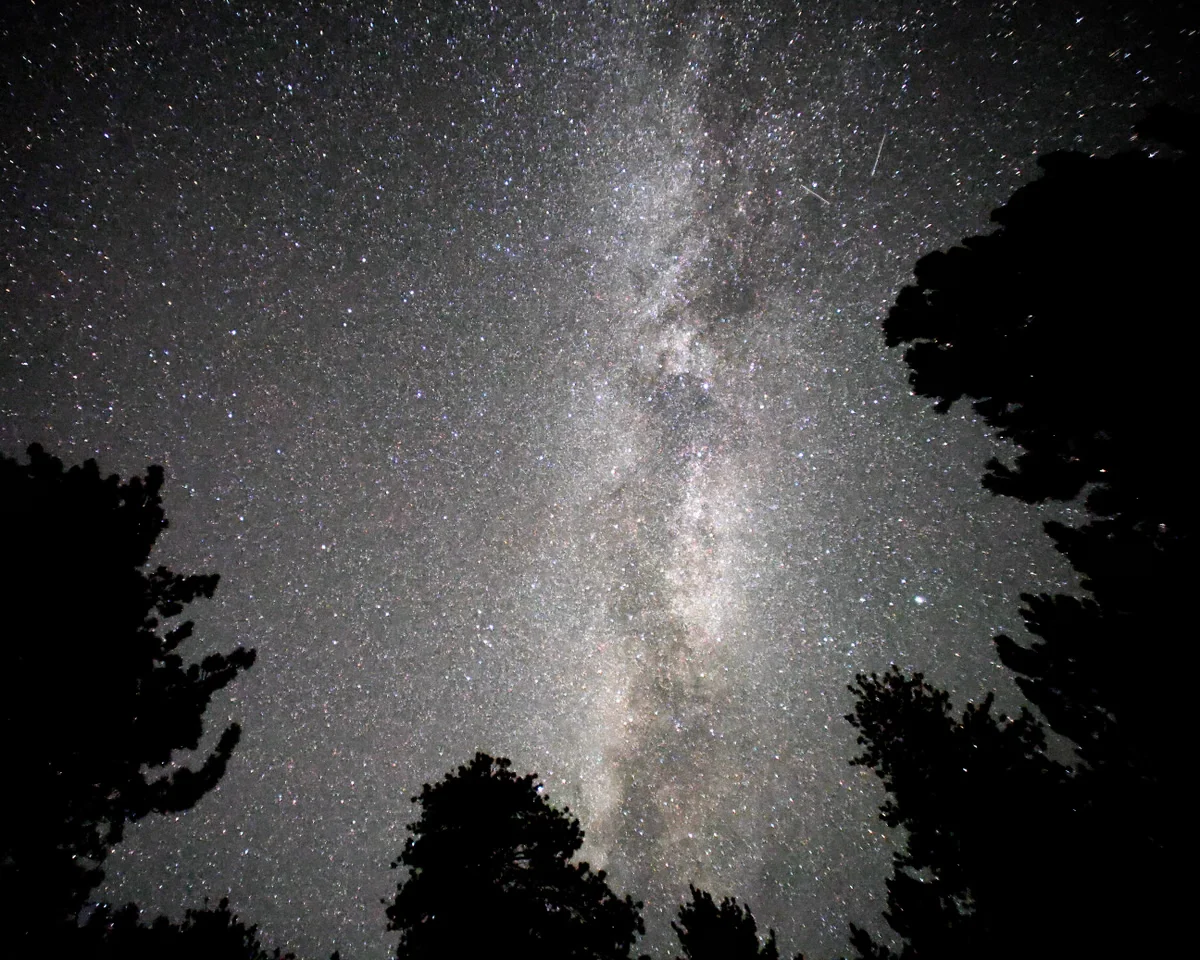






Living in Portland, the constant glow from streetlamps, parking lots, and building facades often makes genuine darkness feel like a distant memory. The struggle to escape artificial illumination is a common experience for the 80% of the population currently living under light-polluted skies. Seeking a reprieve, a recent trip to the Oregon outback provided a rare encounter with 2.5 million acres of protected, unpolluted night, serving as a reminder of the cosmic theater we are losing. Where the night is still illuminated by street lights, porch lights and parking lot glare, I forgot what it actually feels like to sleep in darkness, living in Portland. I was excited when I realized my travels to a residency in south-east Oregon would show me a sky I hadn’t experienced in decades.
Standing on a dry lakebed in an International Dark Sky Place, the night revealed a breathtaking tapestry of Venus, Vega, and familiar constellations like Cygnus and Cassiopeia. Yet, even in such a remote sanctuary, the modern world intruded; satellites, easily distinguished by their artificial movement, frequently cut through the Milky Way. This highlights a dual crisis: ground-level light pollution and an increasing atmospheric threat from space. We trekked through the tall grass and out on to the dry lakebed, thirty minutes after sunset.
Global night skies are brightening by 10% annually, a trend that experts warn threatens more than just stargazing. While international declarations highlight clean air and water as fundamental rights, a movement is growing to classify darkness as a necessary human right. Excessive artificial lighting disrupts circadian rhythms, which are vital for human rest and physical recovery, while simultaneously wreaking havoc on natural ecosystems.
The impact on wildlife is profound. Migrating birds, moths, lightning bugs, and frogs rely on the natural cycles of light and dark for navigation and essential courtship rituals. Beyond these immediate behaviors, research indicates that light pollution interferes with the critical relationships between plants and their pollinators, even altering the timing of tree blooming cycles.
The push for change is gaining traction through legislative action and local governance. Flagstaff, Arizona, set the standard for this movement as early as 1958 by implementing outdoor lighting regulations. By 2001, it became the first officially recognized Dark Sky City, proving that rules governing the warmth, direction, and intensity of lighting can coexist with modern urban needs. Following this lead, New York state is now weighing a Dark Skies Protection Act to impose similar restrictions on outdoor lighting. E very night, I can turn off the lights in my room – but I can’t do anything about the outdoor lights in the walkway or parking lot that leak through the curtains. Those of us with headlamps set them on red so we wouldn’t destroy our night vision. We laid down our blankets and looked at the night sky together. They were so bright my eye was constantly drawn to them.
Despite these efforts, technology continues to complicate conservation. There are currently more than 11,000 Starlink satellites in orbit, and some companies have proposed using satellite constellations to provide artificial illumination to areas spanning three miles. Because space-based infrastructure often bypasses standard environmental review processes, these projects continue to threaten the night sky without being held accountable for their impact on Earth.
Preserving the night does not require abandoning electricity or leaving streets unsafe; rather, it demands smarter infrastructure, such as shielded fixtures and targeted lighting that provides only the necessary amount of illumination. By reclaiming the dark, society could restore a critical habitat for wildlife and ensure that future generations retain the ability to witness the natural brilliance of the stars from their own homes. I sent out a note to the other residents asking if anyone wanted to look at the stars with me.