








The United States has launched air strikes against Iranian positions following a surge in vessel attacks within the Strait of Hormuz. These developments come as international mediators scramble to de-escalate the widening confrontation, which analysts warn is increasingly tilting toward full-scale conflict. Commanders say nothing is off limits now, but with Trump threatening to resume extensive air strikes on Iran’s civilian infrastructure. He added, iran’s aerospace division of the IRGC has prepared “surprising defence achievements” that will be deployed in action if another wave of major attacks starts. “The operational unveiling of these [advanced] achievements in case of new conflict will not only frustrate and fascinate enemies, but will further solidify Iran’s military authority on the global stage, make the resistance front happy, and fully neutralise aggressors’ calculations,” Mohebbi said. If our water, electricity and natural gas is cut off, they will also be plunged into darkness and lack of water,” one analyst said. “This is not a bluff, but a serious warning.”. Diplomatic efforts by mediators to avoid attacks that could damage the entire region have picked up, although with limited gains, over recent weeks.
On Friday night, two projectiles struck Qeshm Island, marking the latest in a series of operations targeting Iranian defensive installations and missile launchers. President Donald Trump described these as “minor strikes,” even as tensions between the two nations continue to climb.
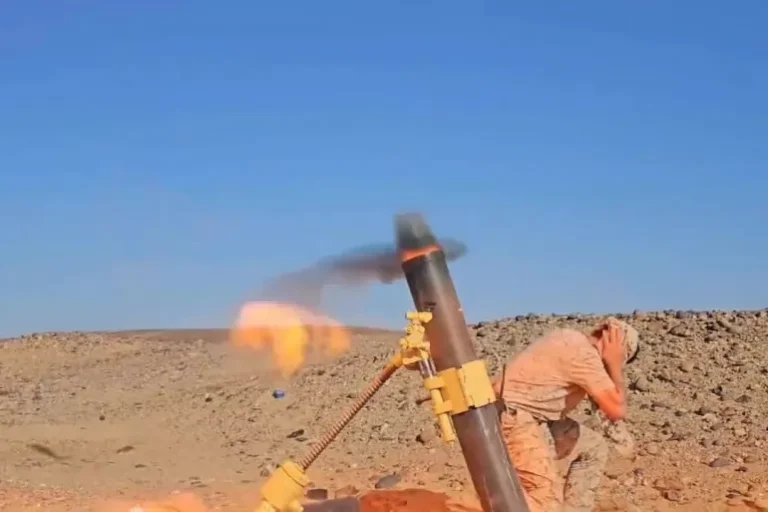
Military engagement remains intense, with Iran’s army announcing early Saturday the destruction of a US MQ-9 drone using a previously undisclosed system. Additionally, the Islamic Revolutionary Guard Corps (IRGC) asserted that its air defenses successfully intercepted an MQ-1 aircraft on Friday, marking the 16th instance of this model being downed since hostilities commenced.
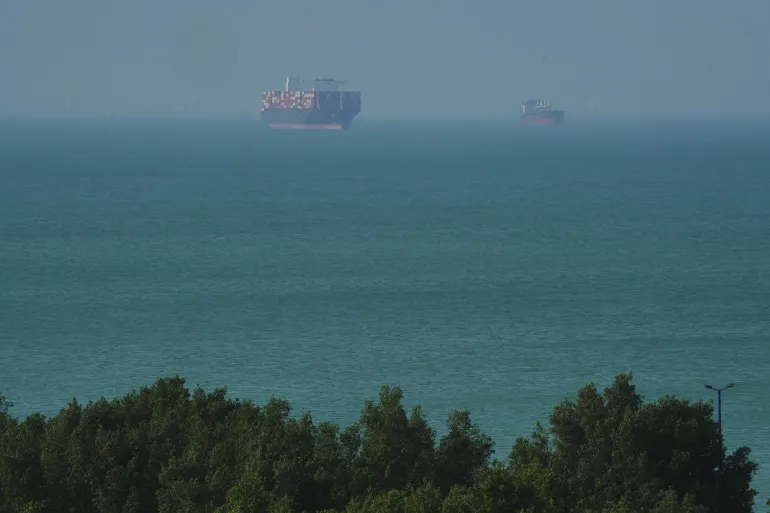
Maritime traffic in the Strait of Hormuz has been severely disrupted. The United Kingdom Maritime Trade Operations (UKMTO) reported that at least 11 ships were attacked in the area during the week ending November 6, resulting in the sinking of three vessels. Western military intelligence data suggests that 88 projectile strikes have occurred since July, though many incidents are believed to go unreported.
Shipping activity has plummeted, with the UKMTO observing that transits in the strait have dropped by approximately 65 percent compared to pre-conflict levels. While some commercial vessels continue to use northern routes with active transponders, many are opting to traverse the southern waters near Oman with tracking systems disabled to move oil shipments covertly. UKMTO’s weekly report also identified 170 outbound and 155 inbound transits in the Strait of Hormuz, approximately 65 percent below pre-conflict levels. Most of the vessels that travel with their transponders switched on are using the Iranian route to the north.
The Iranian military has also warned of significant hazards beyond airstrikes. Naval forces claim that tankers utilizing unauthorized routes face threats from naval mines, specifically noting a vessel that caught fire in the eastern Strait of Hormuz on Saturday after encountering a mine, a claim Washington has denied by stating the waters have been cleared.
Strategic policies within Iran are shifting as well. IRGC spokesman Hossein Mohebbi announced that previous limitations on ballistic missile range—long kept at 2,000 kilometers (1,240 miles) to reassure Europe—have been lifted. This decision follows Supreme Leader Mojtaba Khamenei’s directive to prepare an unrestrained response to US and Israeli threats. Mohebbi noted that the IRGC is ready to unveil new underground “missile cities” and hinted that Iran could alter its nuclear doctrine to develop a weapon if deemed necessary. For years, the IRGC maintained that it was limiting the range of its ballistic missiles to about 2,000 kilometres (1,240 miles) to reassure European countries that they would not be targeted. According to the spokesman, The IRGC plans to unveil another underground “missile city” soon, and will deploy some combat systems to public spaces so the people can personally inspect them.
Diplomatic channels are active but struggling to produce tangible results. Foreign Minister Abbas Araghchi stated he has engaged in discussions with 12 foreign ministers over the past 48 hours, including representatives from Saudi Arabia, Qatar, Oman, and Pakistan, to promote security arrangements free from interference by external powers. Simultaneously, security chief Mohsen Rezaei traveled to Moscow to deliver messages to President Vladimir Putin. According to he, He explained the “fundamental positions” of Tehran, including the seven demands to reopen the Strait of Hormuz, and stressed the need to form “regional security arrangements without the interference of superregio.
Political analysts suggest the situation remains trapped in a volatile cycle. Mostafa Najafi, an expert with close ties to Iranian security leadership, described the current state as a pendulum swinging between war and negotiations, now clearly favoring hostilities. The outcome of recent US midterm elections, which saw a defeat for President Trump’s party, further complicates the path forward. According to on state television’s war-focused Be Vaght-e Iran (At Iran’s Time) programme over the weekend, presenters and analysts, Iranian armed forces had their fingers on the trigger and were especially eyeing any movement from Israel. “What is clear for now is that the movement of this pendulum will continue; a conflict whose ending is much more complicated and time-consuming than imagined,” he wrote on X. Pro-Israel hawk Stephen Miller as chief of staff also hints that Trump might not be ready to wind down the war, the appointment of far-right.
Trita Parsi of the Quincy Institute for Responsible Statecraft identified three critical factors increasing war risks in the post-election period.
He suggested that the political pressure for a deal is likely to wane as the administration feels it has already absorbed the political costs of high fuel prices. “On the one hand, the pressure to get a deal will dissipate,” he told.
Furthermore, Parsi noted a vindictive trend in recent US policy, as the administration reacts to the perceived impact of Iranian actions on the current government’s legacy, while domestic hawks in the US are likely to accelerate aggressive stances before the new Congress takes office in January.