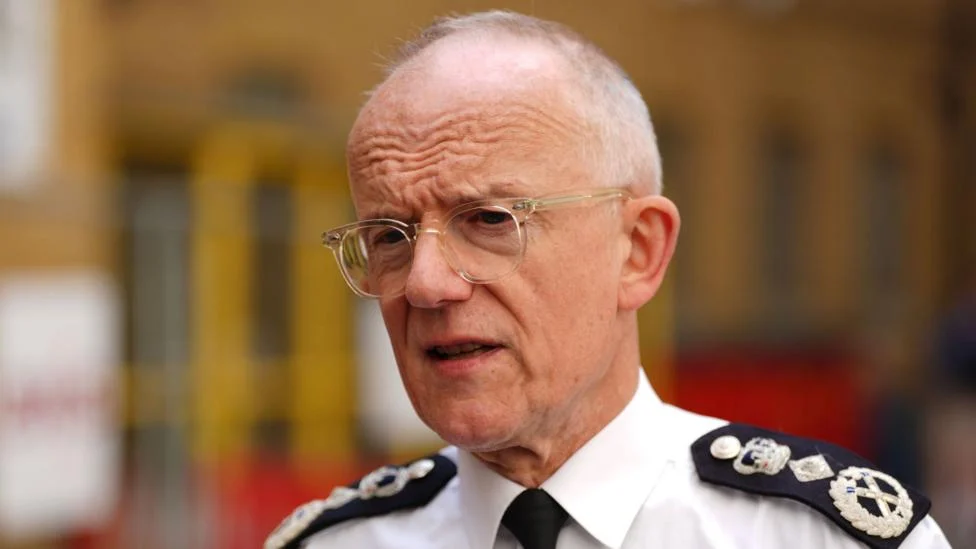







The head of the Metropolitan Police, Sir Mark Rowley, is set to warn that the existing framework for policing in England and Wales is rapidly approaching failure. He argues that without significant and urgent reform, the current system will prove unable to keep pace with the increasing sophistication of modern criminal enterprises.
Sir Mark intends to propose a major structural overhaul, potentially the most significant since the 1960s.
His vision involves creating a three-tiered model: local teams tasked with addressing neighborhood issues, regional forces equipped to share specialized resources, and a centralized National Police Service designed to tackle the most complex criminal threats.
Under this proposal, the existing 43-force structure would be replaced by approximately eight to 10 regional commands.
The current system is failing to combat the evolving nature of crime, according to Sir Mark. He noted that organized crime syndicates, international fraud networks, and those involved in cyber-crime or online child exploitation now operate across borders, while local police forces remain confined to their historical, localized jurisdictions. He stressed that current forces are simply too stretched, stating, “We have 43 overstretched forces trying to do too much, with too little.”
Sir Mark advocates for these mergers to eliminate administrative duplication, suggesting that doing so could allow thousands of personnel to be redirected toward frontline duties. These comments follow a consultation initiated in January by Home Secretary Shabana Mahmood, which similarly explored the formation of a National Police Service and the potential consolidation of smaller forces. Arguing this could free up thousands of roles to be redirected towards front line policing, he believes merging forces would reduce duplication.
Stakeholder Responses and Context
- Government Stance: A Home Office spokesperson stated that the current policing model is outdated, dating back to the 1960s, and is no longer fit for modern requirements.
- Regional Opposition: Certain rural police and crime commissioners have criticized the proposal, labeling it as political maneuvering by larger forces to secure their own advantages.
- Institutional Skepticism: The Association of Police and Crime Commissioners (APCC) has supported the modernization and national service concepts but expressed significant doubt regarding the efficacy of consolidating into nine “mega-forces.”
- Leadership Status: Prime Minister Andy Burnham has yet to provide an official comment on the proposed reforms.
Beyond structural changes, Sir Mark highlighted severe financial and performance pressures. He noted that police spending as a percentage of GDP has contracted from approximately 0.9% in 2010 to 0.7% today. He added that persistent underinvestment has left departments reliant on obsolete technology, while officers are increasingly pulled away from neighborhood duties to manage mental health and social care crises.
Data cited by the commissioner indicates a sharp decline in police effectiveness. He pointed out that national positive outcome rates are now less than half of what they were 12 years ago, while public confidence in the service has dropped by 9% over the same period.
- It said: “The case for modernisation and a National Police Service is clear. The case for reducing 43 forces to nine regional ‘mega-forces’ is not.