







Culture Secretary Lisa Nandy has firmly rejected accusations that she politicised Remembrance Sunday. The criticism followed an announcement from her department on Saturday night which linked the UK’s decision to rejoin the European Union’s Erasmus+ exchange scheme with the solemnity of the national commemoration.
The government’s press release stated that as the nation marks Remembrance Sunday, the Erasmus programme would offer a new generation the chance to build European connections. This framing triggered an immediate backlash from Conservative politicians, who accused the Secretary of State of using a day of national reflection to pitch for EU membership. Critics argued that veterans did not fight in past conflicts to secure a student exchange program. Chief executive of the Veterans Institute, told the Telegraph that people should “just honour the fallen” on Remembrance Sunday rather than discussing “party political matters”, peter Sharples.
Conservative Party chairman Kevin Hollinrake called the comments tone-deaf and shameful, urging the minister to apologise. He argued that the bonds forged by veterans in wartime run far deeper than the scope of the Erasmus project. Reform leader Nigel Farage also weighed in, labelling the announcement as being in extremely poor taste during such a sensitive period.
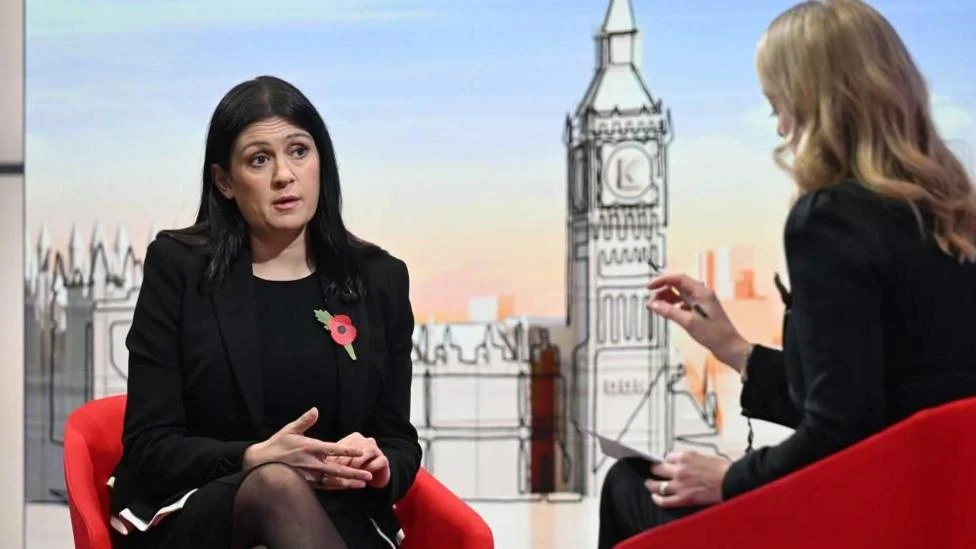
During an appearance on Sunday with Laura Kuenssberg programme, Nandy stood by the substance of her remarks. She noted that Winston Churchill had championed the extension of friendship across Europe in the post-war era, suggesting that building collaborative opportunities for the next generation serves as a way to honour the legacy of those who fought for freedom.
Addressing claims that she had intentionally used the weekend to promote the government’s new deal with the EU, Nandy insisted she was not selecting a specific day to push a political agenda. She maintained that linking the scheme to the values of remembrance should be viewed as common sense, noting that such sentiments would likely not have raised controversy in the past. According to nandy, She was “horrified” by the Tory response and insisted that the expanded EU scheme for study and work would help young Britons recognise wartime sacrifice.
The UK is set to rejoin the Erasmus+ programme in January, marking a return six years after the country exited the initiative as part of the Brexit process. The government has committed 570 million pounds to join the expanded scheme, which officials describe as a 30 percent discount compared to previous arrangements.
Beyond university placements, the initiative will provide free train passes for 18-year-olds to explore EU nations either independently or in small groups. The government also plans to support short-term exchanges for youth groups, with a particular focus on regions previously less involved with the scheme, including the Midlands and the north of England. Applications for the programme are expected to open later this month. According to the government, Free train passes would be available for 18-year-olds to visit EU countries by themselves or with up to five friends.
While the government promotes these cultural benefits, political debate continues surrounding the broader relationship with the EU. Nigel Farage has criticised the project as being prohibitively expensive and inferior to the government’s 2021 Turing Scheme. Meanwhile, Prime Minister Andy Burnham has called for an honest discussion regarding the potential return to free movement between the UK and the EU. He also criticised ongoing negotiations between the UK and the EU for a new youth mobility scheme ahead of a major summit on 20 November.
Reflecting on the wider political landscape, Nandy acknowledged that many benefits promised during the 2016 Brexit referendum have not yet been realised. She emphasised that there are difficult choices and trade-offs the country must confront as it navigates its future diplomatic and economic path with the European Union.