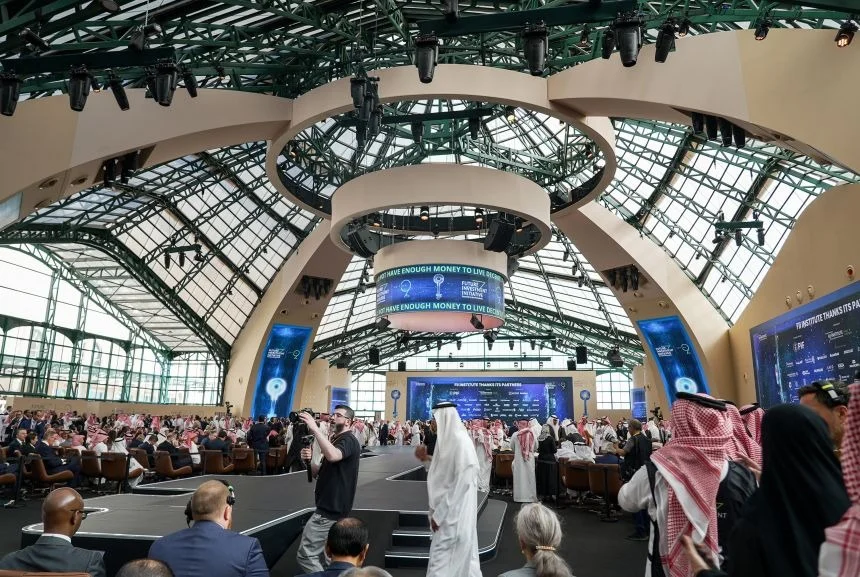





Saudi Arabia has officially scrapped its high-profile Future Investment Initiative, popularly dubbed “Davos in the Desert,” which was slated for October 26–29 in Riyadh. The FII Institute, which organizes the annual showcase of the kingdom’s economic reach, announced that the event will now be rescheduled for an undisclosed date in 2027. This postponement marks a significant challenge to the nation’s broader efforts to transition its economy away from an exclusive reliance on oil and natural gas. Known as “Davos in the Desert,” the Future Investment Initiative will now take place on an undisclosed date in 2027, according to a statement from the conference shared via email with Becky Anderson. Normally, the annual event showcases Saudi Arabia’s financial muscle and growing role on the world stage.
The decision follows an intense period of escalation involving Iran-backed Houthi militants. Recent weeks have seen a surge in missile and drone strikes targeting strategic sites across the country, including energy infrastructure and airports. Notably, a deadly missile attack struck Riyadh’s King Khalid International Airport earlier this month, prompting international travel warnings and creating an atmosphere of heightened insecurity that likely influenced the cancellation. Industry observers suggest that boards of directors may have been increasingly reluctant to send high-profile executives into the region while such active hostilities persist. Drone and air strikes in recent week, with the conflict escalating sharply, saudi Arabia and Yemen’s Iran-aligned Houthis have exchanged near-daily missile.
The conference had originally boasted an impressive roster of speakers, including leaders from major global financial institutions such as JPMorgan Chase CEO Jamie Dimon, Citigroup CEO Jane Fraser, Goldman Sachs CEO David Solomon, and BlackRock head Larry Fink. The FII Institute stated that the postponement was necessary to ensure the event’s tenth edition meets the quality and scale expected by delegates, speakers, and partners. According to the organizers, all current registrations and existing partnerships “remain valid,” and further details regarding the 2027 event “will be communicated very soon.” Analysts warn that this development creates a climate of investment uncertainty, potentially hindering long-term efforts to draw Western capital into the Middle East. The deteriorating security situation undermines decades of effort to attract Western capital to the Middle East and may herald a period of investment uncertainty that would be detrimental to the whole region.