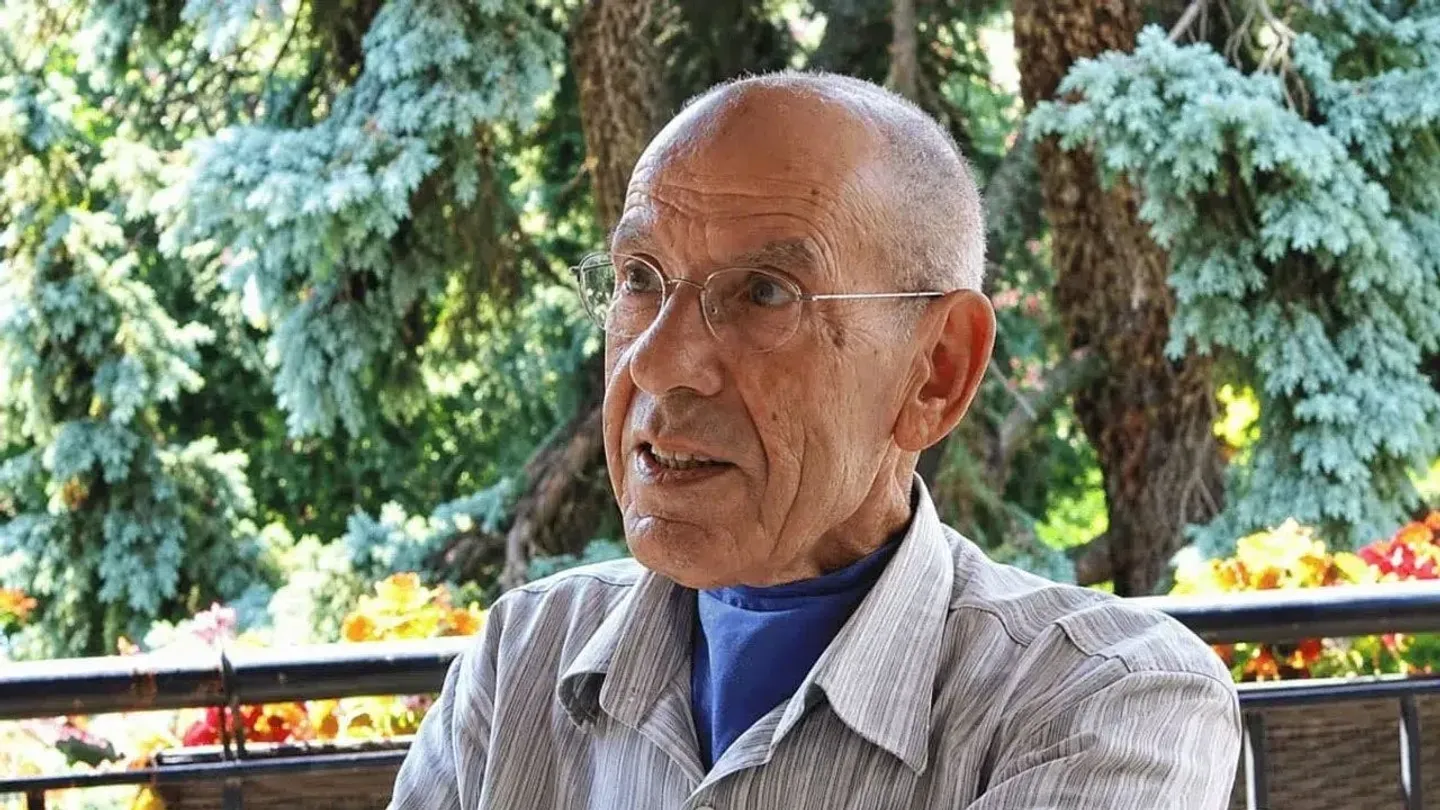








Engin Deniz Akarli, a distinguished Turkish academic renowned for his re-examination of late Ottoman legal, economic, and political history, has died at the age of 81. His passing marks the loss of a scholar who challenged long-standing narratives regarding the decline of the Ottoman Empire, particularly through his detailed research into its administration of Lebanon.
A central pillar of his academic legacy is the award-winning book The Long Peace, which chronicles Ottoman governance in Lebanon between 1861 and 1920.
The work investigates the period following the brutal 1860 civil war between Druze and Maronite Christian communities.
In the wake of this violence, Istanbul implemented a semi-autonomous governance structure in Mount Lebanon, directed by Christian governors. Louis, Harvard, Bogazici and Istanbul Sehir.
This model was intended to stabilize the region amidst increasing pressure from European powers—including Great Britain, France, Russia, Austria, and Prussia—who frequently intervened in Lebanese affairs to support specific religious groups. The arrangement also sought to contain French influence in the region.
Akarli’s research offered a revisionist perspective on this era. He argued that while Western involvement often exacerbated sectarian divisions, the Ottoman administration actively worked to foster a stable governmental order. He described this governance as a modern adaptation of the traditional millet system, which organized society along religious lines, rather than attempting to force a nation-state structure onto a complex, multi-confessional society. In 1994, one year after its publication, The Long Peace received the Missouri Historical Society’s Best History Book Award. “In fact, the Ottoman evidence suggests that whereas European intervention in the affairs of the Mountain was often self-interested, sectarian, and divisive, the Ottomans perforce worked hard, until 1912-13, to build a stable governmental order which would reconcile the moral and material differences among Mount Lebanon’s different regions, sects, and dominant social classes,” he wrote. “This, in turn, traps the complexity of human life within black-and-white templates, both undermining historical consciousness and fueling social polarization,” he adds. Social pluralism and the role of law in limiting central authority, according to Kavak, at the heart of Akarli’s approach to Ottoman historiography was an emphasis on ordinary people. “He wanted to make sure students will have different approaches.”. He requested publications exploring how military conflicts had shaped human history, Oner recalls, the next year.
The scholar’s connection to this research began in the mid-1970s. While examining Ottoman policies in the Middle East at the Prime Ministry archives in Istanbul, Akarli was “struck by the wealth of documents” regarding Lebanon. According to Medipol University history professor Sit Tufan Buzpinar, a longtime colleague, Akarli was likely the first Turkish academic to seriously engage with the history of Ottoman Lebanon in the broader context of Ottoman-Arab relations.
Akarli’s academic foundation was built at Princeton University, where he completed his PhD in the Department of Near Eastern Studies. His doctoral research explored the pressures of budget deficits, external diplomatic challenges, and great-power competition during the reign of Sultan Abdulhamid II from 1876 to 1909. While many contemporary historians characterized the 19th-century empire as a failing entity destined for inevitable collapse, Akarli’s work demonstrated that it possessed the intellectual and political agility to manage territories throughout the Middle East until the First World War.
His analysis of Ottoman stability is frequently contrasted with the perspectives found in David Fromkin’s A Peace to End All Peace, which focuses on the collapse of Ottoman rule and the resulting post-war settlements. Following the April 1920 San Remo Conference, Allied powers partitioned former Ottoman territories, with France assuming mandates over Syria and Lebanon. Akarli contended that at a time when Western powers promoted a culture of sectarianism, the Ottoman Empire successfully maintained a period of relative order that he termed a “long peace.” Several European powers sought to intervene in Lebanon’s internal affairs on behalf of Christian communities, thereby challenging Ottoman authority, following the conflict. A Mediterranean country not far from Cyprus, the island from which his paternal ancestors hailed, akarli maintained a lifelong interest in Lebanon. “He would not be satisfied with a simple explanation that this Ottoman court ruling is about this particular issue. He would challenge you to go deeper to understand why this court ruled like that and what kind of results this rule might have on human lives in that particular time and area,” Cimen says.
Beyond his archival research, Akarli was a deeply committed mentor who influenced generations of students. Colleagues noted his demanding approach to pedagogy; for instance, he would update his world history syllabus annually to ensure students were exposed to diverse methodologies. He encouraged pupils to move beyond superficial interpretations of legal documents, urging them to consider the human impact of judicial decisions. He often prompted his students to investigate why historical actors required specific laws or the origins of their desire for consistency. Away from academia, Akarli was a passionate gardener who grew roses and often gave them to his students.
His contributions to the field were recognized in 2014 when he received Türkiye’s Presidential Culture and Arts Grand Award in History and Social Sciences. He was deeply devoted to his family, dedicating his seminal book to his wife, Tuna. Born with ancestral ties to Cyprus and his mother’s hometown of Rize, Akarli was laid to rest on Tuesday at Istanbul’s historic Karacaahmet Cemetery, near his mother’s grave.
For those who worked alongside him, his legacy remains tied to his insistence on bridging the gaps between official registers and the realities of human experience. By integrating court records, literary sources, and material culture, Akarli provided a more nuanced, integrated reading of history. His colleagues emphasize that his influence will persist through the students he challenged to develop their own critical historical imaginations. According to “In his view, the past can only be grasped in proportion to the traces it leaves behind and through a disciplined historical imagination that faithfully bridges the gaps between those traces in accordance with the sources,”, Ozgur Kavak, a theology professor at Marmara University and a close associate of Akarli. “Insisting on an integrated reading of everyday disputes, as reflected in court records, literary works, and elements of material culture alongside official registers and statistical data, Akarlı pointed out that the primary obstacle facing the historian is not a lack of documents but rather the ideological conditioning and mental blind spots of the present,” Kavak tells. Akarli, whose journey led from Marxism to Islam, was acutely aware of how ideological convictions could shape scholarly research. But that did not mean he was an easy professor to please. Even on his final day, Akarli, who had battled cancer for more than a decade, continued working until the early hours of the morning, according to his wife, Tuna Akarli, and others close to him.