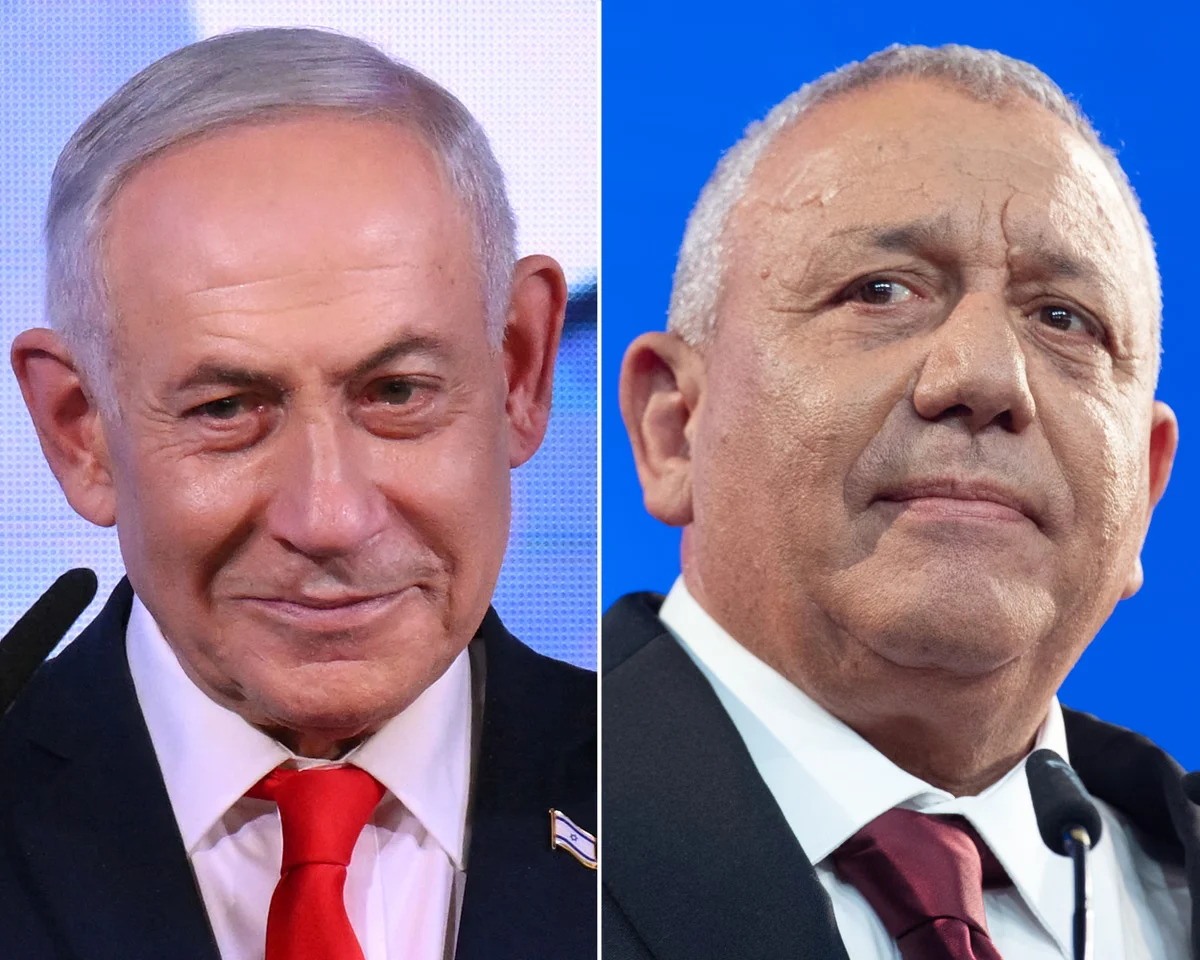










Israel faced political uncertainty on Wednesday as election results indicated that incumbent Prime Minister Benjamin Netanyahu failed to secure a governing majority. The country’s political future now hinges on whether opposition Jewish factions are willing to form an alliance with Palestinian parties, which saw a surge in support during Tuesday’s vote. “We have no future here if we don’t stop being afraid. And if we don’t put an end to racism. Noa Landau, a commenter writing in Haaretz, argued that by making Zionism the test for forming a coalition, excluding potential partners, while the prime minister had not, Eisenkot had fallen “into the trap Netanyahu laid for him over the course of the election campaign”. Despite the fact that Israel has been accused of committing genocide in Gaza and ethnic cleansing in the West B, the election happened in the midst of Israel’s war in Gaza – barely mentioned in the course of the campaign. But that broad picture may be complicated by the fact that a lot of older, more moderate reservists are now on active duty, the army vote usually swings right. Governing for 19 of the past 30 years, and its most tenacious political survivor, netanyahu is Israel’s longest-serving prime minister. He and his far-right coalition had stoked xenophobic fears and suggested Israel would be vulnerable to a nuclear attack without him, entangled in a long-running corruption trial. The campaign, febrile even by Israeli standards, included Netanyahu posting a picture of a nuclear explosion devastating Tel Aviv on the eve of the polls opening.
Gadi Eisenkot, the retired general leading the Jewish opposition, appeared to rebuff the idea of such a broad coalition, declaring a victory for what he termed a “Zionist majority.” However, initial exit polls showing a narrow lead for his bloc were challenged as votes were counted throughout Wednesday. With approximately 14% of the electorate still to be tallied—including deployed soldiers and other absentee ballots—Netanyahu’s coalition showed signs of narrowing the gap.
With 86% of the vote accounted for, neither Jewish bloc appears capable of reaching the 61 Knesset seats required for a majority. This puts Eisenkot in a difficult position: he must either reach an agreement with Arab Israeli parties, which are on track for a historic 16 to 19 seats, or risk providing Netanyahu a path to remain in power through a new government or fresh elections. Both Jewish blocs looked certain to fall short of the 61 Knesset seats needed for a majority government, leaving Eisenkot and his allies facing a clear choice: either make a pact with Arab Israeli parties heading for a record result of 16-19 seats, or hand Netanyahu a political lifeline in the form of new elections or a unity government, with the remaining 86% of the votes tallied. “Anyone who tries to erase the votes of Arab citizens is surrendering to Netanyahu and giving up on Israel,” he added, pointing out that Netanyahu relied on ultra-Orthodox Jewish parties that were non-Zionist and opposed conscription for their constituents. Between 2019 and 2022, Israel held five elections.
Netanyahu alleged on Wednesday that high Palestinian turnout and the performance of Arab Israeli parties had “stolen the election. Projections show votes for Palestinian parties surged in a tight contest that drew highest turnout in decades.
While he provided no evidence, he stated on X that his Likud party had submitted hundreds of testimonies to the central elections committee and the Shin Bet internal security agency. Both bodies have previously faced accusations of politicization under the current administration, particularly after the elections committee’s unsuccessful attempts to bar Arab Israeli parties, which the supreme court later overturned.
Reflecting on the performance, Donald Trump claimed credit for Netanyahu’s resilience, noting that his overt endorsement ahead of the vote had been influential. Meanwhile, Yair Golan, leader of the centre-left Democrats, pressed Eisenkot to engage with the Joint List and Ra’am, stating that failing to cooperate or succumbing to racist rhetoric would only serve to strengthen Netanyahu. Claiming his overt backing in the run-up to the vote had made the difference. “When the endorsement went out, it helped him a lot,” Trump said, adding that the result appeared to be heading for a stalemate or a Netanyahu win, donald Trump took credit for Netanyahu’s better than expected performance so far.
Yousef Jabareen of the Joint List asserted that his party’s strong showing meant it could no longer be ignored in any political scenario. He criticized the current government’s treatment of Arab citizens and expressed readiness to help remove Netanyahu, Ben-Gvir, and Smotrich from office, framing the current choice as a decision between democracy and supremacy. “We will be ready to pave the way to oust the government of Netanyahu, Ben-Gvir and Smotrich – and send them home,” Jabareen said.
The final count is expected to take several days. Once finalized, President Isaac Herzog will likely grant one party leader a six-week period to form a governing coalition. Should the first attempt fail, the mandate will move to their political rival. Throughout this process, both camps are expected to pursue defectors from opposing sides.
Netanyahu remains in office as a caretaker and may view a potential deadlock as an opportunity for further elections. Conversely, the Palestinian parties and the centre-left are advocating for a common front to replace the Knesset speaker and investigate the security failures surrounding the 7 October 2023 Hamas attack. President Herzog has urged all factions to maintain an “open mind” to avoid another cycle of elections. He might expect to benefit if the deadlock leads to another round of elections.
This election takes place amid ongoing conflict in Gaza. A recent report from a UN commission of human rights experts stated that Israel has continued committing genocidal acts, noting that 1,431 Palestinians have been killed since an October 2025 ceasefire. Israel’s UN ambassador, Daniel Meron, dismissed the report as an attempt to undermine the nation’s legitimacy and its right to defend itself. Since then 1,431 Palestinians have been killed by the Israeli military, including 300 children. The report, by the Independent International Commission of Inquiry on the Occupied Palestinian Territory, said: “Israeli authorities and forces continue to commit genocidal acts with the genocidal intent to destroy, in w. The highest since 1999, with marked increases in the number of serving military members voting, the turnout was nearly 78%. Since the deadly attack launched by Hamas on Israel’s southern communities on 7 October 2023, Israel has devastated Gaza and killed more than 74,000 Palestinians, fought Hezbollah in Lebanon, occupied new territory in Syria and launched a war alongside the US against Iran.