







Estonia is set to close its border crossings with Russia in the wake of an attempted arson attack targeting Threod Systems, a domestic drone manufacturer. Foreign Minister Margus Tsahkna announced the decision on Sunday, shortly after Estonian authorities detained eight individuals suspected of orchestrating the sabotage. While the government has not yet provided a specific timeline for how long the closures will remain in effect, the move aims to mitigate hostile activities and prevent the circumvention of international sanctions.
Estonian officials have directly linked the attempted arson to Russia’s GRU military intelligence. Foreign Minister Tsahkna stated on X that the nation is prepared to ensure that hostile actions against its security will face consequences. “Attempts to intimidate, destabilise, or undermine our security will not go unanswered,” he said, framing the border closure as a necessary step to curb Moscow’s influence. There has been no official statement from the Russian government regarding the allegations.
The investigation also led to arrests in neighboring Latvia. Latvian Interior Minister Janis Dombrava confirmed the detention of several suspects, identifying them as “Latvian citizens and non-citizens.” Expressing gratitude to the Estonian Internal Security Service for their coordination, Dombrava noted that individuals working in the interests of Russia have continued to pose threats since the collapse of the Soviet Union. He vowed that national security services would persist in their efforts to protect the safety of those living in Latvia. “Since the collapse of the USSR, there have been people among us who are willing to commit serious crimes in Russia’s interests. We will continue our work to ensure that such people cannot endanger the lives of those who love Latvia and want to live in safety,” Dombrava wrote.
Marko Mihkelson, who chairs the Estonian Parliament’s Foreign Affairs Committee, emphasized that the arrests underscore Estonia’s capacity to react quickly to foreign threats. He argued that the incident is part of a broader, state-sponsored campaign of terror designed to divide Europe and weaken support for Ukraine. “It is essential that Russia’s state-sponsored campaign of terror does not remain merely a matter of diplomatic protests,” Mihkelson told reporters. He added that closing the borders serves as an asymmetric measure to counter what he described as Russia’s shadow war.
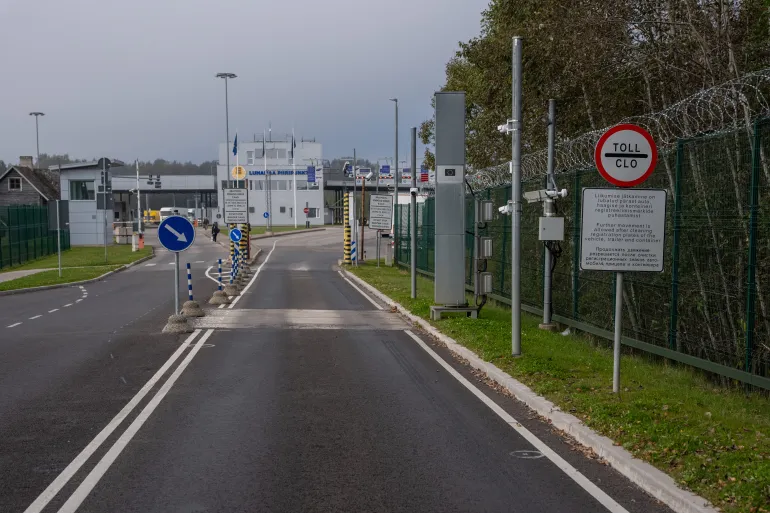
Estonia currently maintains three operational border crossings with Russia located at Narva, Luhamaa, and Koidula. As both a NATO and European Union member, the country has maintained a firm stance in supporting Ukraine, positioning these defensive measures as a critical response to ongoing regional instability.