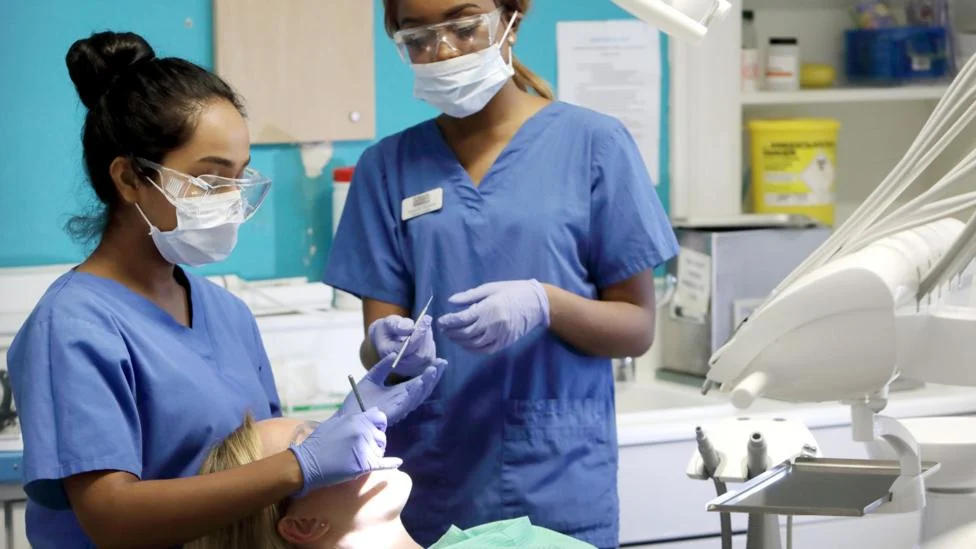








A decade-long decline in NHS dental provision has left patients across England facing a widening two-tier system, where access to care is increasingly dictated by geography and personal income. Data analyzed by the Nuffield Trust indicates that nearly 600 dental practices have withdrawn from the NHS over the past 10 years, representing more than one in 10 of the practices that previously provided public health service care.
The impact of this shift is unevenly distributed. Regions such as Cornwall, Devon, and Northamptonshire have experienced some of the most significant reductions in NHS-offering practices. In Cornwall, more than 25% of practices that once provided NHS treatment have ceased doing so. Conversely, North East London was the only region to record a slight increase in NHS-linked practices over the same period, while the smallest declines were observed in North West London and the Black Country.
Current NHS dental activity remains 8% lower than pre-pandemic levels. A Nuffield Trust survey highlights the severity of the situation, revealing that only 38% of adults who attempted to secure an NHS appointment in the last two years were successful. Furthermore, six in 10 adults have not seen an NHS dentist at all within the last two years.
For many, the lack of access has profound consequences. In Somerset, where fewer than one in five practices now offers NHS services, 83-year-old resident Alan has abandoned his search for care. He notes that he has only one tooth remaining after years of decay and has had to significantly alter his diet. “I used to try, but getting a dental appointment anywhere near where I live would be impossible,” he says.
Dentists argue that the current contractual framework is financially unsustainable. Vivak Shah, who manages three practices in Northamptonshire, continues to provide NHS treatment but reports that it operates at a loss, forcing him to stop accepting new NHS patients. “Each year we struggle to decide what to do, and there is a limit to how much the private side can cover the NHS losses,” Shah explains, warning that the loss of NHS capacity risks pushing patients toward hospital emergency departments for pain relief.
This sentiment is shared by Jim Sykes, a Hexham-based dentist who returned his NHS contract in 2024. Describing it as a difficult emotional decision, Sykes noted that the work was loss-making and that he felt unable to continue without compromising his staff’s stability. He added that none of his graduating peers remain in the NHS, opting instead for private practice, teaching, or retirement. “There has been a real breakdown in trust for me,” he says. “Even if there was a new government offer, I would still be very nervous about entering a new NHS contract.”
Mark Dayan, head of public affairs at the Nuffield Trust, characterizes the trend as a “quiet transformation” of dentistry into a two-tier service. He emphasizes that the issue is not a lack of overall dentistry, but a specific shortage of NHS-funded care, noting that practices must be incentivized to return to areas where the NHS footprint has thinned most significantly.
Shiv Pabary, chair of the British Dental Association’s General Dental Practice Committee, attributes the crisis to the policy choices of successive governments. He warns that unless ministers take urgent action to “fix and fund NHS dentistry,” more practitioners will likely reduce their public service commitments or exit the system entirely.
The campaign group 38 Degrees has labeled the current situation “shameful,” arguing that it forces individuals to pay for private care they cannot afford or endure the pain and complications of being denied essential treatment. In response, the government has stated it is working to reform the dental contract and increase training. Proposed measures include a requirement for newly qualified dentists to practice within the NHS for a minimum of three years to help bolster capacity in the most underserved regions. The report also notes that raising concerns about growing inequalities in access to care, the decline has been particularly sharp in parts of the South West and East of England. The report also notes that leaving it near impossible for some communities to find NHS appointments, the analysis suggests more than one in 10 dental practices that once offered NHS care no longer do so. The report also notes that but dentists say the current deal is not viable, the findings come as ministers have pledged to tackle so-called “dental deserts”. The report also notes that alan, 83, who lives in the county, says he has given up trying to find an NHS dentist. The report also notes that although he jokes that he has perfected a way of eating Brazil nuts, alan has only one tooth remaining after the others “crumbled out over the years” and says he has had to adapt what he eats. The report also notes that i had to think of my team of staff and make it work,” he says. The report also notes that or give up the NHS work, sykes asked if he could continue treating just children but was told he had to accept adults as well.