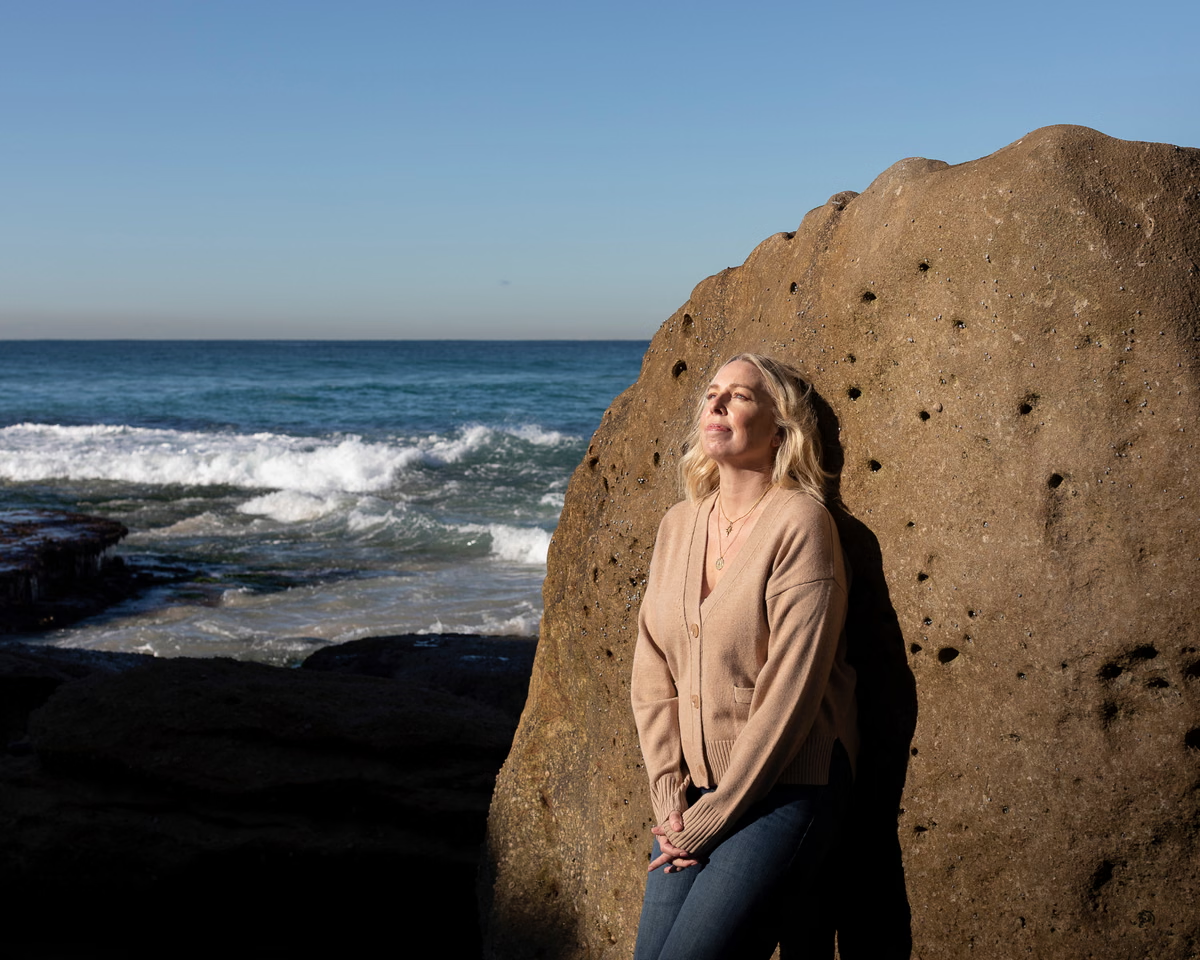









Surfers often begin their day by carefully studying the ocean, analyzing wind patterns and tide conditions before entering the water. For Hannah Richell, however, the ocean became the site of a life-altering tragedy. Ten years after her husband, Matt, died in a surfing accident, she reflects on the profound impact of that loss, noting that the beach has remained a constant, looming presence in her mind.
The ordeal began on an ordinary Wednesday afternoon in Sydney during the first week of July. Two plainclothes police officers arrived at the couple’s small sandstone cottage. Richell recalls the moment they knocked on the door and asked, “Hannah Richell?” When she confirmed her identity, the officers introduced themselves and delivered the devastating news: “I’m sorry to tell you your husband has been in a surfing accident.” Initially, Richell’s mind raced with thoughts of hospital logistics, asking, “Is he OK?” before the reality of the situation set in.
Before the police arrived, Richell had received a call from a friend who mentioned a Bondi detective was looking for her address, noting they could not reach Matt. The confusion and panic of that day remain vivid. Following the notification, she was taken to the morgue. She describes the experience of viewing her husband’s body as the most painful hour of her life, a time spent alone to kiss and caress him. She noted that when she held his hand, she found grains of Tamarama sand, a detail that underscored the finality of the event.
Richell later connected with Adam, the friend who had been with Matt during the accident. Meeting in a park, Adam recounted the sudden shift in tide conditions and the moment he saw Matt’s board come loose in a rip current. He also suggested she speak with Wendy, a counselor from the forensic science team who had been assigned to the case. Wendy became a vital source of support, offering a space where Richell could process her trauma without judgment. During their sessions, Richell often grappled with the feeling that returning to the beach was a way of returning to her husband, even while acknowledging the impossibility of that.
As time passed, the family sought ways to navigate their grief. A friend introduced the concept of “memory jars” to help the children process their loss. Her daughter remembered her father singing “Frozen” songs in the car, while her son recalled him curling up with them. They fondly remembered his cooking, specifically his Yorkshire puddings, and the way he would carry his daughter on his shoulders. The children often expressed their love simply, stating, “He loved us … and we loved him.”
Nearly two years after the accident, Wendy informed Richell that an inquest would be held. The process was not intended to assign blame but to clarify the sequence of events. Over two days, the facts of the incident were relayed, detailing the treacherous conditions that led to the tragedy. For Richell, this period was marked by a struggle to understand the concept of acceptance. She eventually realized that acceptance was not about finding a sense of “rightness” in the situation, but rather learning to live with the ongoing, shifting nature of grief.
As she prepared to move and sell their home, Richell reflected on the possessions that made up their life together. She spent time in her son’s room, acknowledging the pain of the transition. Ultimately, she found a way to thank the house for the memories it held before moving forward. Even today, she finds herself contemplating Matt’s final moments, hoping he did not know he was about to die and that he felt the love of his family until the end. As she sits on Tamarama beach during a high-tide morning in 2024, the memory of her husband remains deeply intertwined with the landscape of the coast. The report also notes that break points and swells, they analyse currents and patterns. The report also notes that i have travelled across oceans and a day to sit here on Tamarama beach in Sydney on a high-tide weekday morning in 2024. The report also notes that too, attempt to read the waves, to find meaning in their unfathomable churn, a notebook and pen lie beside me on the sand as I. The report also notes that this beach has loomed large in my mind, these past 10 years. The report also notes that it’s as if my face has been turned to these waves and I have been buffeted, sometimes staggering, sometimes falling, always bracing for the next set to roll in, even when absent. The report also notes that one day, to come along and knock you off your feet, for I have learned that all it takes is one ocean. The report also notes that buried in my studio, wrestling with the tangled threads of a novel, when I receive a call from my husband’s PA, i am a few streets away. The report also notes that half-walk up the steep hill to our house, i grab my laptop but leave everything else in place and try Matt’s number as I half-run.