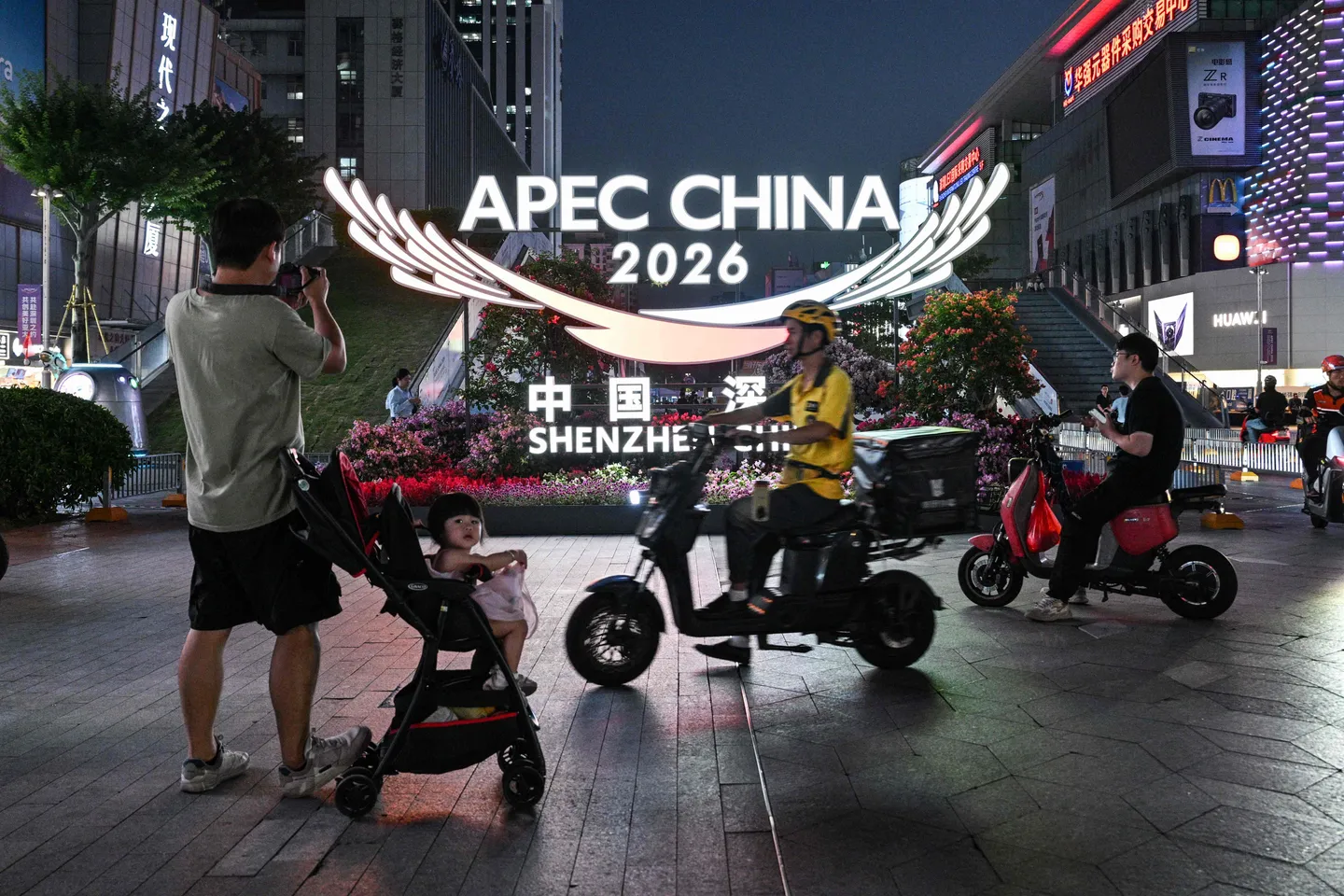










Shenzhen, China’s southern technology hub, is preparing to host the 21-member Asia-Pacific Economic Cooperation (APEC) gathering next week. The summit is expected to draw major international leaders, including U.S. President Donald Trump, Chinese President Xi Jinping, and Russian President Vladimir Putin, as the forum faces a backdrop of deepening trade frictions and ongoing geopolitical rivalries.
Founded in 1989 in Canberra as an informal 12-member dialogue, APEC has evolved into the region’s premier economic forum for advancing growth, trade, and investment. Today, the group comprises 21 economies—ranging from the United States and China to Japan, Australia, and Southeast Asian markets—that collectively account for roughly 60 percent of global GDP and about half of world trade.
Summit Mechanics and Significance
- Influence: Operates through consensus and non-binding commitments rather than legal treaties to lower trade barriers and align standards.
- Inclusivity: The structure allows for the participation of “member economies” rather than nations, enabling seats for Hong Kong and Taiwan, though it notably excludes India.
- Schedule: The APEC Economic Leaders’ Meeting is set for November 18-19, following a CEO summit on November 17-18.
China is hosting the summit for the third time, having previously held the event in Shanghai in 2001 and Beijing in 2014.
Chim Lee, a senior analyst at the Economist Intelligence Unit, noted that the choice of Shenzhen—part of China’s Greater Bay Area—is strategic. The city is a hub for technology giants such as BYD, Huawei, and Tencent, and offers Beijing a platform to showcase its development vision while demonstrating resilience against geopolitical turbulence.
Key Geopolitical Dynamics
- Tripartite Tensions: All eyes are on potential interactions between U.S., Chinese, and Russian leaders. Analysts note China’s reluctance to discuss nuclear disarmament, citing its smaller arsenal compared to the U.S. and Russia, while the U.S. and Russia remain focused on the war in Ukraine.
- U.S.-China Relations: Stability remains the primary goal, though both sides are currently struggling to meet existing commitments regarding an extended trade truce.
- Agenda Items: Discussions are expected to cover rare earth supplies, artificial intelligence, and tariffs, with close attention paid to U.S. arms sales to Taiwan.
- Regional Instability: Conflict in the Middle East and its subsequent impact on energy security, global inflation, and supply chains will be a significant concern for attendees.
While official attendance lists remain unconfirmed by Beijing, several leaders have confirmed their participation.
Philippine President Ferdinand Marcos Jr. is expected to attend, while Japan’s Prime Minister Sanae Takaichi and New Zealand’s Prime Minister Christopher Luxon have confirmed their travel.
Taiwan has appointed Acer founder Stan Shih as its envoy.
Other expected participants include the heads of state from Canada, Australia, Mexico, Indonesia, Malaysia, South Korea, and Vietnam. The world’s most populous nation, however, it does not include India.
Under the banner of “Building an Asia-Pacific Community to Prosper Together,” the summit aims to prioritize innovation and cooperation. In Shenzhen, the core challenge will be determining whether the collective economic weight of these 21 members—which also include Brunei, Chile, Papua New Guinea, Peru, Singapore, and Thailand—can create common ground among powers that are increasingly at odds. Competing interests, one stage, three major powers.
- A close look at what is behind the summit pageantry: a patient pursuit of economic integration across a region that accounts for roughly 60 percent of global GDP.