
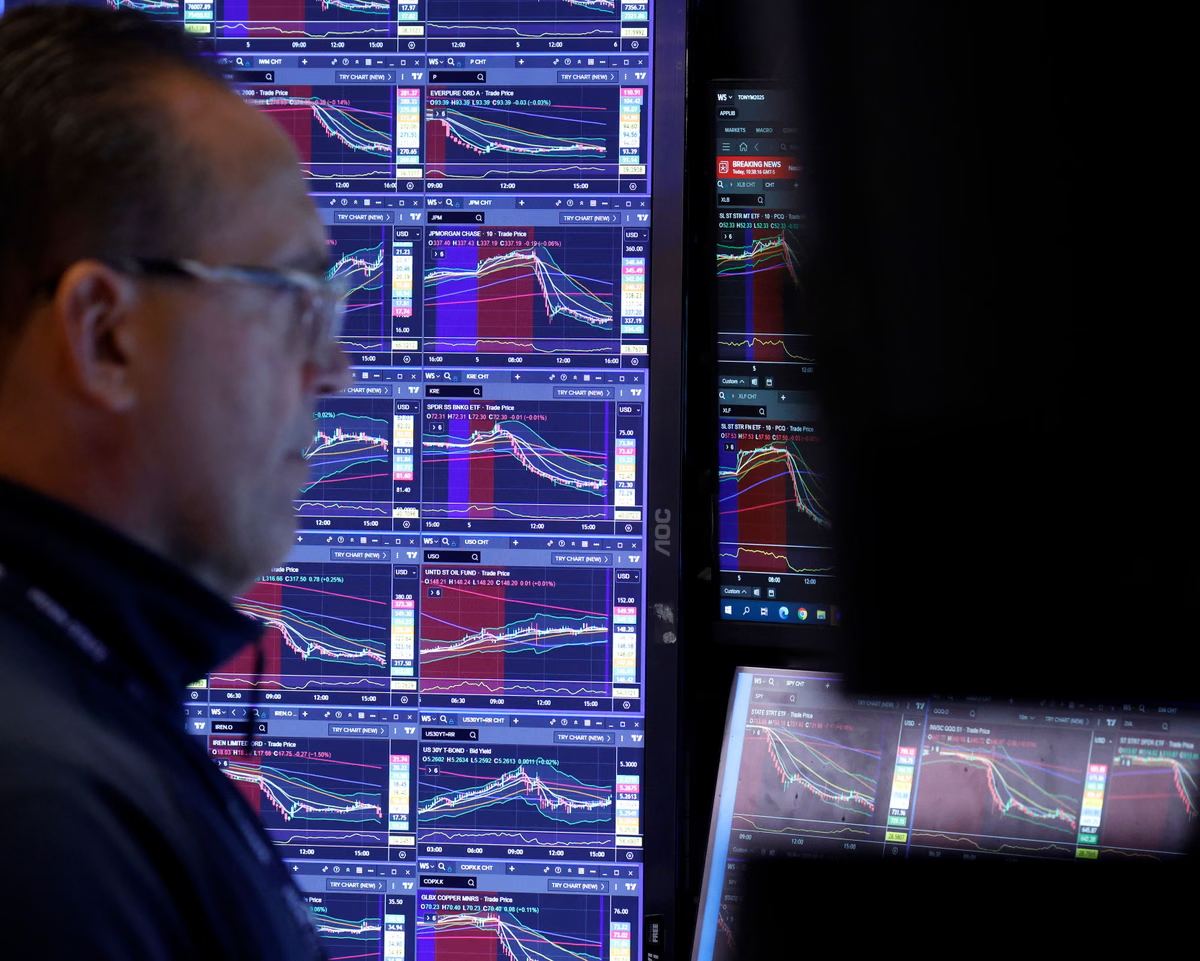










Global financial markets experienced significant instability following a massive sell-off on Wall Street, as investors grappled with concerns over a potential slowdown in the artificial intelligence sector following the US midterm elections. The volatility, which began on Thursday, rippled through Asian and European markets by Friday. While US exchanges saw a partial rebound, markets remain cautious about the possibility of continued downward pressure. But could this volatility be the start of a huge market meltdown. US markets rebounded after trading reopened in New York, but failed to recover all of the lost ground amid lingering concerns of a relapse in selling pressure. Challenging billionaire power and calling out Wall Street and big tech were the rallying cries of many Democrats in the midterm elections. In a blow to countries that have pinned their hopes on the AI revolution creating jobs and generating a productivity boost to overcome years of relative economic stagnation, the prospect of a sustained tech sell-off could prove a big setback.
The scale of the downturn was substantial, with more than $3.2tn wiped from the value of the US stock market on Thursday—a figure exceeding the annual economic output of Canada. The tech-heavy Nasdaq dropped 5.5%, while the blue-chip S&P 500 fell 4.4%. More than $3.2tn (£2.4tn) was wiped from the value of the US stock market on Thursday – bigger than the annual output of the Canadian economy – after the tech-heavy Nasdaq fell by 5.5% and the blue-chip S&P 500 fell by 4.4%.
Market analysts have long warned that valuations for major AI companies had become increasingly detached from underlying financial realities.
This apprehension was further supported by the cyclically adjusted price-to-earnings (Cape) ratio reaching its highest levels since 2000, indicating an unusually high market valuation relative to corporate profits.
A clear example of this disconnect occurred last week when Alphabet, Google’s parent company, saw its value drop by over $500bn following an earnings report that missed expectations.
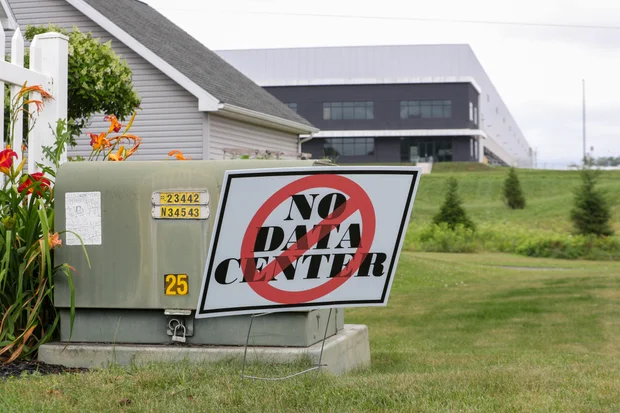
The recent market shift has been attributed by some to the Democrats’ victory in the midterm elections. Investors fear a Democrat-controlled Congress may impose stricter regulations on AI development and datacentre construction, potentially curbing growth in a sector that has been a primary engine for corporate earnings. Public opposition to resource-intensive datacentres also influenced the political climate, with moratoriums becoming a key issue in several states. While governments around the world have encouraged citizens to stockpile for multiple eventualities including cyber-attacks, opinion polls show most Americans are opposed to US datacentre construction.
The impact is particularly significant due to the influence of the “magnificent seven”—Nvidia, Apple, Google, Microsoft, Meta, Amazon, and Tesla. These stocks account for more than one-third of the S&P 500, meaning investment funds tied to the index are highly sensitive to their performance. For instance, after spending nearly half a billion dollars supporting Republicans, Tesla and SpaceX CEO Elon Musk saw his companies’ shares fall sharply following the election results.
Global economic conditions have compounded these pressures. Central banks have been raising interest rates in response to inflation triggered by the Iran war. There is growing concern that a tech-led slowdown could worsen the threat of stagflation, where weak economic growth coincides with rising consumer prices. What happens to the share prices of the US tech giants has enormous consequences for savers worldwide. AI has been a big growth driver, with the tech boom helping to soften the hit to the world economy from the war in the Middle East.
Despite the current climate, some experts argue the sector retains long-term potential. Ben Barringer, head of technology research at Quilter Cheviot, noted that while a pause in infrastructure buildout and delayed approvals are likely, the situation may prove more pragmatic under new leadership, such as Texas governor-elect Gina Hinojosa. Barringer observed, “A virtuous circle could quickly turn into a vicious one, and they [investors] must now ride it out until the direction of travel becomes clearer.”
Mark Haefele, chief investment officer at UBS Global Wealth Management, remains optimistic that the broader AI investment cycle is intact, dismissing the recent turbulence as mere “market indigestion.” He stated, “We do not think fundamentals justify a prolonged downturn,” suggesting that demand for semiconductors and AI tools remains robust despite immediate market fluctuations.