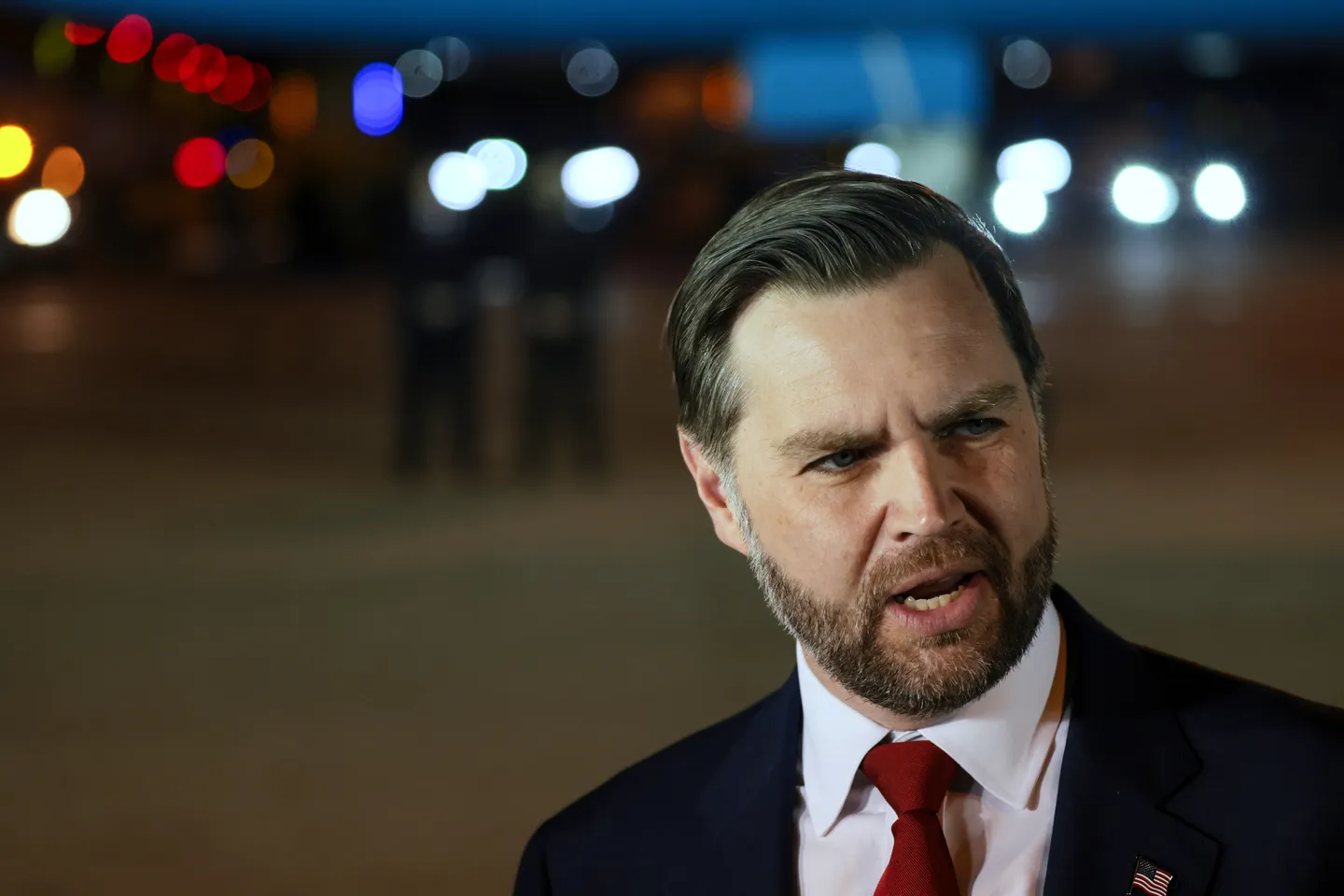








US Vice President JD Vance has publicly linked the Republican Party’s recent election setbacks to the current administration’s foreign policy, specifically identifying Washington’s ties to Israel as a significant political liability. This rare admission from within the executive branch acknowledges that the strategy surrounding the Middle East is no longer aligning with the priorities of the base that initially propelled Donald Trump to power. He also acknowledged that voter dissatisfaction extends beyond the immediate war to the broader relationship between Washington and Tel Aviv, while the vice president blamed the Iran war for the Republican defeat. The war on Iran has pushed those underlying tensions to the surface. His criticism of the election result also leaves unanswered questions about his own role in shaping or defending the policies he now identifies as politically damaging. According to “Trump has already, He has changed MAGA to VETO.
In a detailed post on X, Vance outlined four primary areas of voter concern gathered from citizens who supported Donald Trump in 2024 but shifted their support to Democratic candidates in the most recent midterm elections. But certainly not anymore.”, this may have worked 20 or 30 years ago. According to in a lengthy post on X on Wednesday, Vance attributed the Republican Party’s heavy losses to four demands he, Had emerged from conversations with voters who backed Donald Trump in 2024 but voted Democrat in this week.
These issues include ending the ongoing war on Iran, addressing domestic cost-of-living struggles, prioritizing an America First agenda, and fundamentally recalibrating the US relationship with Israel.
Vance noted that voters clearly signaled these frustrations, stating that these specific policy points were why many abandoned the Republican ticket. And the above four reasons are why many of them voted for Democrats,” he wrote.
Political analyst and communications strategist Klaus Jurgens suggests that Vance’s remarks highlight a widening divide within the Republican Party. Jurgens argues that the Trump administration has underestimated the increased political awareness of the American public, particularly regarding global affairs. He noted that the era where a president could unilaterally initiate foreign military action under the guise of national interest is largely viewed as outdated by modern voters. “What Trump has overlooked is that the American public has become much more educated about politics and global affairs,” Jurgens tells. “A president cannot simply wake up one morning and decide to invade another country, claiming to defend American interests abroad. The answer is yes,” Jurgens says, listening to JD Vance.
The pushback against the war in Iran and the continued financing of the Israeli government has become a focal point for disillusioned voters. While unconditional support for Israel has historically been a bedrock of Republican foreign policy, the America First movement has shifted the internal conversation. Many voters who backed Trump for his promises of isolationism and domestic focus now view foreign military entanglements as a betrayal of his campaign message.
Jurgens emphasized that this represents a notable shift in American public sentiment, where there is a clear rejection of foreign ground wars regardless of the target. He suggested that if Republicans hope to regain electoral success, they must address these grievances and stop the financial support currently flowing to Israel. They don’t want to engage in wars on foreign territories,” he adds. “Perhaps even the Israeli mainstream public is slowly beginning to realise that something is very wrong,” he adds.
The significance of these remarks is underscored by Vance’s position as a sitting vice president, which distinguishes his critique from that of a marginal opposition voice. However, his post lacked specific details on how a “change” in the relationship with Israel would manifest, leaving it unclear if he is advocating for conditioned military aid, adjusted diplomatic ties, or a move toward a more independent foreign policy stance. “I think this is a huge development, a change of mindset among the US population.
The vice president’s comments have not been without scrutiny. New York City Mayor Zohran Mamdani criticized Vance, characterizing the rhetoric as hypocritical. Mamdani argued that as a key member of the executive branch, Vance shares responsibility for the administration’s actions and should not be framing these issues as if he were an outside commentator or independent observer. He is not just some commentator online,” adding that the administration had started the war and had the power to end it.
Beyond the policy critique, analysts suggest that Vance’s statement might be a strategic move to distance himself from unpopular administration decisions ahead of a potential 2028 presidential bid. As the party evaluates its future, names like Vance and Secretary of State Marco Rubio have emerged as top contenders for the next nomination. Jurgens noted that while it is too early to predict the outcome of the next election cycle, the party is clearly at a crossroads. “Whoever wins in two years, the outcome is far from certain,” he adds.
The ongoing situation in Palestine remains a critical element of this disillusionment.
Jurgens posits that the public is increasingly sensitive to the humanitarian cost of the current conflict, despite the influence of groups like AIPAC. Looking toward the remaining term, Jurgens expressed concern that the administration might resort to last-minute foreign policy maneuvers to compensate for political instability, though he hopes the president avoids further conflicts to reclaim the narrative of his presidency. He turned his own MAGA approach into a belief that the world was his oyster,” Jurgens says, all of a sudden.