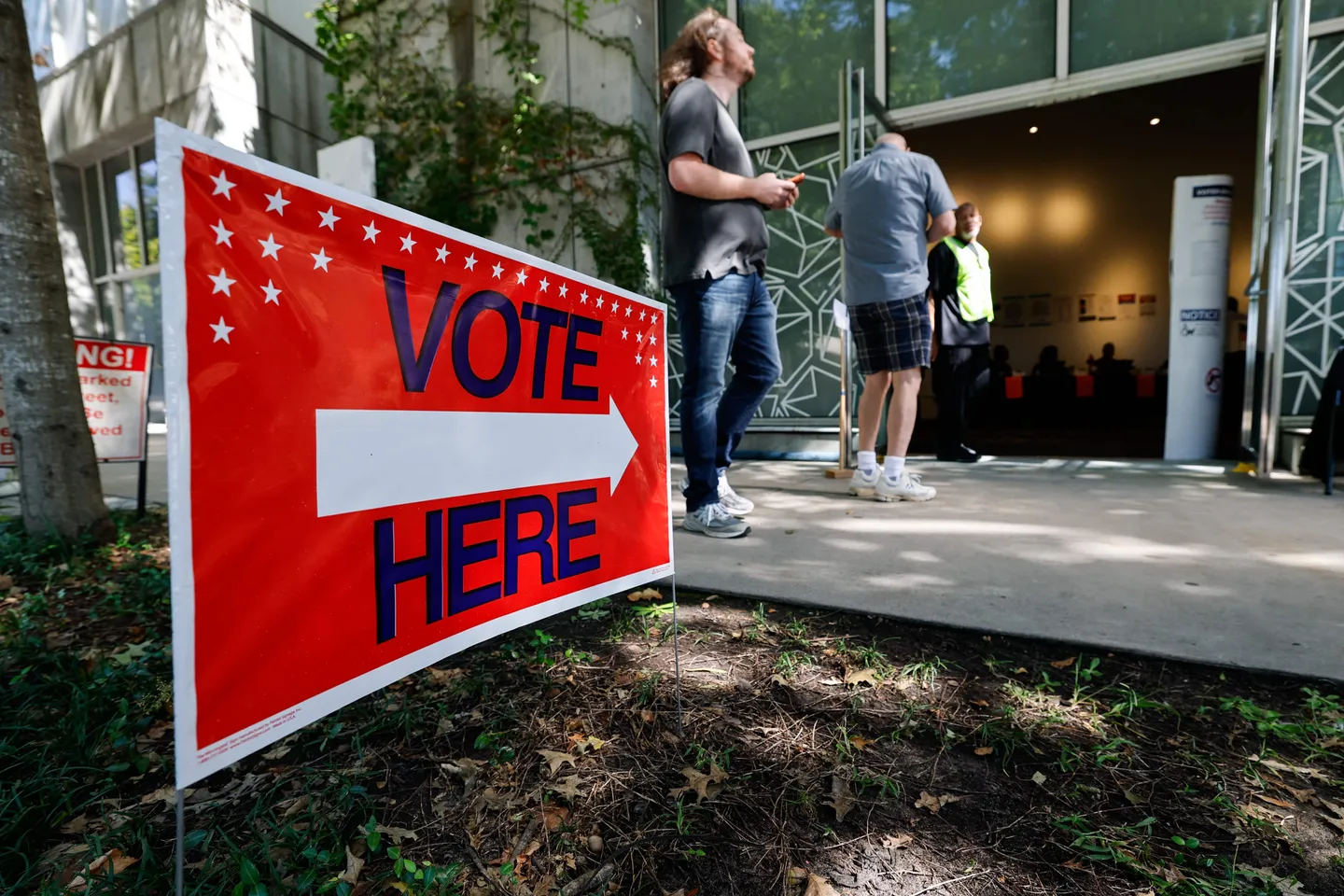










The United States gears up for midterm elections on November 3, a pivotal event that will determine control of both the House of Representatives and the Senate. With all 435 seats in the House and 35 of the 100 Senate seats contested, the outcome will fundamentally shape the final two years of President Donald Trump’s term. Currently, the Republican Party maintains a slim majority in both chambers, a position that faces significant pressure as the administration navigates economic challenges and shifting voter sentiment. The lower chamber of Congress, will be up for grabs in the midterms – the informal term for the nationwide polls held in the middle of every four-year presidential term, all 435 seats in the US House of Representatives.
Historically, the political party of a sitting president almost invariably loses seats in the House during midterm cycles—a pattern observed in approximately 20 of the last 22 elections. Since 1982, every first-term president has faced this trend, with the single exception of George W. Bush in 2002. Prominent figures including Ronald Reagan, Bill Clinton, Barack Obama, and Donald Trump himself in 2018 all experienced significant seat losses during their respective midterm contests. Paired with economic stress or unpopular policies, produced large losses: Reagan amid a recession in 1982, Clinton in 1994, and Obama after the Affordable Care Act in 2010, zogby points to past cycles in which weak presidential approval.
John Zogby, a public opinion pollster and co-founder of the Arab American Institute, suggests that the current environment is primed for the opposition Democratic Party to continue this historical trend. Zogby points out that Trump’s approval ratings are currently low, particularly regarding issues that matter most to American voters: the economy, affordability, and the ongoing war in Iran. With just two weeks until the election, he notes that the president’s party appears to be in a difficult position. “During the past 10 years with Trump dominating the political scene, many of the old rules and historical traditions have been defied,” John Zogby, a public opinion pollster and co-founder of the Arab American Institute, said. But Schultz notes many reasons why poll numbers may overstate Democratic gains. What distinguishes 2026 from past midterms is that a “small set of issues is nearly inseparable from President Trump himself”, Schultz notes. “Because Democrats have not offered a clear alternative economic message, affordability may produce disengagement as often as it produces Democratic votes,” he adds. He says, this leaves open the possibility of “last-minute revulsion” by late-deciding voters.
However, analysts caution that while history offers a useful benchmark, it is not a guaranteed predictor of current results. David Schultz, a political science professor at Hamline University and editor of “Presidential Swing States: Why Only Ten Matter,” argues that unusual external events—such as the 1998 backlash against Clinton’s impeachment or the post-9/11 support for Bush—can override standard midterm dynamics. Schultz notes that presidential approval ratings, which currently place Trump between 36 and 38 percent, are a strong indicator of election outcomes when paired with negative economic perceptions. A non-partisan polling service, has shown only about 32 percent approving of Trump’s handling of the economy against 65 percent disapproving, a survey by Quinnipiac University. Polls show only 29 percent approving of Trump’s handling and 65 percent disapproving.
The structural landscape of American politics has also shifted. Schultz observes that the number of truly competitive House seats has plummeted from roughly 120 in previous decades to approximately 30. Furthermore, the proportion of swing voters has dwindled from 10–15 percent to just 0–5 percent. This concentration means election outcomes now hinge more heavily on voter turnout strategies rather than shifting the minds of undecided voters. Outcomes depend more heavily on who turns out on the day of election, with fewer voters available to switch sides. He insists, adding that independent voters now make up a smaller, more disengaged share of the electorate than in earlier eras, disapproval does not automatically translate into a vote for the other party.
Zogby emphasizes that the “Democratic brand” faces its own ceiling, with only about 21 percent of voters approving of Democrats in Congress. Despite this, he observes that more than three-fourths of Democratic voters describe their participation primarily as an act of opposition to Trump. Zogby also highlights that Democratic trust is at a low point, with a 26 percent positive rating—a sharp decline from the 85 percent trust level recorded in November 2024. “Democrats also lack an agenda going forward. And even moderate Democrats are attacking them for being too radical,” he says, those that do have an agenda for action are the progressive wing.
Concerns among the electorate, including housing costs, healthcare, and grocery prices, have melded into a singular, overarching issue of economic stress. While Republicans have historically held advantages on topics like crime and immigration, ratings in these areas have recently slipped. Zogby notes that because Republicans currently control the House, the Senate, and the presidency, they are facing the brunt of this voter dissatisfaction.
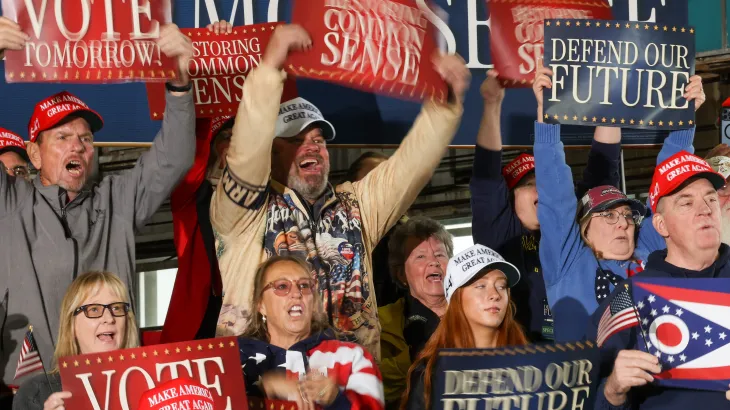
Despite the negative indicators for the incumbent party, experts remain wary of declaring an absolute outcome. Zogby points to Trump’s history of defying traditional political rules and his efforts to make the contest deeply personal by telling supporters to vote as if his own name were on the ballot. Meanwhile, Schultz highlights that roughly 79 percent of Republicans still approve of the president. He concludes that while Republicans are likely to lose House seats, the magnitude of those losses remains highly uncertain, and maintaining a majority would require both durable Republican loyalty and significant Democratic abstention. Even though rising polarisation in US society, along with other factors, complicates any major shift in voting patterns, experts say the trend is likely to continue. Experts say, several conditions can possibly allow Republicans to limit losses or retain at least one chamber of Congress. Zogby identifies Democratic vulnerabilities as a major wild card. Three, a change in the news, such as a durable settlement of the Iran war, falling gas prices, or easing inflation, can improve Trump’s standing by a few points in key places, Schultz says.