









Human affinity for birdsong may be rooted in fundamental acoustic preferences rather than learned appreciation. A study conducted by researchers at the University of Tübingen, published September 1 in the journal Frontiers, suggests that specific sound characteristics—such as softer tones and narrower frequency ranges—consistently trigger positive responses in listeners. Interestingly, the research found that individuals who identified as having no experience with birdwatching still displayed these preferences, indicating that the enjoyment of avian music is likely tied to deeper psychological or evolutionary traits rather than prior knowledge of bird species.
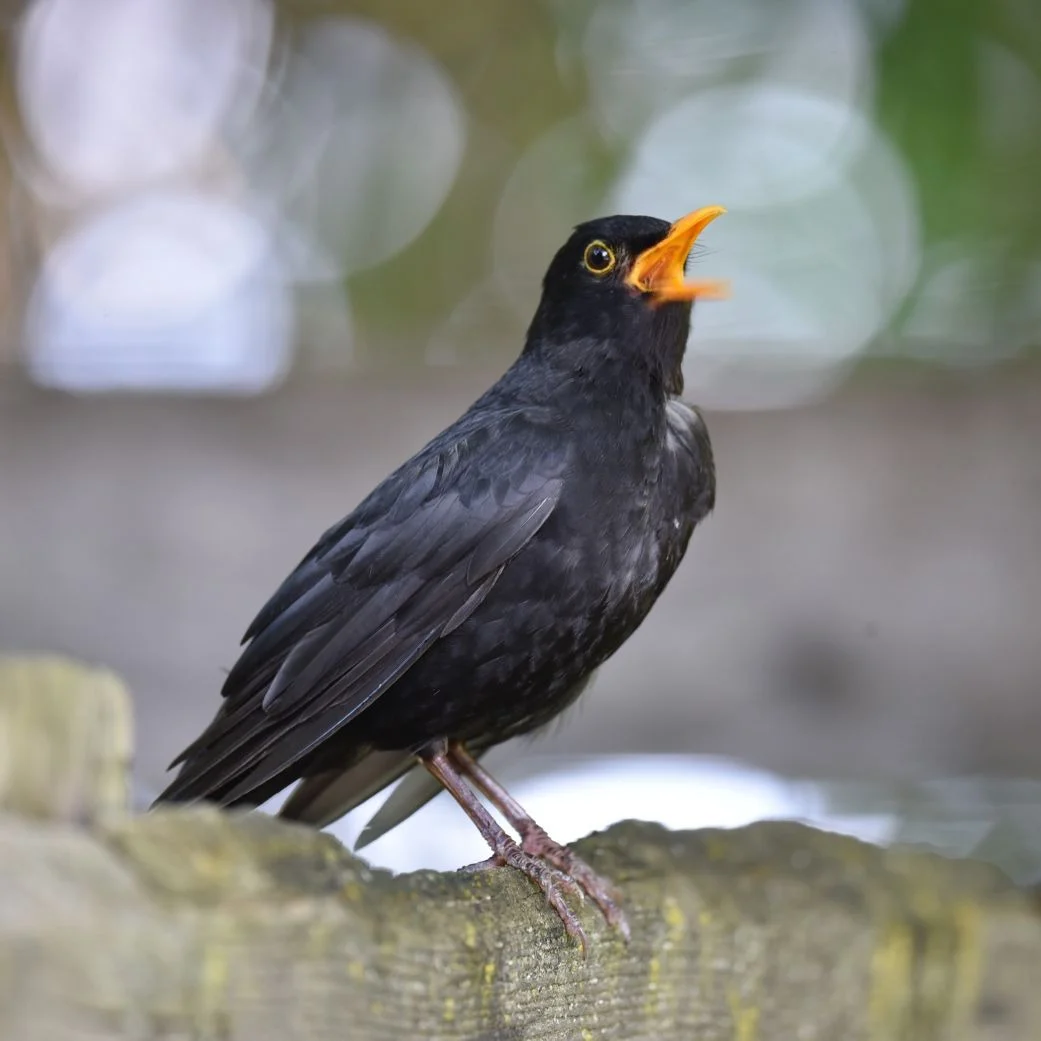
To explore these reactions, the research team surveyed 84 participants, asking them to rate the pleasantness of recordings from 123 different wild bird species. The common blackbird, known for its rich, mellow, and flutelike song, secured the highest ranking with an average score of 4.52 out of 5. Conversely, the harsh, raspy screech of the barn owl received the lowest rating at 1.32. Other highly-rated species included the European goldfinch at 4.26, the European robin at 4.04, and the blue tit at 3.92.
Lead author Dr. Nadine Kalb noted that the data reveals no singular formula for what constitutes a pleasant song. While the blackbird, willow warbler, and blackcap sound quite distinct from one another, they all garnered high marks, proving that various combinations of acoustic features can produce agreeable results. A significant surprise for the team was the discovery that participants generally favored more intricate vocalizations. While one might assume simple, repetitive chirps would be easier to process and therefore more enjoyable, the study found the opposite pattern emerged, with complexity often elevating the perceived quality of the song.
Senior author Dr. Christoph Randler emphasized that these findings could eventually guide urban planners and park designers in creating more restorative environments. By understanding how natural soundscapes affect human well-being, officials could shift their focus from merely mitigating noise pollution to actively fostering environments that incorporate pleasing acoustic elements. However, Randler cautioned that the field is still developing and that simply broadcasting recorded birdsongs via loudspeakers does not appear to provide the same psychological restoration as authentic, naturally occurring vocalizations.
Dr. Olga Feher, an associate professor of psychology at the University of Warwick who was not involved in the research, noted that the study supports the existence of biological factors in how humans perceive bird sounds. She pointed to previous research suggesting that human responses to sound may have evolutionary origins, noting that human music and birdsong share specific rhythmic patterns. While she acknowledged that personal associations can also influence individual preferences—for instance, finding joy in the robotic calls of zebra finches because of familiarity—the study provides a foundation for identifying which specific frequency scales or patterns humans find most attractive.
Robert Lachlan, an animal communication researcher at Royal Holloway, University of London, believes the work opens an important new area of inquiry. He noted that while the study establishes a link between acoustic characteristics and human perception, more work is required to determine precisely why the brain gravitates toward these specific traits. As researchers continue to bridge the gap between avian vocal biology and human psychology, the ultimate goal remains to better understand how these feathered inhabitants shape our daily experience of the natural world. The report also notes that humans may feel a little more at ease, when birds are chirping. The report also notes that but some bird vocalizations seem to strike a particularly pleasing chord with human ears — and scientists are beginning to understand why. The report also notes that the sounds of birds going about their business may have been a reassuring signal that the surrounding environment was free of danger, for much of our evolutionary history. The report also notes that parks and woodlands, Turdus merula is a familiar sight across Europe, with a song that’s rich, mellow and flutelike, typically spotted in gardens.