
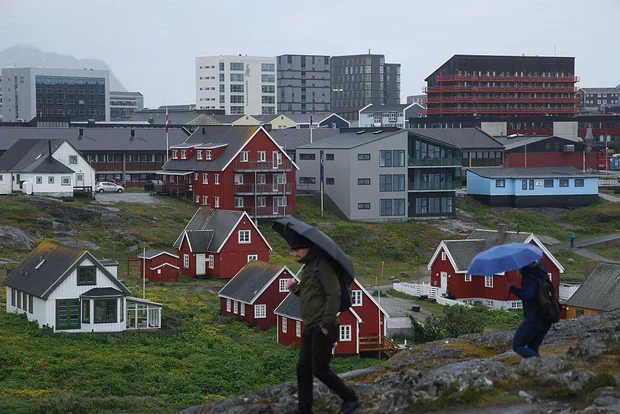








Denmark and Greenland officials have expressed measured optimism following President Trump’s announcement of a security deal aimed at strengthening the American military presence within the semiautonomous Arctic territory. The pact, revealed by the president on Friday, promises to establish permanent U.S. control over security operations and other essential needs in Greenland. According to the president, this arrangement effectively addresses multiple long-standing American national security concerns.
While the administration plans to sign the agreement in New York City this Tuesday alongside the United Nations General Assembly, the Danish Prime Minister Mette Frederiksen’s office clarified that the deal still requires formal legislative approval. Both the Danish and Greenlandic parliaments must ratify the terms before they can be legally enforced.
Danish Foreign Minister Lars Løkke Rasmussen shared his outlook on social media, describing the coming week as a potential turning point for Greenland, Denmark, and the United States. He emphasized that the move replaces a period of uncertainty with a binding framework, which he stated would bolster security across the North Atlantic and Arctic while adhering to the Kingdom’s established diplomatic red lines.
Local leadership in Greenland echoed this sentiment. Jens-Frederik Nielsen, a government leader, welcomed the development as a benefit to collective security and the region’s long-term economic growth. Foreign Minister Múte B. Egede expressed relief that an end product is finally within reach after a prolonged negotiation period.
Behind the scenes, officials from the U.S., Denmark, and Greenland held months of private discussions to resolve security issues concerning the island of approximately 56,000 residents. A U.S. State Department source confirmed that the agreement guarantees permanent American access and overflight rights, potentially facilitating the expansion of military bases. Additionally, the deal imposes restrictions that prevent non-NATO nations from establishing military facilities and limits sensitive investments by American adversaries.
NATO leadership has formally welcomed the pact, citing its potential to enhance regional stability and cooperation. The White House indicated that the U.S. intends to accelerate the development of a more robust military footprint on the mineral-rich territory. Historically, the United States maintained several installations on the island throughout the Cold War, though it later scaled back those operations. Today, the U.S. continues to manage the Pituffik Space Base, which remains a critical asset for missile defense and space surveillance.
The announcement follows a period of heightened geopolitical tension. President Trump had previously suggested that the U.S. should purchase the island, insisting on its strategic necessity, and had even declined to rule out the use of force. These remarks faced intense opposition from European nations, Russia, and the Danish government, which repeatedly stated the territory was not for sale.
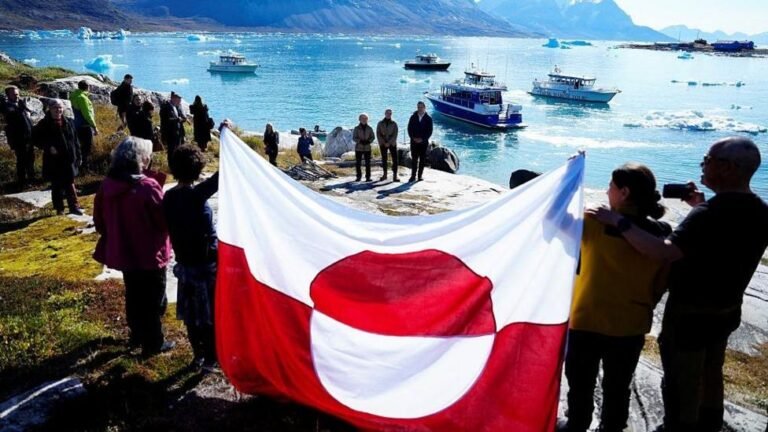
Grassroots sovereignty advocate Orla Joelsen noted on social media that the agreement serves to confirm the territorial integrity of the Kingdom of Denmark and the right of the Greenlandic people to self-determination. For many citizens in Copenhagen, the deal offers a sense of relief.
Michael Burgaard, a 56-year-old telecommunications worker, expressed his hope that the diplomatic resolution ends the recent crisis sparked by the president’s earlier proposals to acquire the land. Similarly, high school teacher Michael Frees described the agreement as the most pragmatic solution currently available, noting that as a small nation, Denmark must prioritize cooperation with larger international partners and the European Union.
While the deal represents a significant policy milestone for the White House ahead of upcoming domestic elections, Denmark and Greenland have not yet disclosed specific details regarding the full scope of rights and obligations outlined in the final text. The report also notes that it has taken some time,” he told Denmark’s TV2 broadcaster. “I’m pleased that we finally have an end product within reach. The report also notes that which would “help advance security, stability and cooperation in this vital region,” partner BBC News reported, a NATO spokesperson said the military alliance welcomed the deal. The report also notes that built after the U.S. and Denmark signed the Defense of Greenland Treaty in 1951, it still operates the remote Pituffik Space Base in northwestern Greenland. The report also notes that the U.S. push for Greenland was also fiercely opposed by Russia and much of Europe. The report also notes that greenland grassroots pro-sovereignty activist Orla Joelsen wrote on X that “our fight against Trump’s ambition to take over Greenland has been won. The report also notes that north of the Danish capital of Copenhagen, was hopeful the crisis was over “because just a fortnight ago, Donald Trump posted this map showing Greenland… as part of the U.S, michael Burgaard from Gentofte. The report also notes that we were kind of worried that he would take all of Greenland by force,” added the 56-year-old telecommunications worker. “So, the fact that we can settle this in a diplomatic way. The report also notes that a 51-year-old high school teacher in Copenhagen, said he thinks the agreement is “the most realistic solution for us right now, michael Frees.