








Travelers seeking to escape the crowds are sharing their favorite lesser-known European islands, ranging from secluded Irish coves to the dramatic volcanic peaks of the Mediterranean. These recommendations highlight the diverse appeal of Europe’s quieter corners, where local traditions and natural beauty remain largely untouched by mass tourism.
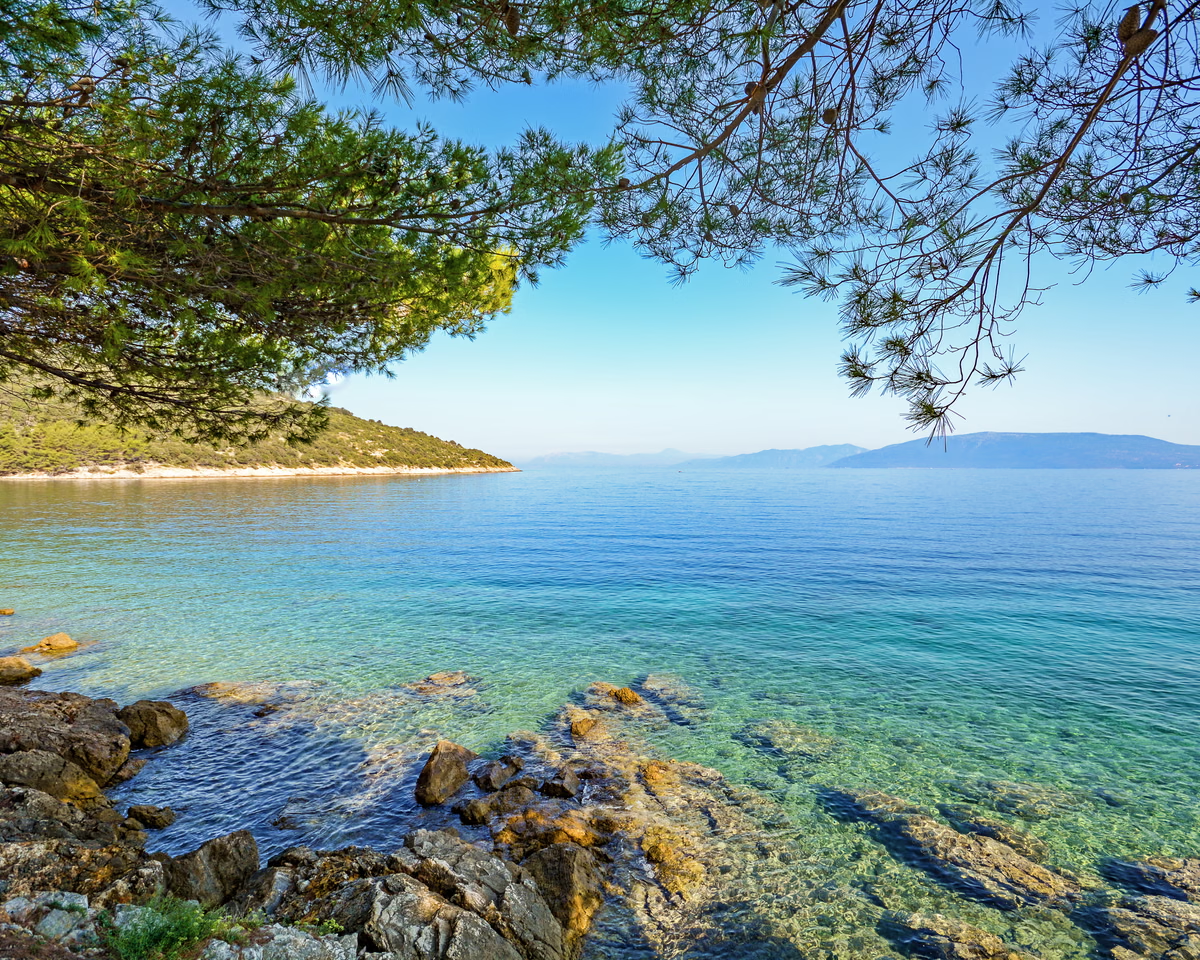
In Croatia, the island of Cres offers a wild, rugged landscape in the Kvarner Gulf. Visitors can spot giant griffon vultures gliding over the island’s highest points, while the interior is defined by lavender fields, olive groves, and scrubby heath. While towns like Cres town provide modest amenities for tourists, other areas remain deeply authentic, preserving a way of life that has persisted since the Venetian era. All of this is set against the backdrop of the Adriatic’s signature turquoise, crystal-clear waters.
For those traveling in Ireland, Valentia Island off the south-west coast provides a tranquil alternative to the busy Ring of Kerry. Accessible by bridge or ferry, the island features the secluded Glanleam beach, which offers views of the Dingle peninsula’s mountains. Further north, the Welsh coast of Pembrokeshire offers a different kind of wildlife experience on Skomer, where visitors can observe puffins in their natural habitat, an activity described by one reader as a cure for many ills.
The Aegean and Mediterranean seas host several hidden treasures. Karpathos, situated between Rhodes and Crete, remains free from package tourism, characterized by winding cliffside roads and the traditional village of Olympos, where residents still wear local dress. Nearby, the Italian island of Lipari offers a more energetic atmosphere rooted in its volcanic history. Visitors to the largest of the Aeolian islands can explore a castle-dominated town, enjoy the evening passeggiata, or swim in the shimmering, clear waters off the beaches of Papesca and Porticello.
In the Atlantic and Baltic regions, islands offer unique historical and geological experiences. The Île de Sein in France, reached via a 60-minute ferry from Audierne, is a car-free destination sitting just 1.5 meters above sea level, known for its shell-rich beaches and historic lighthouse. Meanwhile, the Swedish island of Gotland serves as a medieval dream, with the town of Visby featuring preserved city walls and cobbled streets. Nearby Fårö is home to the rauks, massive limestone columns that stand as a reminder of the island’s history as an ancient coral reef.
For a more unusual excursion, the Estonian island of Saaremaa features the nine Kaali craters, formed by meteorite impacts approximately 3,500 years ago. These sites have been linked to ancient folklore and archaeological findings of animal offerings. Visitors can explore the area and the small Meteoritics Museum for a modest fee of €2 (£1.70). Similarly, the volcanic island of La Graciosa in the Canaries provides a peaceful retreat from the busier resorts of Lanzarote, offering traffic-free streets and clear waters ideal for snorkeling.
Guardian Travel readers are invited to submit their own travel tips for a chance to win a £200 voucher for a Coolstays break. Submissions may be featured in future online or print publications. The report also notes that which includes the Pointe du Raz where currents off the Breton coast create weird wave formations that carry bemused seabirds in opposite directions even when the, after an exciting 60-minute ferry crossing from Audierne. The report also notes that winning tip: a bird’s-eye view of wild Croatia. The report also notes that some, like Cres town, are unobtrusively set up for holidaymakers; in others local people just quietly get on with the life they’ve lived since the Venetians ruled here. The report also notes that every week we ask our readers for recommendations from their travels. The report also notes that to enter the latest competition visit the readers’ tips homepage. The report also notes that my sister and I took a road trip along the south-west coast of Ireland, earlier this summer. The report also notes that like us, you’ll probably want to return the next day and do it again.