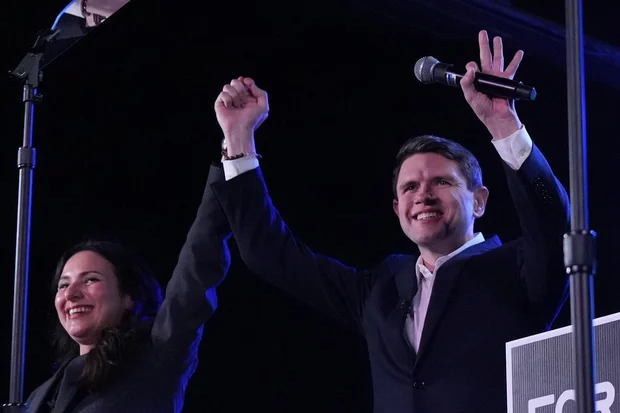








In the lead-up to the United States midterm elections, the war in Iran has become a primary focal point for voters concerned about the economy. During a recent Senate debate in Detroit, Michigan, Democratic candidate Abdul El-Sayed challenged his Republican opponent, Mike Rogers, by framing the ongoing military conflict as a direct driver of inflation and the rising cost of living. El-Sayed was referring to legislative efforts to curb Trump’s ability to continue the eight-month conflict. Likewise, petrol or gasoline has become less affordable. Fuelling inflation at a time when affordability had become one of the key issues in US electoral politics, the increased cost of energy and transportation has trickled down to the entire economy. The Republican candidate said, “The war with Iran needs to end, and end quickly.”, in a recent campaign commercial filmed in a grocery store.
El-Sayed argued that current economic pressures—specifically the cost of fuel and groceries—are tied directly to the war, which began following attacks on February 28. “Right now, the cost of gas, the cost of groceries, it all really goes back to this war in Iran,” he stated, calling for a War Powers Resolution to constrain President Donald Trump’s executive authority regarding the intervention. “We need a War Powers Resolution rather than a senator who wants to stand hip-to-hip with Donald Trump on this war that made no sense when it started and certainly makes no sense now.”. In neighbouring Ohio, Senator Jon Husted has called for a “quick” end to the war as well. “It’s one of the best things that we’ve done, and it took a lot of courage to do it because no other president was willing to do it.”.
Energy experts and analysts suggest the linkage is becoming standard in the current political climate. Jonathan Guyer, program director at the Institute for Global Affairs (IGA), noted that while foreign policy is rarely a top-tier issue, its deep integration with economic instability has fundamentally altered the landscape. “The war in Iran is a kitchen table issue,” Guyer observed, adding that the conflict effectively functions as a proxy for the economy itself. Taxes, or trade policy, it was not about interest rates.
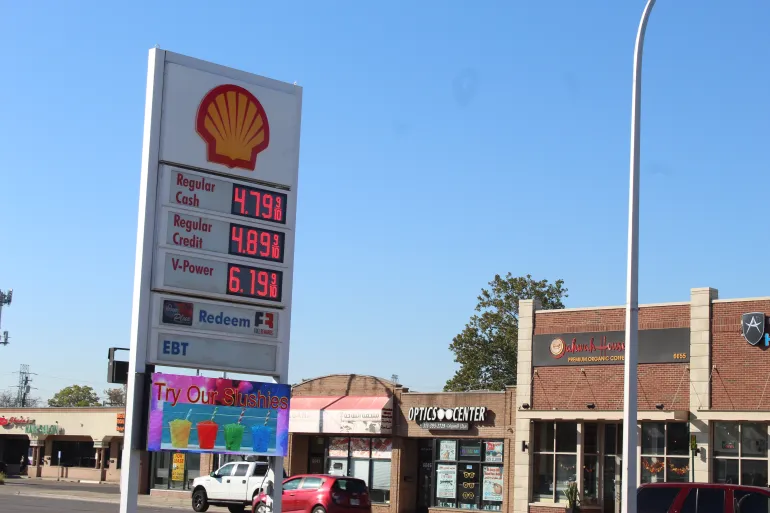
Data from the American Automobile Association (AAA) highlights the severity of the shift: the average price of a gallon of petrol has surged from under $3 before the hostilities began to $4.27 as of Thursday. Furthermore, the disruption of energy transit through the Strait of Hormuz by Tehran has caused diesel prices to hit record highs, complicating the logistics of transporting goods across the country. Almost immediately after Israel and the US started attacking Iran on February 28, Tehran began disrupting the flow of energy products through the Strait of Hormuz – sending oil and gas prices skyrocketing. In the US, the price of diesel – which is used to power heavy machinery, including heavy trucks that ship consumer goods across the country – has reached record highs over the past weeks. Average Americans feel that uptick firsthand almost daily at the gas pump. According to the American Automobile Association (AAA), the average price of one gallon (3.8 litres) of petrol has gone from less than $3 before the war to more than $4.27 as of Thursday. “You want to pay $8 [for] a gallon of gas, let Iran get a nuclear weapon. You lose control of that whole region,” he said. We’ve stopped Iran from having a nuclear weapon,” Trump told reporters on Wednesday.
Polling data indicates that voter frustration is mounting.
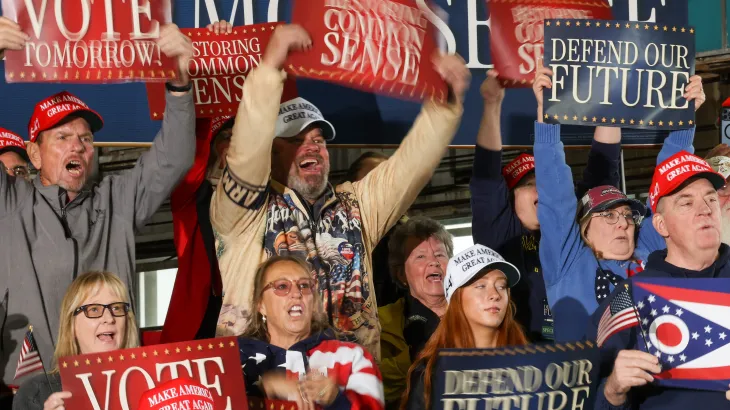
A survey conducted by the IGA in August revealed that 60 percent of potential voters disapprove of how President Trump has managed the war, while 81 percent of respondents believe the conflict has directly increased their living expenses. Within the Republican base, support is showing signs of wavering; while many still favor the president, the intensity of that backing has softened, with “strongly approve” ratings falling to 34 percent from 40 percent in April. An overwhelming majority of respondents – 81 percent – agreed that the conflict has raised the cost of living, more alarmingly for Republicans. According to a Pew Research Center poll released earlier this month showed that 63 percent of Republican respondents, They approve of Trump’s handling of the conflict. Taken in August, put the number at 74 percent, the IGA survey. “That could have implications if they actually show up to vote [and] if they are going to be involved in campaigning.”.
The debate has created a distinct rift between party platforms. Trump has defended the intervention as a historic success, claiming it was necessary to prevent Iran from developing nuclear weapons. However, official intelligence reports provided to Congress have contradicted this, indicating no evidence that Iran is currently constructing a nuclear bomb. Trump has previously asserted that Iran’s nuclear program was effectively neutralized by US strikes in June 2025. According to but before the war, Trump himself had, Repeatedly that Iran’s nuclear programme had been “obliterated” by the June 2025 US strikes against the country’s uranium enrichment facilities.
Republican candidates are navigating a difficult path regarding the war’s future.
While some, like Mike Rogers, have defended the necessity of the conflict to maintain regional stability, they simultaneously acknowledge public fatigue, with some calling for a swifter conclusion.
Other GOP figures, including Iowa’s Congresswoman Ashley Hinson and Maine’s Senator Susan Collins, have echoed calls for an end to the fighting or pushed for legislative oversight, even as the party leadership contemplates potential further action after the elections.
Democratic Senator Chris Murphy characterized the Republican stance as detrimental to the nation’s financial health. Commenting on the situation in Detroit, where diesel prices have climbed above $6 per gallon, Murphy warned that continued support for the war amounts to a “death sentence for the American economy.” He suggested that voters face a clear choice: supporting the existing war effort at the risk of higher gas prices, or favoring a change in leadership to focus on economic relief.
As the elections approach, the persistent focus on the Iran conflict suggests that Democrats view it as a significant political vulnerability for the GOP. Whether this dissatisfaction with the war’s economic fallout will drive turnout remains to be seen, but the intensity of the debate underscores a voter base increasingly focused on the intersection of global military strategy and domestic affordability.