








Ahead of the US midterm elections scheduled for November 3, Iran has intensified efforts to influence American public opinion by highlighting the financial burdens of the ongoing conflict between the United States, Israel, and Iran. Through state-affiliated outlets and direct social media engagement, Iranian officials are emphasizing the war’s negative impact on the US economy and household living costs. “Countries around the world have lost their faith in the US economy.
Sina Toossi, a senior non-resident fellow at the Center for International Policy, suggests that Tehran is utilizing this information warfare to heighten the political price of the war for the Trump administration. According to Toossi, the goal is not necessarily to manipulate US partisan outcomes, but rather to broadcast a specific narrative that emphasizes the conflict’s domestic economic strain. “It’s not necessarily that they’re trying to get Democrats in power or manipulate US politics in a certain direction, other than just overall increasing the costs on this issue of the Iran war, and just playing that game of information warfare and getting out their own narrative and propaganda as well,” Toossi told.
Parliament Speaker and chief negotiator Mohammad Bagher Ghalibaf has been particularly active, recently sharing a collage of critical economic headlines and a report on rising inflation, which hit 3.7 percent last month. Ghalibaf also utilized a cartoon metaphor on social media to address US Treasury Secretary Scott Bessent, who has been steering the sanctions campaign. Referencing Bessent’s previous comparison of the economy to a casino, Ghalibaf declared, “Let’s ‘play the percentages’. Not in odds, but in the % increases,” pointing to rising costs of living. The social media post also featured a comic strip from the Road Runner cartoon showing Wile E Coyote building a catapult that misfires and launches a boulder at him. Underscoring that the cost of living keeps rising due to the war despite Bessent’s assertions, ghalibaf’s remark referred to the increase in inflation.
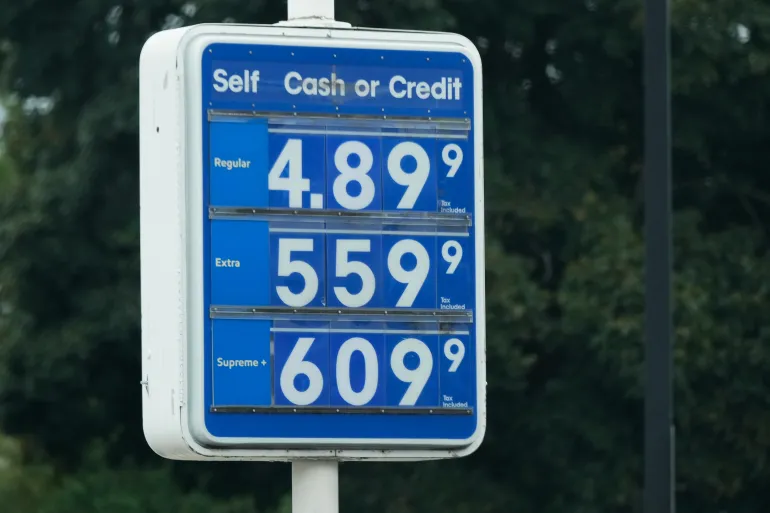
Economic data highlights the scale of these concerns. Since the conflict began on February 28, Iranian-led disruption of shipping lanes in the Strait of Hormuz has sent energy prices soaring. Diesel prices have reached a record $6.33 per gallon, while gas prices have climbed to $4.33, up from under $3 before the war began. These energy spikes have contributed to broader inflationary pressure, forcing the Federal Reserve to raise interest rates despite calls from President Trump to stimulate economic activity. In the US, the price of diesel is at an all-time record of $6.33 per gallon (3.8 litres), according to the American Automobile Association, and gas is $4.33, up from less than $3 before the war. Iran has intensified its attacks on vessels around the strait in recent days after Trump and his aides repeatedly stressed that the waterway is under US control.
On September 29, the Islamic Revolutionary Guard Corps (IRGC) issued a direct letter to the American public, accusing President Trump of misrepresenting the state of the economy. The group dismissed claims that oil prices were poised to plummet, asserting that global confidence in the US economy is fading as nations move to divest from American bonds. “Soon, the dam will break, and the economy will implode,” the IRGC warned, calling on Americans to reclaim control from what they described as a corrupt political system. Days earlier, he shared an image of a ghost shaped like a bell curve, with diesel prices rising and housing affordability and consumer confidence falling. They need to wrest control back from corrupt politicians.
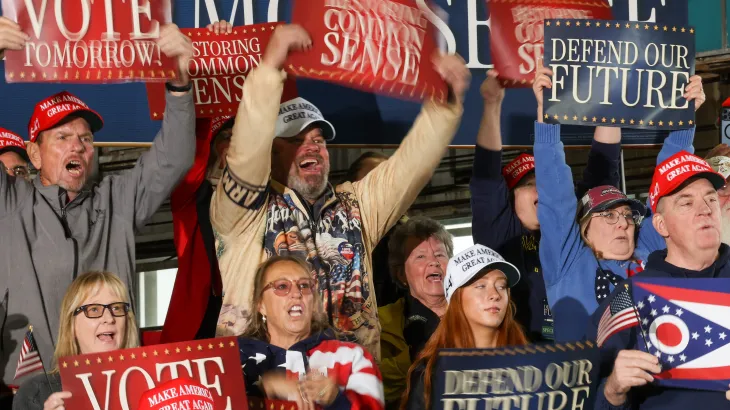
The upcoming legislative vote is viewed as a pivotal moment for the war’s future. While President Trump has downplayed the election’s impact on his foreign policy, suggesting he might pursue a deal or escalate to full-scale war afterward, he noted at the United Nations General Assembly that he is not on the ballot himself. He maintained, “When it comes to Iran, it doesn’t even enter my mind. The only thing that does is that Iran will never have a nuclear weapon.” “I gave absolutely no credence and will not give credence to the election. Others say a midterm defeat would make him politically vulnerable and likely constrain his war powers, while some point to foreign policy hawks among the Democrats to argue that little would change.
The Democratic Party, which generally opposes the current military trajectory, is challenging Republican control of both the Senate and the House of Representatives. A shift in congressional power could theoretically provide a pathway for Democrats to restrict funding or curb executive war powers. However, analysts remain divided on whether this would fundamentally alter Iran’s strategy. Toossi noted that while some within Iran view a Democratic victory as a potential catalyst for political vulnerability for Trump, the core strategy of increasing the costs of the conflict appears to remain constant regardless of the November results. Which largely opposes the war with Iran, is mounting a strong challenge across the congressional electoral map, including in areas that have been conservative strongholds for decades, such as Texas, but the Democratic Party.