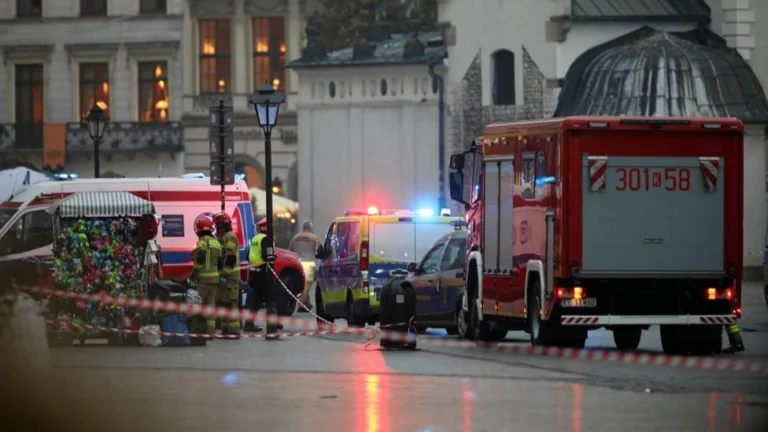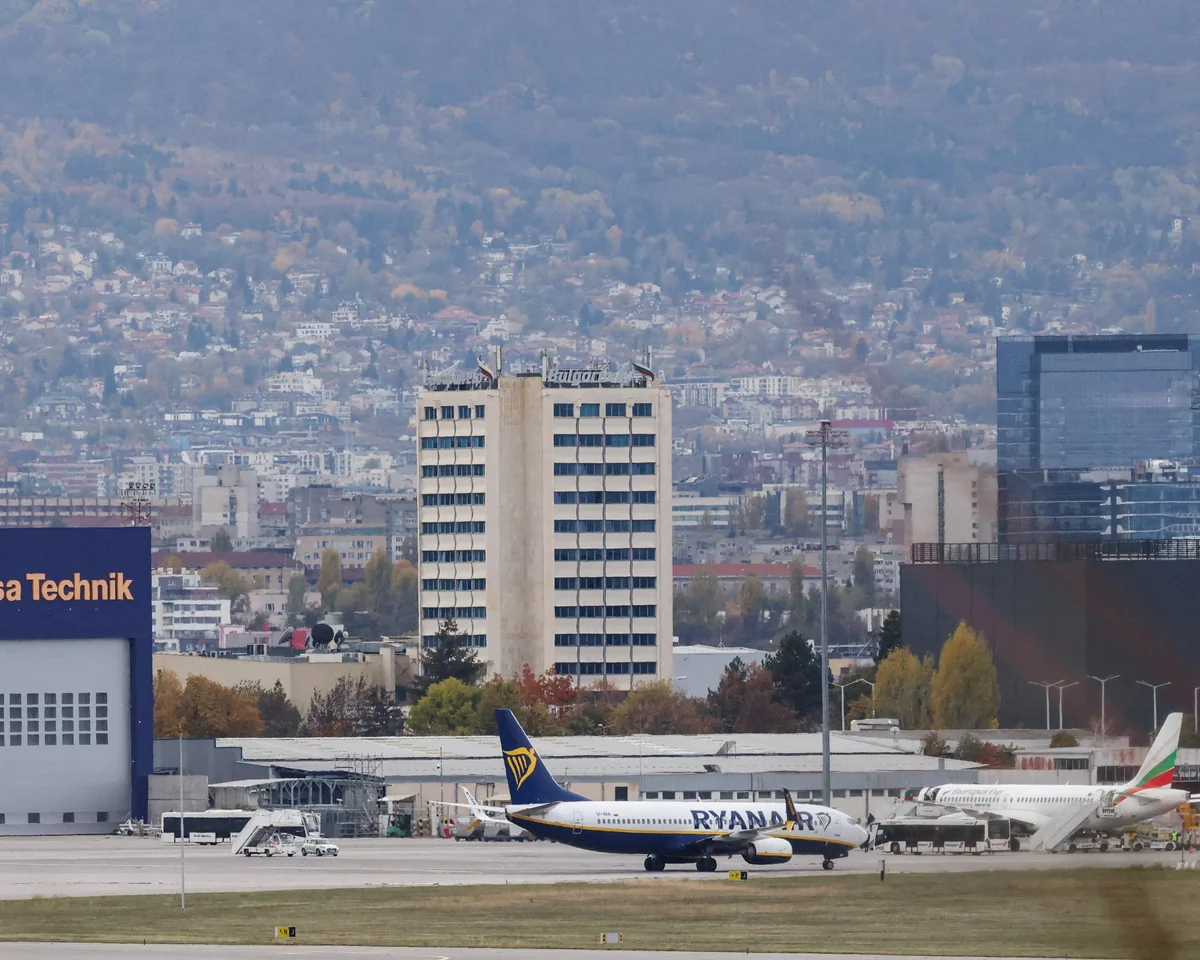






A wave of coordinated bomb threats has disrupted at least 34 flights across Europe this week, forcing emergency landings and creating widespread travel delays. The incidents, which authorities believe are part of a calculated campaign, have sparked concerns over potential hybrid warfare tactics aimed at destabilizing civilian transport. In total at least 33 flights have been affected this week. Why have more than 30 European flights been hit by bomb threats this week. Many of the affected flights were operated by low-cost carriers but there was little discernible pattern surrounding the incidents.
On Thursday alone, flight operations between numerous countries, including Italy, Ireland, the UK, Spain, Bulgaria, Romania, Poland, Finland, Austria, Denmark, Belgium, Portugal, France, Greece, Serbia, and Czechia, were affected. Airlines impacted by the alerts include Ryanair, Aer Lingus, Wizz Air, Finnair, easyJet, Aegean Airlines, Iberia, Sky Express, Air Serbia, and LOT Polish Airlines. Every flight landed safely, and subsequent security sweeps revealed no suspicious items.
In the United Kingdom, both London Heathrow and Birmingham Airport received overnight threats. Specialist investigators from the Metropolitan Police’s aviation command determined these were hoaxes. The Met confirmed that four aircraft associated with Heathrow were targeted, and after an assessment, stated that “no security issues [were] identified.” Causing a flight to be delayed, a Cork airport spokesperson confirmed to that the airport had received an anonymous threat by phone on Thursday morning. According to a Kremlin spokesperson, On Thursday it was “absurd” to blame Vladimir Putin’s administration for the fridge hacks. “We have such baseless accusations against our country, implicating it in everything,” Dmitry Peskov told reporters. So no one can pin the blame.”, it’s done that way on purpose.
This week’s activity follows similar disruption on Tuesday, when seven planes were diverted or searched due to malicious alerts. On Monday, a flight bound for Bulgaria from the UK was also diverted after an unsubstantiated threat. The European air traffic control agency, Eurocontrol, noted that while these events were highly disruptive, they represented only a tiny fraction of the 27,400 flights scheduled across the continent on Thursday. Your feminist regime will remember this for ever. The explosion will occur in 60 minutes. The effects of any detonation would be multiplied for planes at typical cruising altitude of 35,000ft, while getting a large explosive onboard should be ruled out by multiple layers of security and screening.
Investigators have stated there is currently no evidence linking the hoaxes to a specific hostile terror group or state actor, such as Iran or Russia, though continent-wide inquiries continue.
In Rome, Italian defence minister Guido Crosetto described the pattern as “under-threshold warfare,” explaining that the threats are designed to be below the attribution threshold to make identifying the perpetrators difficult. He added that there appears to be a clear interest in stoking broader tensions, citing recent anomalies ranging from refrigerator cyber-attacks to disruptions in French blood supply logistics. Additional reporting by Pjotr Sauer in Amsterdam and Angela Giuffrida in Rome.
Some threats received by airports in Sofia and Rome were signed by the “fighters of the Male State,” a Russian ultranationalist and misogynistic movement. The emails contained violent rhetoric, including claims that the group would “make history” and threats that the “skies will turn red.” The group’s founder, Vladislav Pozdnyakov, has not publicly claimed responsibility for the alerts. According to sources at Aeroporti di Roma, which manages the city’s two airports, and a text seen by Agence France-Presse, bomb threats emailed to airports in Rome and Sofia were signed “fighters of the Male State”. Ultranationalist and misogynistic movement founded in 2016 by Vladislav Pozdnyakov, male State is a Russian far-right. A prominent supporter of the war in Ukraine, did not comment on or claim responsibility for the bomb threats, on his Telegram channel Pozdnyakov.
The International Air Transport Association (IATA) has condemned the campaign, emphasizing that safety remains the industry’s primary concern. Nick Careen, IATA’s senior vice-president for operations, safety, and security, stated, “Safety is the number one priority for the industry and we take all threats seriously.” Meanwhile, EU transport commissioner Apostolos Tzitzikostas noted that while the cause remains unconfirmed, such threats against civilians are entirely unacceptable.
Operational challenges have been significant, with some incidents involving bizarre complications. For instance, the pilot of an Aer Lingus flight from Dublin to Rome that diverted to Évreux was reportedly questioned by French authorities after initially refusing to land at a designated military base. Additionally, a Ryanair flight from Pescara to Brussels-Charleroi underwent inspection after the word “bomb” was found written in an onboard lavatory.
Aviation experts suggest the ready availability of real-time flight data online has made it easier for malicious actors to target specific schedules and aircraft types. Rhys Jones, an analyst at Osprey Flight Solutions, noted that while the threats appear to be a “reasonably chaotic campaign,” the ultimate goal of the perpetrators may simply be to cause disruption and normalize security threats, potentially weakening future response protocols. The type of plane and its technical specifications that would have eluded all but insiders decades ago, the ready availability of airline operations information on the internet means that any hoaxer now has a level of detail about the schedules.