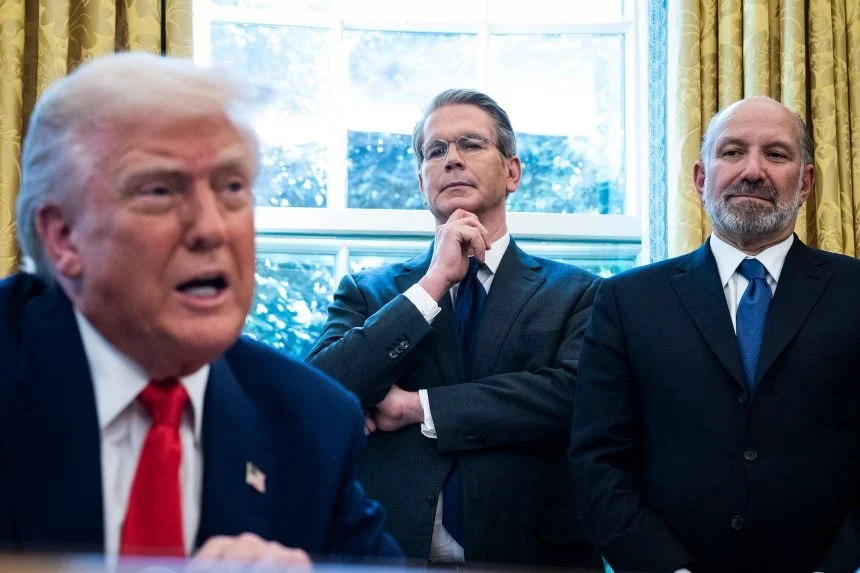







Treasury Secretary Scott Bessent on Friday publicly criticized the Commerce Department for failing to designate the Nvidia customer Megaspeed as a national security threat. The critique highlights an ongoing internal dispute within the administration regarding export oversight, which has intensified following the resignation of former Nvidia CEO Jensen Huang.
Reports suggest that some of President Donald Trump’s advisers have begun discussing the potential dismissal of Commerce Secretary Howard Lutnick. These conversations follow concerns raised by various administration officials and outside advisors about his leadership, though the White House previously affirmed that Trump maintains complete confidence in Lutnick as a transformative Commerce Secretary. Two additional people said, trump himself has also fielded calls from administration officials and outside advisors raising alarm bells about Lutnick. So far, the White House has stood by him, issuing a statement Thursday – before Bessent’s comments – saying Trump “maintains complete confidence in the secretary and his ability to carry out the position as the most transformative Commerce Secretary in modern history. According to trump and Lutnick are longtime friends, and sources, It was unclear what the president might do.
Bessent stated during a CNBC interview that numerous government bodies, including the State and Treasury departments, the Pentagon, and the US Trade Representative, supported placing Megaspeed on an export blacklist. He argued that the Commerce Department, under Lutnick’s guidance, failed to implement this measure. When questioned about internal protocols, Bessent noted that the Commerce Department holds primary authority over such decisions. You would have to ask them about their internal processes,” he said.
The administration has long suspected that Megaspeed may have bypassed federal laws to distribute advanced chips into China, posing potential national security risks.
Bessent expressed frustration over the situation, noting that directives from the president regarding chip export limitations were clear. He warned that inaction risks damaging American companies and providing China with a competitive advantage in the artificial intelligence sector. “I am frustrated when President Trump made it very clear that China should not receive any Nvidia chips above A100s,” he said, referring to an entry-level chip. “And so any leakage is very frustrating because it hurts our great companies in the AI race, gives the Chinese an advantage,” he went on.
Public scrutiny of the situation increased recently following reports that Jensen Huang had a relationship with Alice Huang, a Megaspeed executive suspected of having intelligence ties to China. Although senior administration officials, including Lutnick, were briefed on these connections months ago, the department has reportedly declined to add Megaspeed to the entity list. According to but the issue gathered newfound attention and importance in recent days when it was, Publicly that Huang had an affair with a Megaspeed employee suspected of having intelligence connections to China.
The tension between cabinet members reached a head during a private Situation Room meeting last week, where Bessent challenged Lutnick regarding his department’s reluctance to act. While sources indicate Lutnick did not immediately commit to a specific course of action during that briefing, Bessent declined to discuss the specifics of the exchange on Friday, maintaining that private deliberations should remain confidential.