









Following a robust performance in the latest midterm elections, Democratic lawmakers are weighing their newfound political leverage to strip a contentious provision from the Fiscal Year 2027 National Defense Authorization Act (NDAA). The measure, codified under Section 219, seeks to launch a “United States-Israel Defense Technology Cooperation Initiative,” designed to accelerate and expand bilateral research, development, and industrial coordination in defense technology. But later opposed, the provision to integrate US-Israeli military development, smith had initially supported.
Democratic leadership had already expressed significant opposition to the sprawling $1.15 trillion defense package earlier this year. The legislation, which covers major military priorities such as President Donald Trump’s “Golden Dome” missile shield and the so-called “Trump-class” battleship program, has faced criticism from top officials like Senate Minority Leader Chuck Schumer. Their concerns have centered on the administration’s ongoing conflict with Iran and broader economic strains affecting American households.
Cavan Kharrazian, a senior policy adviser at Demand Progress, noted that the current congressional environment provides Democrats with substantial influence, as the NDAA requires 60 votes to advance. With a critical December 11 deadline looming—when current stopgap funding measures expire—Democrats are being urged to withhold their support for the NDAA unless the bill is stripped of provisions regarding US-Israeli military integration and funding for the conflict with Iran. Advocates say the leadership must also send the message that the US-Israeli defence production integration is a non-starter. Because the NDAA requires 60 votes to pass, Democrats can exercise outsized leverage in the remaining days of this congressional session, Kharrazian explained. “So I think that’s a good sign that a good amount of Democrats are ready to really stand against those provisions in the NDAA,” he told. Fuelled by the genocide in Gaza, bendaas also pointed to public opinion polls suggesting widespread opposition to US military support for Israel.
“Democrats need to make it clear right now that their votes for the NDAA depend on substantial changes,” Kharrazian stated, arguing that mere amendment votes are insufficient if the core legislation is allowed to progress with the controversial sections intact. He added that the party should commit to blocking the bill’s consideration entirely until these demands are met.
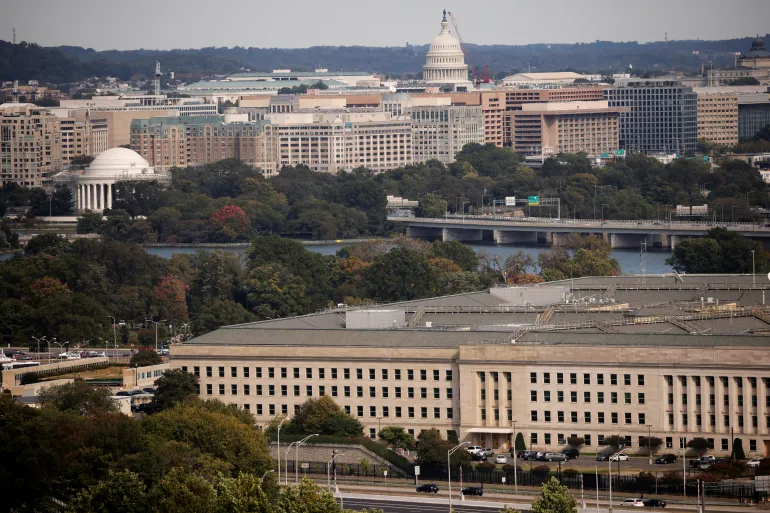
The debate comes as Congress faces pressure to pass either a new stopgap measure or the full NDAA to ensure Pentagon operations continue. While a House version of the funding bill passed under Republican leadership in May, Democrats successfully delayed the Senate counterpart through a procedural maneuver in July. Republicans, meanwhile, face a ticking clock before Democrats take control of both chambers of Congress in January.
Some analysts suggest that the pushback reflects a broader ideological divide within the party. Representative Adam Smith, the ranking Democrat on the House Armed Services Committee, emphasized the need for a more sustainable national security strategy that avoids massive budgetary expansion or deep cuts to essential domestic programs. Schumer, in a recent letter to his colleagues, also criticized the Republican approach for prioritizing defense industry spending while neglecting long-term investments in US communities. According to “We must push for the development of a more realistic and sustainable approach to our national security – one that does not require a defense budget in excess of $1 trillion or one paid for with draconian cuts to critical domestic programs,” Representative Adam Smith, currently the ranking Democrat on the House Armed Services Committee,, In a statement shortly after the November 3 election results rolled in.
Critics of Section 219 argue that the initiative would create an opaque pipeline for US taxpayer funds to flow into Israeli military ventures while circumventing traditional congressional oversight.
Matthew Duss, executive vice president at the Center for International Policy, characterized the provision as an attempt to insulate the US-Israel military relationship from democratic scrutiny. He noted that while party leaders Schumer and Jeffries have traditionally been pro-Israel, they are increasingly acknowledging that their caucuses occupy a different ideological space on this issue. According to “The whole point of Section 219, let’s understand, is to move the US-Israel aid relationship … further outside the purview of Congress, which is to say to sort of inoculate it from democracy,”, Matthew Duss, the executive vice president at the progressive Center for International Policy think tank. “I think Democrats and others who are opposing this measure in the NDAA are on firm ground to hold a hard line.”.
Opponents further warn that entrenching Israeli-developed technology into the American defense industrial base could create long-term dependencies. Furthermore, they argue that providing such integration while the Israeli government continues specific policies in the West Bank and Gaza risks undermining US national security interests by granting Israel undue influence over American weapons systems. “To do so in this instance would be unwise,” the lawmakers wrote. “Especially as the Government of Israel continues to pursue policies in Gaza, the West Bank and other parts of the region that are inconsistent with US interests and values.”.
A growing coalition of lawmakers is moving to oppose the measure. A total of 12 senators have signed a new letter demanding the removal of these provisions, including progressive figures like Bernie Sanders and centrist members such as Ron Wyden and Tammy Duckworth. This follows a July effort where Senator Chris Van Hollen and six others formally rejected the inclusion of the initiative.
Hamid Bendaas, communications director for the Institute for Middle East Understanding (IMEU) Policy Project, highlighted that this collective push represents a broad cross-section of the Democratic Caucus. He argued that it would be politically difficult for any lawmaker to support a bill that directs Pentagon funds toward these specific integration goals given the current political climate.
Despite the growing opposition, uncertainty remains regarding whether party leaders will fully commit to excising the initiative from the final package. While Democrats have pledged to overhaul the NDAA and related supplemental funding to address voter affordability, it is not yet clear if their reform efforts will definitively include the elimination of the controversial US-Israeli defense cooperation framework.