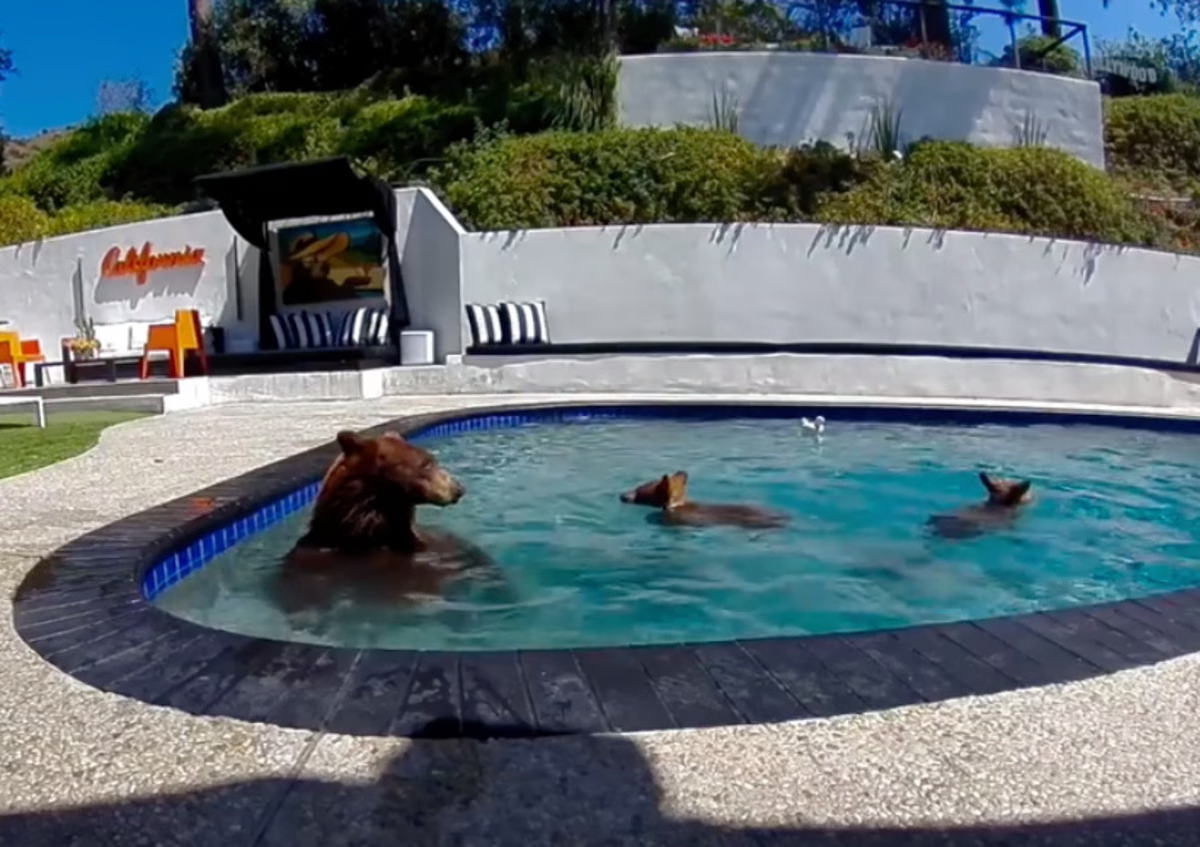










As California approaches late summer and early autumn, the state’s black bear population enters a period of intense caloric need. Known as hyperphagia, this pre-hibernation phase drives bears to search extensively for food, often shifting their focus from natural resources like pine nuts and acorns to the abundant, calorie-dense scraps found in human neighborhoods. This trend has become increasingly visible in the Los Angeles area, where suburban expansion continues to push human development deeper into wildlife habitats, placing residents in closer proximity to the state’s estimated 50,000 to 70,000 black bears.
Wilson Sherman, a PhD student at the University of California, Los Angeles, who specializes in human-wildlife interaction, explains that these animals are highly versatile omnivores. Because they can consume much of what humans eat, they are naturally drawn to pools, fruit trees, chicken coops, and trash bins. Human-bear encounters have trended upward since the 1990s, a development that aligns with the growth of mountain-adjacent communities. A small portion of the state’s total bear population, numbering in the hundreds, resides in the Angeles National Forest just north of the sprawling metropolis.
For some residents, these encounters have evolved into a strange form of cohabitation. Brian Gordon and his partner moved to Monrovia, California—a city often considered the state’s bear capital—four years ago. Their property sits on the literal edge of the Angeles National Forest. Upon arrival, they were greeted by bears wandering through their garden. Since then, they have even documented bear families using their backyard pool on an Instagram account titled PoolBearLife. Gordon admits that his initial perception of bears was rooted in fear, but direct experience transformed his perspective. He notes that the animals frequently pass through their yard with little interest in their bins, treating the space as an extension of the forest.
Despite this unique proximity, the couple emphasizes that they are not experts, but rather city residents who have adapted to their environment. They maintain strict safety practices, such as keeping trash cans secured and removing potential food sources, though they occasionally deal with minor mishaps like a bear discovering a case of beer in their garage. According to Sherman, this level of consideration is ideal. In an optimal scenario, residents in human-dominated landscapes would take active steps to make their properties unattractive to bears by securing pet food, clearing fruit trees, and managing koi ponds, as these attractants provide an easier caloric intake than foraging in the wild.
Climate change serves as another critical driver for this shift. Warmer summers alter the availability of natural food, and major wildfires—such as the 2025 Palisades and Eaton fires—have further reduced natural sustenance, forcing bears to forage closer to human homes. Alex Heeran, a research scientist with the California Department of Fish and Wildlife, notes that September is a particularly active month for these interactions. Heeran predicts that 2026 will likely be a record-breaking year for reported bear encounters, a trend compounded by the human activity seen around Labor Day picnics and camping trips.
While many interactions are harmless, conflict can occasionally escalate. Earlier in 2026, the community of Monrovia experienced significant distress when officials euthanized a bear known as “Blondie” after it was determined she had swiped at locals twice, resulting in minor injuries. The loss of the bear, which had two cubs, prompted a memorial walk and sparked public outcry. Becky Shevlin, the mayor of Monrovia, expressed devastation over the decision, noting that the city was excluded from the process and that the community holds a strong affinity for the local bear population.
Sherman observes that social media has added a layer of complexity to this coexistence. Doorbell cameras have proliferated over the last decade, allowing residents to capture and share footage of bears. While these videos can build genuine empathy and motivate conservation efforts, Sherman cautions that they also present a double-edged sword. People may find bear behavior cute or endearing, but they often lack the underlying expectation that these wild animals will be in their backyards. Despite the initial shock, Sherman notes that most people he interviews eventually become accustomed to the presence of bears, provided they maintain proper boundaries and respect the wildlife. The report also notes that every year, as summer draws to a close and fall begins, California’s bears get hungry. The report also notes that hunting for acorns, ants and pine nuts by the bucketload to pack on calories before hibernation, black bears have long roamed the state. The report also notes that for every berry and root, there’s an even greater temptation: our trash and the detritus of human existence, but increasingly. The report also notes that that dynamic is playing out in perhaps a surprising place: Los Angeles. The report also notes that it was the start of a new era of coexistence. The report also notes that climbing – and falling from – trees and causing adorable, young bear mayhem, videos show bear cubs with their snouts bubbling in the water. The report also notes that “I only had education up until I bought this house of bears from whatever I saw online.